Standing at the heart of Yangon, Sule Pagoda is one of those rare places where the city’s past and present seem to collide without friction. Its golden stupa rises above the chaos of downtown traffic, a quiet sentinel amid the honking cars and bustling sidewalks. For centuries, it has been more than just a religious site—it’s a landmark that has witnessed colonial rule, independence movements, and the slow, uneven march of modern Myanmar. Even today, when the rest of the city feels like it’s racing forward, the pagoda remains a steady presence, a place where time moves at its own pace.
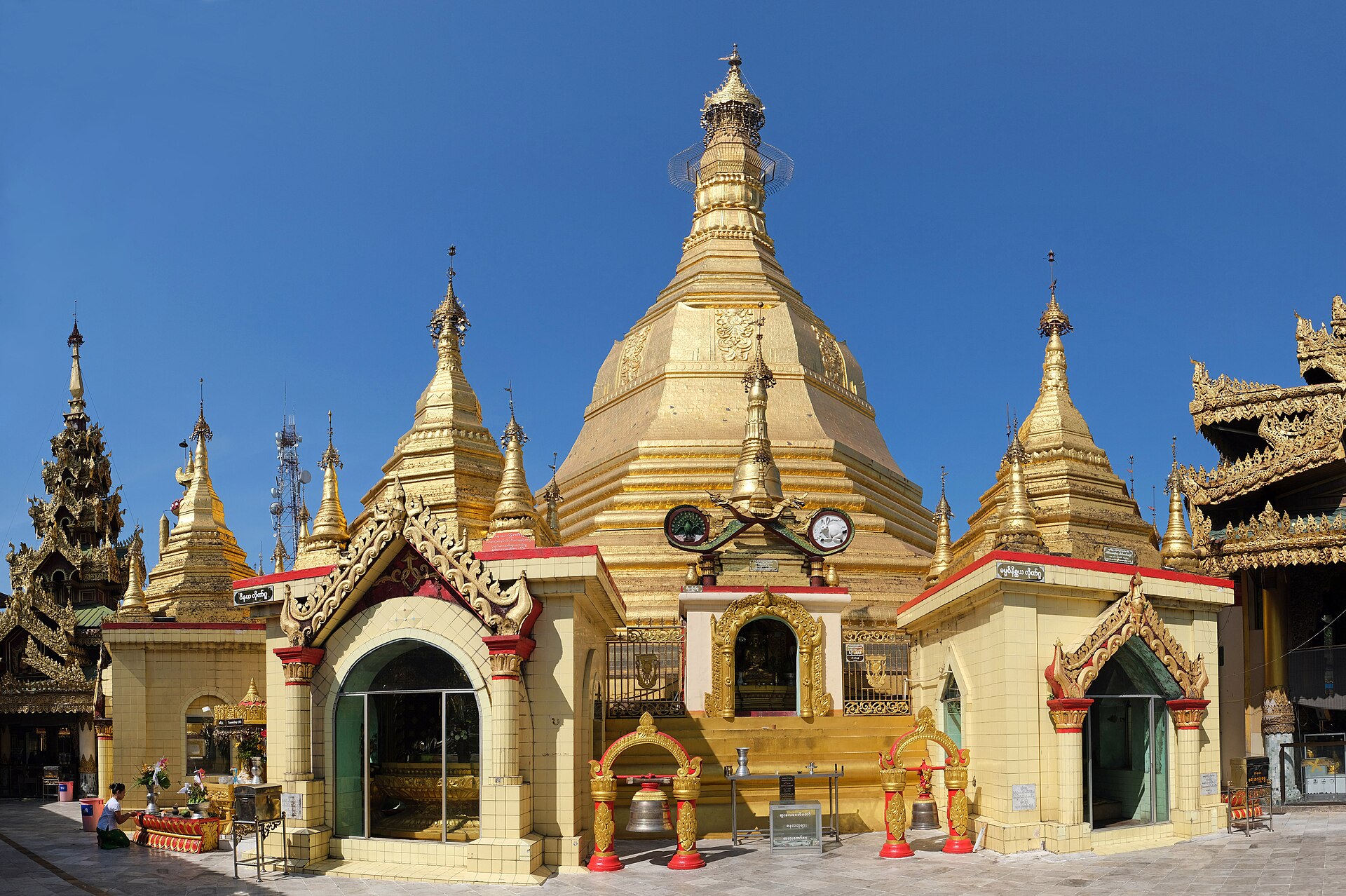
The origins of Sule Pagoda are shrouded in legend, as is often the case with Myanmar’s ancient sites. Some say it was built over two thousand years ago, during the lifetime of the Buddha himself, though historians place its construction closer to the 5th century. The name "Sule" is thought to derive from the Mon word for "meeting place," a nod to its role as a gathering point for both spiritual and civic life. Over the centuries, it has been renovated and expanded, but its core structure—a 48-meter-tall stupa—has remained largely unchanged. The golden dome, encircled by smaller shrines and prayer halls, glows warmly in the sunlight, a beacon visible from nearly every corner of central Yangon.
What makes Sule Pagoda unusual is its location. Unlike many of Myanmar’s grand pagodas, which sit on hilltops or in quiet temple complexes, this one is planted firmly in the middle of the city. It occupies a traffic island at the intersection of Sule Pagoda Road and Mahabandoola Road, surrounded by colonial-era buildings, government offices, and the occasional street vendor selling flowers and incense. The contrast is striking: the sacred and the mundane coexist here in a way that feels uniquely Burmese. You might see a monk in maroon robes walking past a businessman in a crisp shirt, or a group of schoolchildren giggling as they dodge the cars circling the pagoda.
The pagoda’s architecture is a blend of simplicity and grandeur. The central stupa, covered in gold leaf, is octagonal in shape, a design that sets it apart from the more common bell-shaped stupas found elsewhere in Myanmar. At its base, eight smaller shrines radiate outward, each dedicated to a different planetary deity—a nod to the astrological beliefs that have long influenced Burmese culture. The surrounding platform is lined with prayer halls, their walls adorned with intricate carvings and murals depicting scenes from the Jataka tales, the stories of the Buddha’s past lives. Even the railings and gates are works of art, with delicate ironwork that has been carefully maintained over the years.
For locals, Sule Pagoda is more than just a tourist attraction. It’s a place of daily devotion, where people come to pray, make offerings, and seek blessings. Early in the morning, the air is filled with the scent of incense and the soft murmur of prayers. By midday, the platform is crowded with worshippers—some kneeling in quiet meditation, others spinning prayer wheels or lighting candles. The pagoda is also a hub for festivals, particularly during Thingyan, the Burmese New Year, when the streets around it are transformed into a sea of water fights and celebrations. Even on ordinary days, there’s a sense of community here, a feeling that this is a place where people come not just to worship, but to connect.
The pagoda’s role in Myanmar’s history is just as significant as its spiritual importance. During the colonial era, it was a focal point for anti-British protests, a place where nationalist leaders gathered to rally support for independence. In 1988, it became a symbol of the pro-democracy movement, with students and activists using its grounds as a staging point for demonstrations. Even today, it remains a site of political significance, though in quieter ways. The surrounding streets are often filled with the sounds of daily life—vendors selling betel nut, taxi drivers haggling over fares, the occasional political rally—but the pagoda itself feels like a sanctuary, a place where the noise of the world fades into the background.
Visiting Sule Pagoda is less about ticking off a tourist checklist and more about experiencing the rhythm of Yangon. There’s no grand entrance fee or strict dress code, just a request to remove your shoes before stepping onto the platform. The best time to go is early morning or late afternoon, when the light is soft and the crowds are thinner. As you walk around the stupa, you’ll notice the way the gold leaf shimmers in the sunlight, the way the air hums with the sound of chanting and the occasional gong. It’s a place that invites reflection, whether you’re a devout Buddhist or simply a traveler looking to understand the soul of the city.
What stays with you after a visit isn’t just the beauty of the pagoda, but the sense of continuity it represents. In a country that has seen so much change—colonialism, dictatorship, democratic struggles—Sule Pagoda has endured. It has been a witness to history, a place of solace, and a symbol of resilience. For the people of Yangon, it’s a reminder that some things remain constant, even as the world around them shifts. And for visitors, it’s a chance to step into that quiet space where the past and present coexist, if only for a little while.