Lake Tanganyika stretches along Zambia’s northern edge, its waters so clear that the depths seem to breathe. Here, near Mbala, the lake forms a natural border with Tanzania, Burundi, and the Democratic Republic of the Congo. The surface shifts between shades of blue and turquoise as the light changes. It is one of the oldest and deepest freshwater bodies on Earth—second only to Lake Baikal in depth and the longest of its kind. The water holds a quiet intensity, as if the weight of millions of years presses beneath its surface.
The lake’s origins trace back to the East African Rift, where the earth split open around twenty million years ago. For the Bemba, the Mbumba, and others who have lived along its shores, it has always been more than a resource. It was a sacred space before European explorers arrived. Richard Burton and John Speke, searching for the source of the Nile in the mid-1800s, were among the first outsiders to document it. Later, during colonial times, the lake became a trade route, linking the interior of Africa to the Indian Ocean. Its remote location kept it from becoming more than a passage for goods and people.
The shores near Mbala see few visitors. Small fishing villages line the water, where life moves at the same unhurried pace it has for generations. Fishermen use traditional methods, casting nets for ndagala and tilapia. They smoke the catch over open fires or sell it in nearby markets. The beaches are quiet, lined with fine white sand, though few swim—the water stays cool year-round, and in places, the shore drops sharply into deep, shadowed depths.
Houses in the villages are made of mud and thatch, their roofs woven from palm leaves. In Mbala, a few colonial-era buildings remain—old mission stations and administrative offices, their red brick walls faded by time. The real draw is the landscape. The mountains surrounding the lake are thick with forest, home to monkeys and birds. At dusk, pelicans and cormorants glide over the water, while the call of the fishing owl echoes into the night.
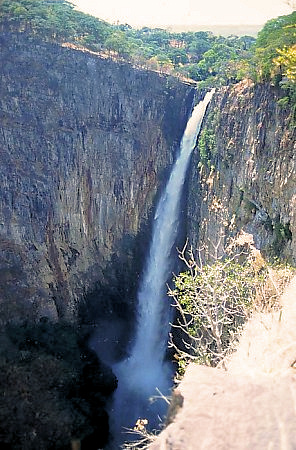
For those who want more than stillness, the lake offers its own kind of movement. Hiking trails wind through the hills to hidden waterfalls or viewpoints overlooking the water. Boat trips take you far from shore, where the lake’s vastness becomes impossible to ignore. Fishing here is unpredictable—Nile perch lurk in the depths, some weighing over a hundred pounds. Most visitors settle for something simpler: a quiet afternoon with a fishing line, watching as children splash in the shallows.
Getting to Mbala means a long journey from Lusaka, crossing savannas and mountain passes where the road narrows to little more than a track. That isolation is what makes Lake Tanganyika feel like a world apart. There’s no reliable phone signal, no constant hum of connectivity—just the lake, the mountains, and an endless sky.
The seasons shape the landscape. During the rainy months, from November to April, the shores turn lush and green, and the water rises, flooding low-lying areas. In the dry season, the air grows crisp, and the nights cool, the stars sharp against the darkness.
Scientists study the lake as a living laboratory. Its waters hold over three hundred species of fish, most found nowhere else on Earth. The cichlids, in particular, have fascinated researchers for decades, their colors and behaviors offering clues about evolution. Near Mbala, small research stations work to understand how to protect the lake as climate change and human activity threaten its balance.
Life along the shore moves slowly. Mornings begin with the crow of roosters and the scent of woodsmoke. Fishermen check their nets and prepare their boats. Women walk to the nearest well for water. Children, if there’s a school nearby, set off down dusty paths. By evening, families gather around fires, sharing stories and the day’s catch.
Lake Tanganyika isn’t a place for those seeking luxury. It’s for travelers who want to see Africa as it is—wild, vast, and unfiltered. You could spend days sitting on the shore, watching the light play across the water, or set out to explore its hidden corners. Either way, the lake leaves an impression. It’s a reminder that nature still sets the rules here.