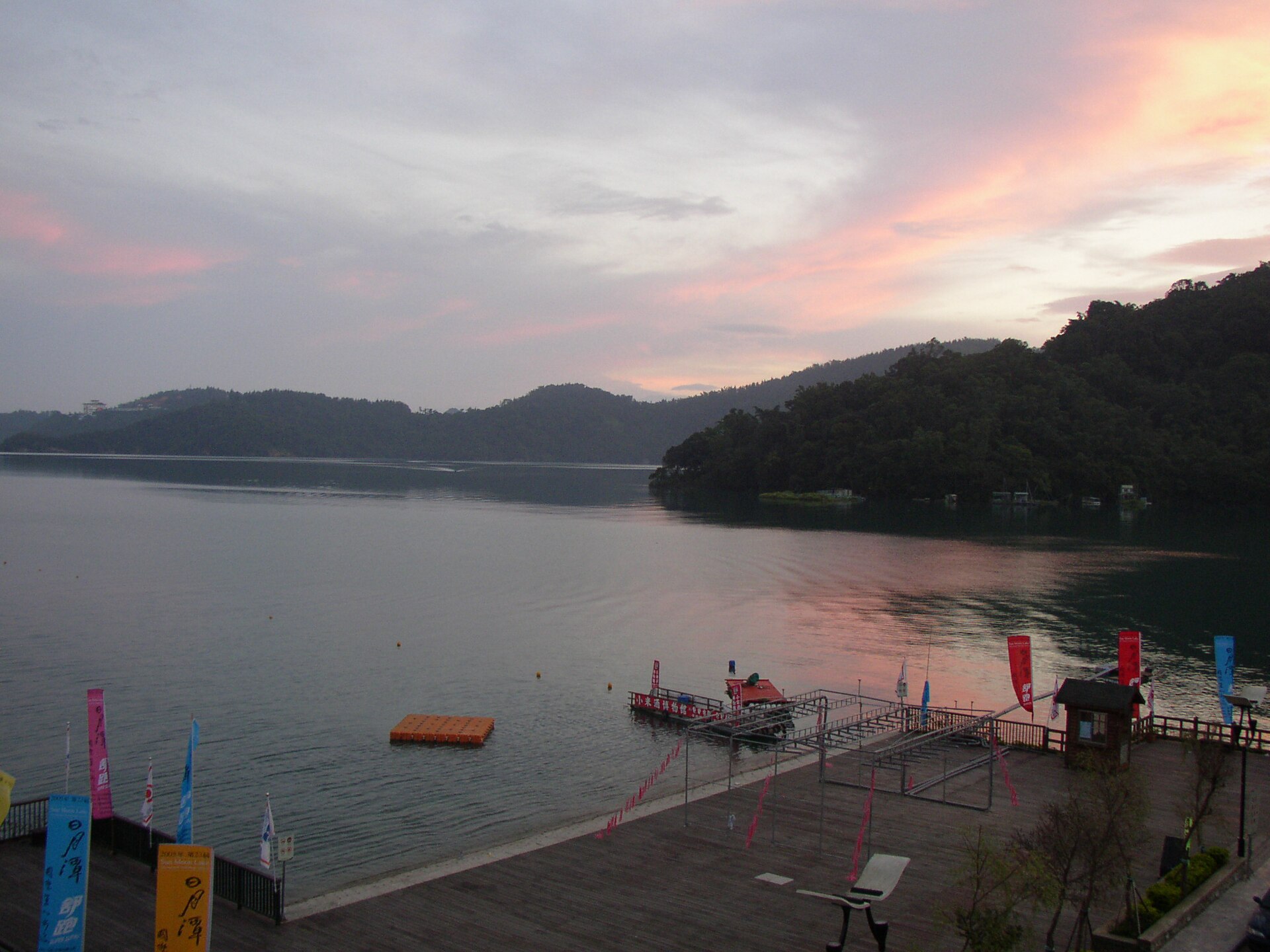
Sun Moon Lake is one of those places in Taiwan that lingers in the memory long after you’ve left. It isn’t just the scenery—though that alone would be enough—but the way the landscape seems to hold both time and stillness in equal measure. Tucked among the green hills of Nantou County in the island’s central region, the lake draws you in not with its size, but with its shape and the quiet sense of harmony it carries. The water splits into two distinct parts: the eastern side, round and full like the sun, and the western side, slender and curved like a crescent moon. The name, which took hold during the Japanese colonial era, reflects this duality, though the indigenous Thao people have long called it by other names, steeped in their own stories and reverence.
The lake’s history is woven into the fabric of Taiwan’s past, particularly for the Thao, who consider it a sacred place. Their legends speak of ancestral spirits dwelling in its waters, which were once believed to hold healing properties. When Dutch traders and later Chinese settlers arrived in the 17th century, the lake became a crossroads for commerce and travel. But it wasn’t until the early 20th century, under Japanese rule, that the area began to take on the form visitors recognize today. The Japanese saw its potential as a retreat and developed it accordingly—building inns, carving out roads, and even introducing steamboat tours. Some of that era’s influence remains visible in the architecture along the shore and the layout of the promenades, a subtle reminder of how the lake has been shaped by those who passed through.
Though shallow—averaging just four meters deep—the lake is one of Taiwan’s largest freshwater bodies. The water is remarkably clear, shifting between shades of blue and green depending on the light and weather. On bright days, the surface mirrors the surrounding mountains so perfectly it’s hard to tell where the land ends and the sky begins. When mist rolls in, the effect is almost otherworldly. The shoreline blurs, and boats gliding across the water seem to float through the clouds. It’s easy to see why so many artists and writers have been captivated by this place—there’s a quiet magic in the way the landscape transforms with the hours.
A well-maintained trail circles the lake, offering a chance to experience its many moods. The walk takes a few hours, but the pace is unhurried, with each bend revealing a new perspective. In some stretches, the path climbs gently onto low hills, where you can look out over both the sun and moon sections at once. Along the way, small temples and pagodas appear, their presence unobtrusive yet deeply rooted in the land. One of the most striking is the Xuan Guang Temple, perched on a hillside overlooking the water. The temple is known for its towering statue of Guanyin, carved from a single piece of stone, and its serene gardens, where the only sounds are the rustle of leaves and the distant lap of waves.
The lake’s character is also shaped by the floating homes of the Thao people. These traditional dwellings, built on bamboo and wooden rafts, were once common, but only a handful remain today. Some have been repurposed as cafes or small shops, where visitors can try local dishes like steamed fish with herbs or browse handmade crafts. During the rainy season, when the water level rises, the floating houses take on a life of their own. Residents move between them by boat, and in the evenings, lanterns cast flickering reflections on the dark water, adding to the lake’s timeless atmosphere.
Beyond its natural beauty, Sun Moon Lake is a cultural hub for the region. Festivals celebrating indigenous traditions take place here, alongside modern music and art events. One of the most vibrant is the Dragon Boat Festival, held in early summer. Dozens of elaborately decorated boats fill the lake as teams compete in races, their oars slicing through the water in rhythmic unison. Spectators gather along the shore, cheering as the boats dart across the surface, and when night falls, fireworks light up the sky, their reflections dancing on the water below.
Despite its popularity, the lake has managed to retain a sense of tranquility. There are no towering hotels or crowded boardwalks here—development has been careful, designed to preserve rather than overwhelm. Local authorities monitor water quality, limit construction, and support environmental initiatives, ensuring the lake remains a place where nature and history coexist. It’s this balance that makes it special, offering visitors not just a postcard-perfect view, but a chance to slow down and connect with something deeper.
For those who want to stay longer, there are plenty of places to rest your head, from family-run guesthouses to more modern resorts. Many sit right on the water, so mornings begin with the sound of waves lapping against the shore and the calls of birds overhead. Evenings are quieter still, the only sounds the occasional splash of a fish or the distant murmur of fishermen returning home. As the sun dips behind the mountains, the lake settles into a hush, and it’s easy to understand why this place has inspired so many—why it feels less like a destination and more like a moment of stillness in a world that rarely stops moving.