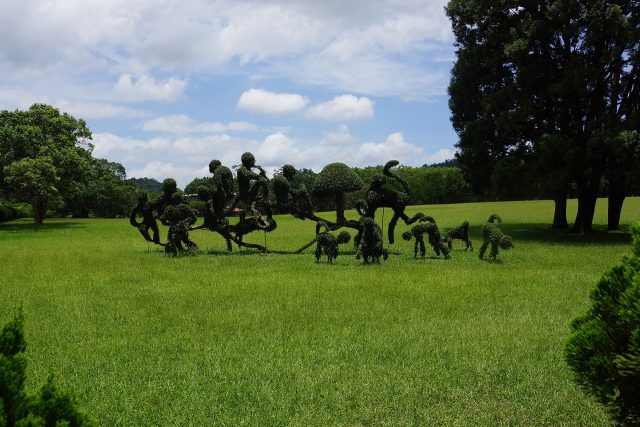
Nestled in the heart of Taiwan, the small town of Yuchi has long been synonymous with winemaking, a craft that has shaped its identity over generations. The Yuchi Wine Museum stands as a quiet testament to this legacy, a place where the past and present coexist without fanfare. Unlike grand museums in bustling cities, this one feels like a natural extension of the landscape—its unassuming building blends into the rolling hills dotted with vineyards, where the air carries the scent of ripe grapes and damp earth. There’s no need for spectacle here; the story of Yuchi’s wine unfolds at its own pace, just as the vines grow with the seasons.
The museum’s exhibits are thoughtfully arranged to guide visitors through the entire winemaking process, from the first bud on the vine to the final pour. It’s not a technical deep dive, but rather an invitation to appreciate the patience and skill behind each bottle. The displays strike a balance between simplicity and depth, offering enough detail to understand the craft without overwhelming those who might not be connoisseurs. What emerges is a sense of how much care goes into every step—how the land, the climate, and the hands of the winemakers all play their part.
One of the most compelling aspects of the museum is its focus on the local grape varieties that have adapted to Taiwan’s unique conditions. Unlike the familiar European vines, these are hybrids developed specifically for the island’s climate, a testament to the ingenuity of Yuchi’s winemakers. The exhibits trace the experimentation that led to these varieties, explaining how generations of trial and error shaped the flavors that define Yuchi’s wines today. It’s a reminder that winemaking here isn’t just about tradition—it’s about adaptation, about finding ways to thrive in a place where the rules of European viticulture don’t always apply.
The museum also offers a glimpse into the tools and techniques that have evolved over time. Some of the older implements on display look almost like relics, yet many were in use just a few decades ago. Seeing them alongside modern equipment highlights how quickly the craft has changed, even as the core principles remain the same. There’s something humbling about standing in front of a wooden press from the early 1900s, knowing that the same hands that once turned its handle might still be at work in the vineyards today.
Beyond the mechanics of winemaking, the museum explores the cultural significance of wine in Taiwan. Here, wine isn’t just a drink—it’s a symbol of hospitality, a staple at celebrations, and even a part of religious rituals. The exhibits show how Yuchi’s wines have woven themselves into the fabric of daily life, from family gatherings to temple offerings. It’s a role that goes beyond mere consumption; wine here carries meaning, connecting people to their heritage and to each other.
For those who want to move from observation to experience, the museum’s tasting room offers a chance to sample the local wines. The selection ranges from dry to sweet, each with a character that sets it apart from European varieties. The flavors are lighter, often with bright fruit notes that pair well with Taiwanese cuisine. It’s an opportunity to taste the difference that climate and terroir make, to understand why Yuchi’s wines have carved out their own niche in the world of viticulture.
What makes the Yuchi Wine Museum special isn’t just its exhibits or its wines—it’s the sense of place it conveys. There’s no pretension here, no attempt to mimic the grandeur of famous wine regions elsewhere. Instead, it feels authentic, rooted in the rhythms of the land and the people who tend it. A visit here isn’t just about learning how wine is made; it’s about understanding why it matters to Yuchi, why it’s more than an industry or a product. It’s a living tradition, one that continues to evolve while staying true to its origins.