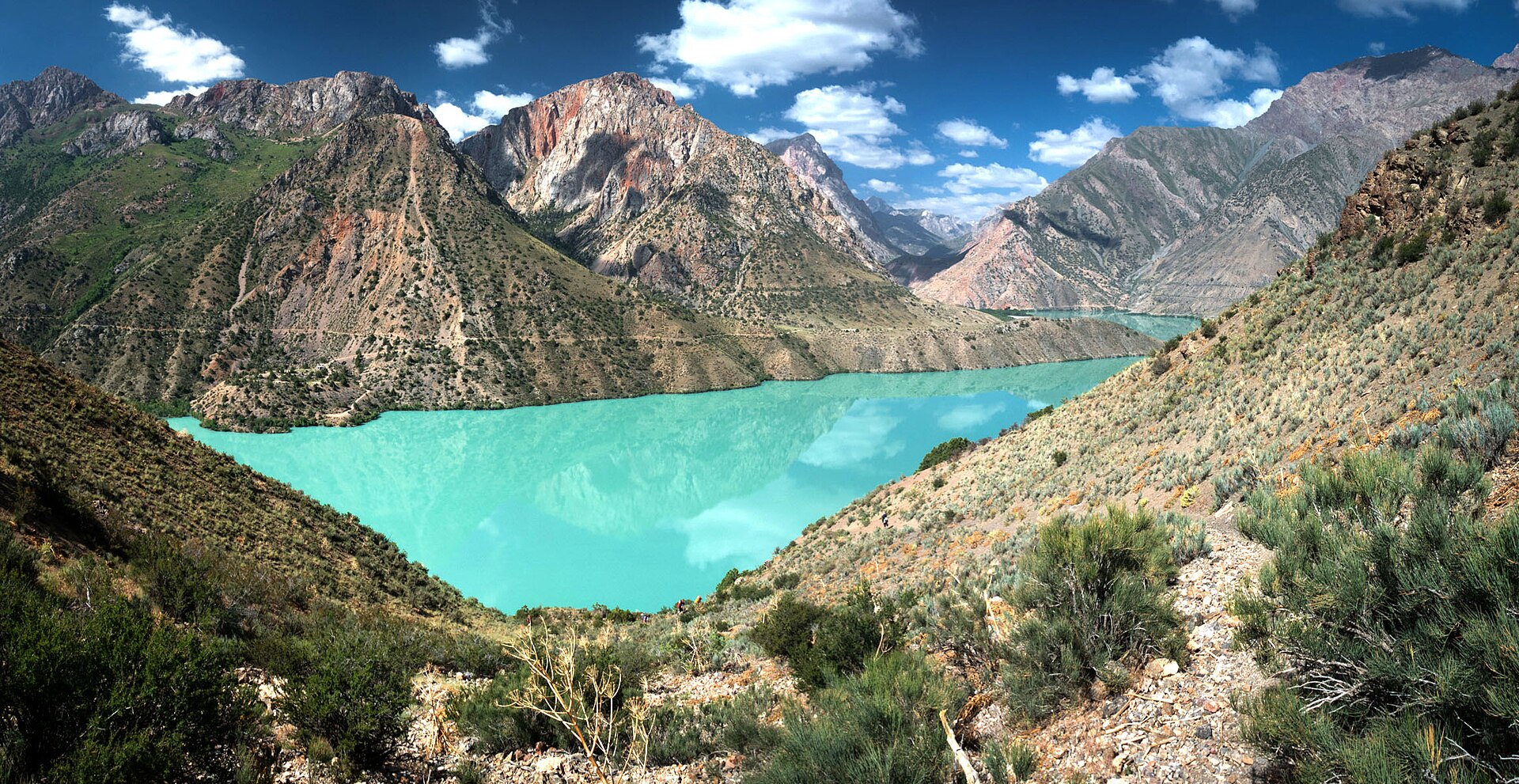
Lake Iskanderkul sits high in the Fann Mountains, a place where the air is thin and the silence is broken only by the wind sweeping across the water. The name itself carries the weight of legend, tied to Alexander the Great, known here as Iskander. Stories say his army passed through these valleys during their Central Asian campaign, and the lake was born from the tears of those who mourned the fallen. Whether true or not, the tale lingers in the way the light catches the water, turning it from emerald to steel depending on the hour, as if the lake itself remembers.
The water is deep, plunging nearly seventy meters in places, and so cold that even in summer it numbs the skin. Yet there are sheltered coves where the sun warms the shallows just enough for a quick swim. The shores are a mix of jagged rock and soft alpine meadows, with juniper trees clinging to the slopes. From certain angles, the lake looks almost artificial, too vivid against the muted tones of the mountains, as if someone had painted it into the landscape.
Around the lake, the past feels closer than it should. Ancient petroglyphs mark the rocks, their meanings lost but their presence undeniable. Nomads once camped here, and later, caravans traveling the Silk Road paused in these valleys, moving between Samarkand and the high Pamirs. The remnants of old settlements are still visible if you know where to look—low stone walls half-buried in the grass, or the faint outline of a path worn smooth by centuries of footsteps.
Reaching Iskanderkul is part of the experience. The road from Dushanbe winds through the Hissar Range, climbing higher with every turn. The landscape shifts from dry foothills to green valleys, then to narrow gorges where the cliffs seem to press in on either side. Small villages appear along the way, their mud-brick houses blending into the hillsides. Shepherds move their flocks across the slopes, and if you stop at a roadside chaikhana, you might be offered tea brewed strong and served with fresh bread and salty cheese.
There are no grand hotels here, just a handful of guesthouses and simple lodges where visitors can stay. The rooms are basic—wooden walls, a stove for warmth, a bed covered in thick blankets—but the views make up for it. In summer, the place fills with families from the city escaping the heat, their laughter mixing with the sound of the water. Winter is quieter. The lake freezes over, and the only sounds are the occasional cry of a bird or the creak of ice shifting beneath the surface.
For those who want to explore, the area offers plenty of trails. Some lead to viewpoints where the entire lake spreads out below, a sheet of blue framed by peaks. Others take you to the Lower Hazorchashma waterfall, where water crashes down from a height of nearly fifty meters, surrounded by wild apple and hawthorn trees. More ambitious hikers can venture deeper into the Fann Mountains, where snow leopards and ibex still roam, though sightings are rare.
What makes Iskanderkul special isn’t just the scenery, but the way it feels untouched by time. There are no crowds, no souvenir stalls, no signs telling you where to go or what to feel. Instead, there’s the quiet rhythm of the place—the way the light changes over the water, the way the wind carries the scent of juniper, the way the mountains stand guard over everything. It’s the kind of place that stays with you long after you leave, not because of anything in particular, but because of the way it makes you slow down and pay attention.
Some people come back year after year, drawn by that same sense of stillness. There’s no grand reason for it, no monument or museum to justify the trip. Just the lake, the mountains, and the quiet understanding that some places don’t need to be explained. They simply are.