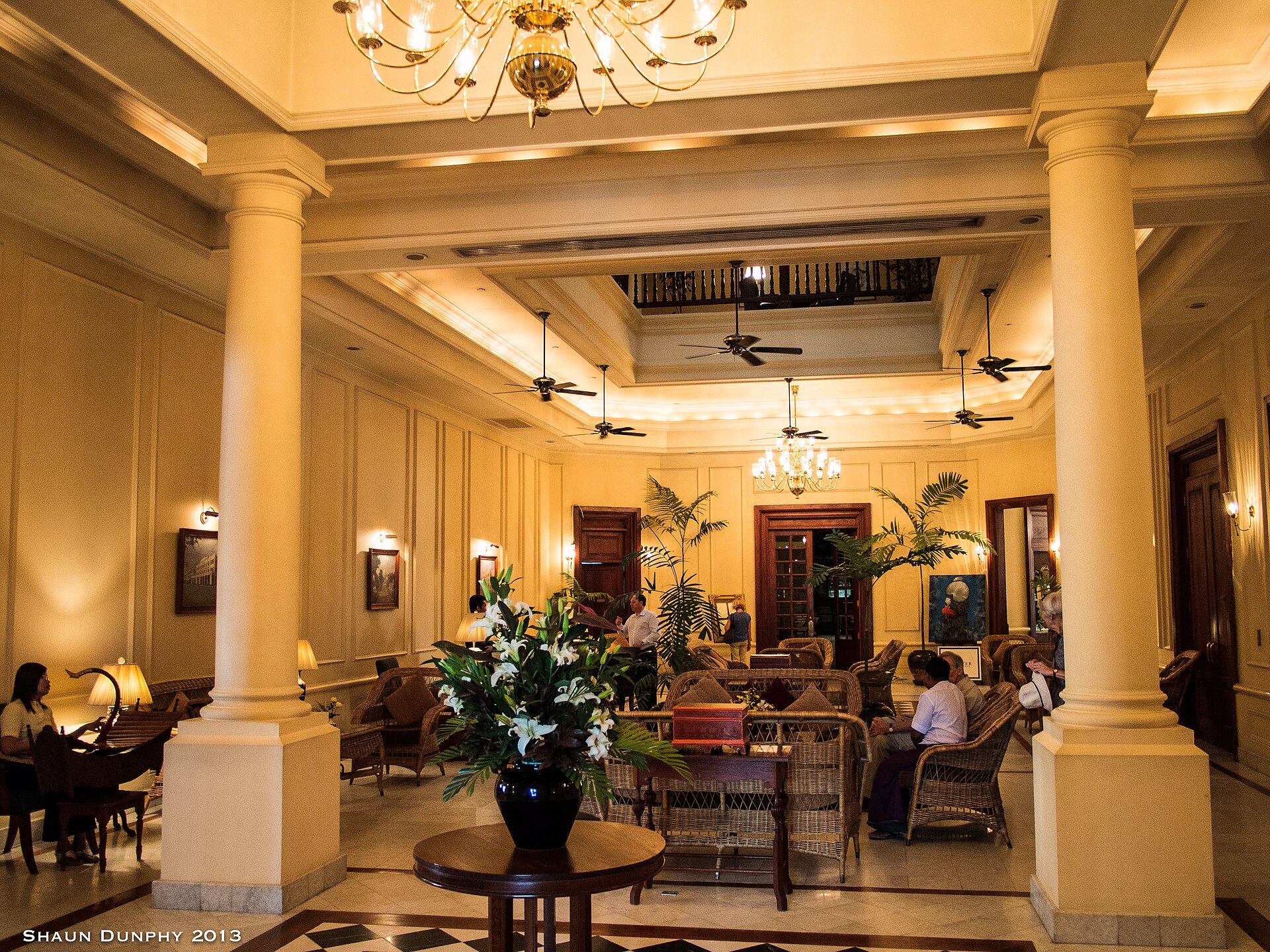
Photo: Shaun Dunphy from Lindfield, United Kingdom, CC BY-SA 2.0
Strand Hotel
out of 5 0 ratingsThe Strand in Yangon is one of those rare places where the past doesn’t just linger—it breathes. Built in 1901, when Myanmar was still Burma and under British rule, the hotel was a cornerstone of the city’s golden age as a bustling colonial trading hub. Named after the riverside promenade where it stands, the Strand became a gathering place for merchants, diplomats, and travelers from across the globe. Over a century later, it retains the quiet grandeur of that era, though its recent restorations have polished its edges without erasing its soul.
The architecture is a seamless blend of colonial elegance and local craftsmanship. High ceilings, teakwood doors, and slowly turning ceiling fans—still in use today—create an atmosphere that feels both timeless and lived-in. The interiors are rich with dark wood paneling, and while the furniture has been updated, it carries the understated sophistication of the early 20th century. The hotel’s bar, with its gleaming wooden counter, is the kind of place where you half-expect to see a British officer or a Burmese aristocrat nursing a whiskey, just as they might have done decades ago.
The Strand has always been more than just a hotel. It’s been a witness to history, hosting everyone from writers like Somerset Maugham to royalty and politicians. During World War II, it even served as a refuge for those displaced by the conflict. After Myanmar gained independence in 1948, the hotel weathered turbulent times, but in the 1990s, it was restored to its former glory by a Singaporean company. Today, it stands as one of the few places in Yangon where the past feels tangible, yet without sacrificing modern comforts.
Its location along the Yangon River is part of what makes the Strand so special. The views from the hotel are serene, with the water reflecting the changing colors of the sky at dusk. Just a short walk away are some of the city’s most iconic sights—the Sule Pagoda, the Bogyoke Aung San Market, and the grand colonial buildings of downtown. Yet the hotel itself feels like a quiet retreat, set back from the noise of the streets, where the only sounds are the rustle of leaves in the garden or the clink of ice in a glass.
Life at the Strand moves at a leisurely pace, as it should in a place with such history. Mornings often begin with breakfast on the veranda, where fresh fruit, local spices, and classic English dishes are served. The day might be spent strolling along the riverfront or exploring nearby cafes, before returning to the hotel for an evening in the bar or restaurant. The food here leans toward European tastes but isn’t afraid to incorporate local flavors—think curries infused with Burmese herbs or river fish prepared simply and well.
Despite its reputation for luxury, the Strand doesn’t feel stuffy or overly formal. The service is attentive but unobtrusive, and guests are left to enjoy the space as they please. Whether you’re in a room overlooking the river or curled up in one of the library’s armchairs, there’s a sense of ease that makes it feel like a home away from home. It’s a place that attracts travelers who are drawn to history and culture, not just beaches and resorts.
The Strand has seen wars, political upheavals, and economic shifts, yet it remains remarkably unchanged. It’s a living piece of Yangon’s heritage, a bridge between the city’s colonial past and its present. For many visitors, staying here isn’t just about having a place to sleep—it’s about stepping into a different time. There’s something deeply moving about walking the same halls as those who came before, seeing the city through their eyes, and feeling a connection to Myanmar’s complex history. That’s the real gift of the Strand: it doesn’t just offer shelter; it offers a sense of belonging to something larger than yourself.