- Home
- Philippines
- Maláte
- Manila Hotel
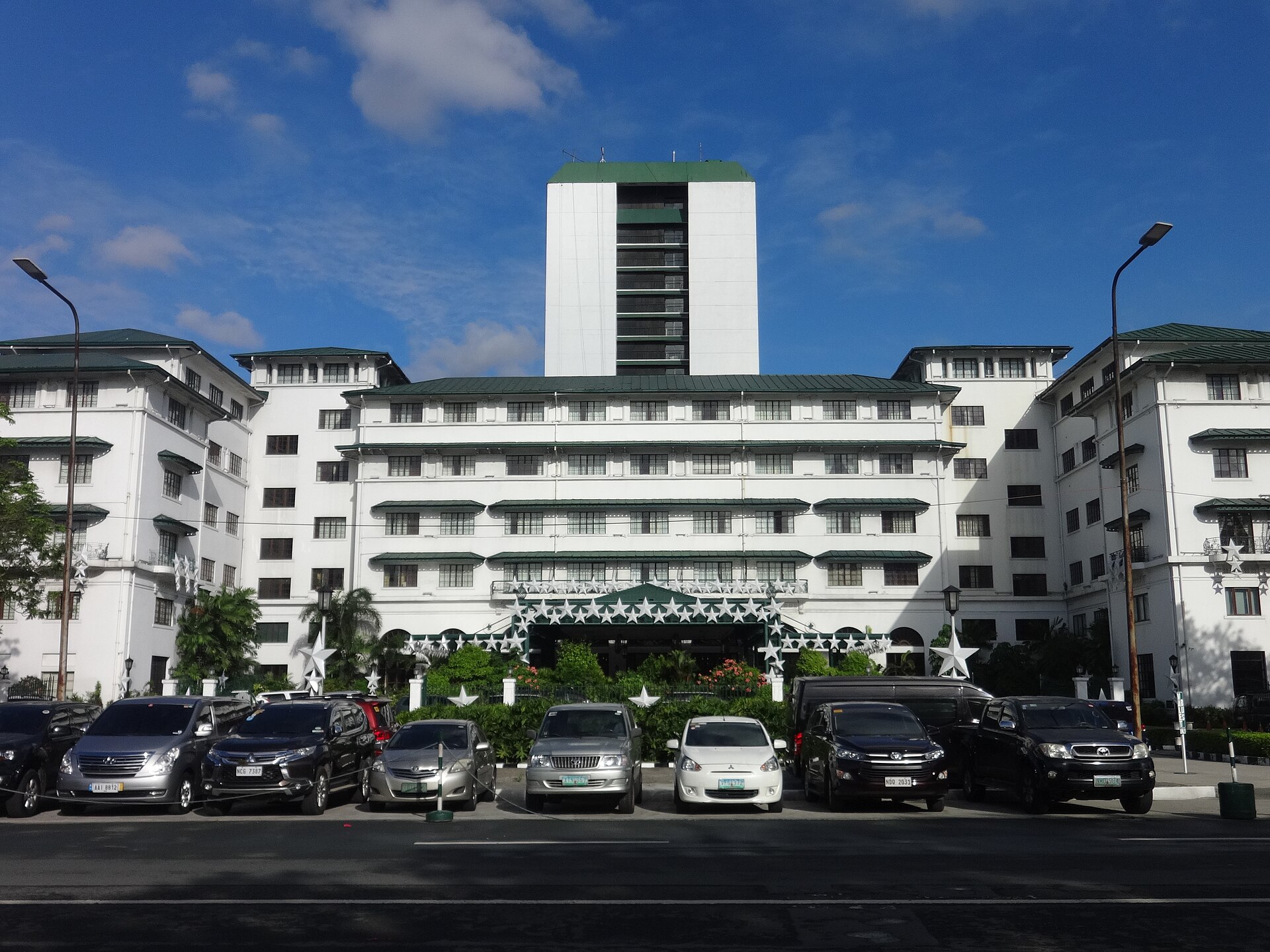
Photo: patrickroque01, CC BY-SA 4.0
Manila Hotel
out of 5 0 ratingsThe Manila Hotel isn’t just a building—it’s a living piece of Philippine history, standing where the city meets the bay. Opened in 1912, when the Philippines was still under American rule, it has witnessed nearly every major event in the nation’s modern story. During World War II, its halls echoed with the footsteps of generals planning liberation from Japanese occupation. Later, it hosted the celebrations of independence in 1946. Presidents, writers, and film stars have walked its corridors, and if the walls could talk, they’d recall the voices of Churchill, Douglas MacArthur, and Hemingway. Even now, stepping inside feels like entering a place where the past lingers in the air—whether in the glow of antique chandeliers or the framed photographs of moments that shaped a country.
The hotel’s architecture blends colonial grandeur with subtle local touches. The main building, with its neoclassical columns and soaring ceilings, reflects the era when Manila was considered one of Asia’s most elegant cities. Inside, polished wood, marble, and crystal create an atmosphere of quiet luxury. The rooms, with their tall windows, offer views of either the bay or the city, while the grand ballroom—once the setting for diplomatic receptions—now hosts weddings and formal gatherings. Even if you’re not a guest, the lobby alone is worth a visit. The bar, in particular, is a perfect spot to watch the sunset over the water, a view that hasn’t changed much since the hotel first opened.
More than just a place to stay, the Manila Hotel has played a role in history. During World War II, it served as General MacArthur’s headquarters, where he directed the campaign to reclaim the Philippines from Japanese forces. The hotel suffered damage in the fighting but was later restored with care, preserving its original character. In the 1970s, new wings were added, yet the older sections remained largely untouched, as if to honor the memories they held. Today, it continues to attract not just tourists but also politicians, artists, and business travelers, many of whom come to Manila for work or performances.
The surrounding neighborhood of Malate has its own quiet charm. One of Manila’s oldest districts, it retains traces of its colonial past in its narrow streets, old churches, and crumbling mansions. Nearby, Rizal Park—named after the national hero José Rizal—offers a green escape from the city’s hustle. A short walk away, Fort Santiago stands as a reminder of Spanish rule, with views of the Pasig River. In the evenings, the bayfront comes alive as locals and visitors gather to watch the sunset. Unlike the sleek business district of Makati, Malate feels slower, more lived-in, and the Manila Hotel seems to hold that same sense of timelessness within its walls.
Despite its age, the hotel hasn’t lost its relevance. Modern amenities like a pool, spa, and several restaurants cater to today’s travelers, while a small museum on the premises offers a glimpse into its storied past. The café on the ground floor serves coffee with local sweets, and the French restaurant still prepares dishes that might have been ordered by the famous guests of decades past. Prices reflect the hotel’s prestige, but for those who want to experience old Manila, that’s hardly the point.
What makes the Manila Hotel special is the way it carries history without feeling like a relic. There’s no rush here, no sense of urgency—just the quiet weight of the past in every corner. Even if you’re staying elsewhere, it’s worth stopping by for a coffee or a stroll through the lobby. In a city of skyscrapers and shopping malls, the hotel remains a rare connection to an earlier time, a place where history isn’t just remembered but still felt.
Day around this place
Where else to go on the same day
Building the day…
Where it is
14.57329, 120.98280