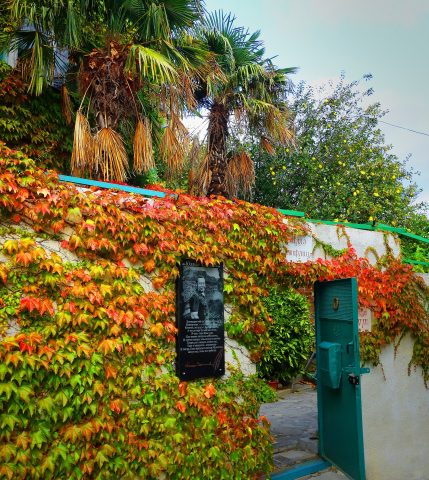
Nestled on the quiet edge of Oliva, a small town where life moves at its own gentle pace, the local history museum stands in a building that has witnessed the town’s growth. The two-story structure, with its thick brick walls and narrow windows, dates back to the late 19th century, when Oliva was still finding its shape. The wooden shutters, carved window frames, and heavy doors with iron handles tell of a time when craftsmanship was part of daily life. Inside, the high ceilings and worn floorboards hold the echoes of the families who once lived here.
The museum began with a few people—a teacher, a historian, a handful of residents—who, in the mid-20th century, started collecting pieces of Oliva’s past. Old photographs, documents, and household items were gathered, and soon, the collection grew too significant to keep private. The house, already steeped in history, became its home. Now, it preserves the stories of those who built the town: farmers, merchants, and artisans whose names may be forgotten but whose work remains.
Step inside, and you’re walking through pages of history. One room recreates a peasant’s home, with a wooden bench, a cast-iron stove, and a spinning wheel. Nearby, tools—carpenters’ planes, blacksmiths’ tongs, cobblers’ lasts—show the trades that once sustained the town. Displays of pottery, woodworking, and textiles reveal how these skills developed over time. Old maps and photographs line the walls, capturing Oliva in the early 1900s, when dirt roads and kerosene lamps were everyday realities.
A separate section focuses on the 20th century. Here, exhibits tell of wars, resilience, and quiet progress. Letters from soldiers, war medals, and newspapers from the Soviet era offer glimpses into life during those decades. School notebooks, factory tools, and movie posters show the routines of daily life. Among the most striking displays are photographs of children and elders taken after the war, their faces reflecting both struggle and hope.
The museum isn’t just about the past. Contemporary artists and craftspeople sometimes exhibit here, their work rooted in local traditions. Visitors can join workshops—pottery, basketry, embroidery—and try these skills for themselves. School groups often visit, filling the rooms with laughter and the sound of tools in use. It’s proof that history isn’t just what’s gone; it’s what continues.
Few tourists come here. There’s no rush, no crowds, just space to pause over a detail—a handwritten letter, a child’s toy, a piece of lace—and wonder about the hands that once held them. The museum doesn’t feel like a collection of artifacts. It feels alive, shaped by the memories of those who came before.
Oliva isn’t a place that draws crowds. Many pass through without a second thought. But those who step into the museum often leave with something unexpected. Here, history isn’t locked behind glass. You can pick up an old iron, sit on a wooden bench, or flip through a yellowed book. The past feels close, almost personal, as if the stories of the town’s people are still unfolding in the quiet corners of the rooms.
If you ever find yourself in Oliva, visit the museum. You won’t find grand masterpieces or famous names. What you’ll find is rarer: the unfiltered, everyday life of a small town and the people who called it home. That kind of history doesn’t make it into guidebooks, but it stays with you long after you’ve left.