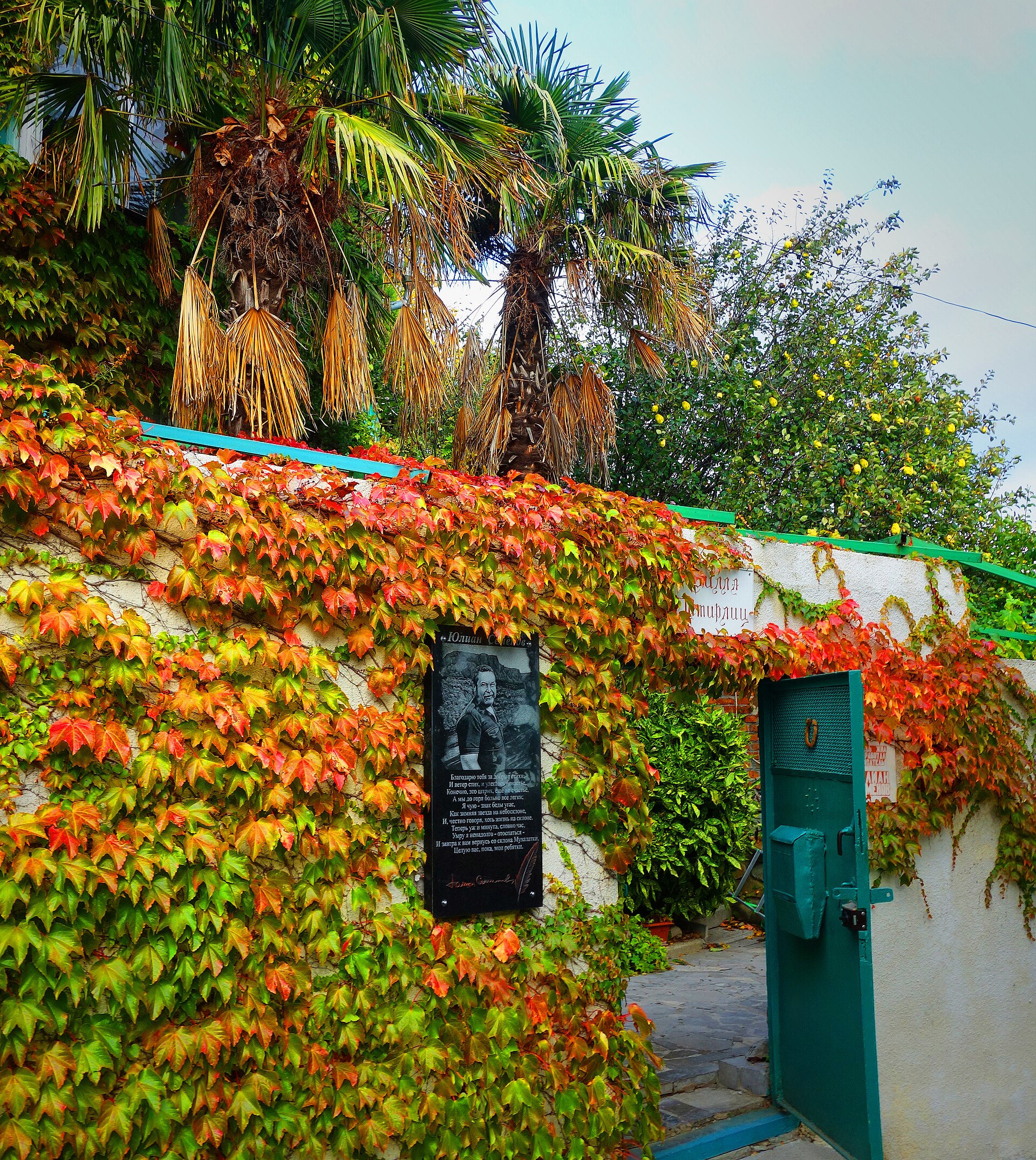
Julian Semyonov’s House-Museum in Oliva is one of those rare places where the past doesn’t just linger—it breathes. Tucked away in a quiet village on the Baltic coast, this unassuming house was more than a retreat for the writer; it was where some of his most famous works took shape. Far from the noise of Moscow or the political intrigue he often wrote about, Semyonov found in Oliva the space to craft the stories that would define a generation. Today, the museum preserves not just the physical traces of his life but the atmosphere of an era when his novels about spies, detectives, and Soviet intelligence became cultural touchstones.
The house itself is modest, built in the early 20th century in a style typical of the Baltic coast—tall ceilings, large windows, and a small inner courtyard that feels sheltered from the world. There’s nothing grand about its architecture, yet it carries the kind of intimacy Semyonov himself valued. Inside, the rooms remain much as they were during his lifetime: the furniture, books, and personal belongings all arranged as if he might return at any moment. A typewriter sits on a desk, manuscripts lie open, and photographs line the walls, each item a quiet testament to a life lived between the pages of fiction and the realities of Cold War politics.
Semyonov was more than a writer. He was a journalist, a screenwriter, and a man deeply embedded in the world of espionage, with connections that stretched from Soviet intelligence to the cultural elite. His most famous creation, the spy Max Otto von Stierlitz, became a legend in his own right, embodying the moral ambiguities and ideological battles of the time. The museum doesn’t just display his books—though there are rare editions in multiple languages—but also the documents, notes, and drafts that reveal how his work intersected with history. Visitors can see the scripts he wrote for films that became Soviet classics, their scenes still vivid in the public imagination decades later.
For Semyonov, Oliva wasn’t just a summer escape; it was a creative sanctuary. He spent his days here walking along the shore, meeting with friends, and working in the quiet of the house. The museum has preserved that sense of lived-in warmth: the old piano in the living room, the photographs of Semyonov with artists and politicians, the cups of tea left on the table as if waiting for his return. It’s easy to imagine him stepping out of his study, mid-conversation, ready to share another story—one that might later find its way into a novel.
Beyond the house, the small garden and the nearby sea offer a glimpse of what drew Semyonov to this place. Locals say he often sat on a bench by the water, watching the waves while plotting his next move—both in his writing and in the real-world intrigues that fascinated him. That bench has since become a kind of informal monument, where fans leave notes, flowers, or even copies of his books, as if paying tribute to the man who turned espionage into art.
A visit here isn’t a typical museum experience. There are no grand exhibits or flashy displays, just the quiet accumulation of a life’s work and the world that shaped it. For those who grew up reading his novels, it’s a chance to step behind the scenes—to see the desk where Stierlitz was born, the chair where Semyonov sat while unraveling another conspiracy, the bookshelf that held the volumes he turned to for inspiration. The guides, many of whom knew him personally, share stories that bring the exhibits to life, filling in the gaps between the pages of his books and the man who wrote them.
Oliva itself hasn’t changed much since Semyonov’s time. The sea still rolls in with the same rhythm, the pines still whisper in the wind, and the village remains a place where time moves slowly. The museum isn’t just a tribute to one man’s legacy; it’s a reminder of how closely life and art can intertwine. After wandering through the rooms, visitors often step outside to walk along the shore, the salty air mixing with the lingering sense of the stories that began here. It’s a place where the past feels tangible, where the line between fiction and reality blurs just enough to make you wonder what other secrets this quiet corner of the world might still hold.