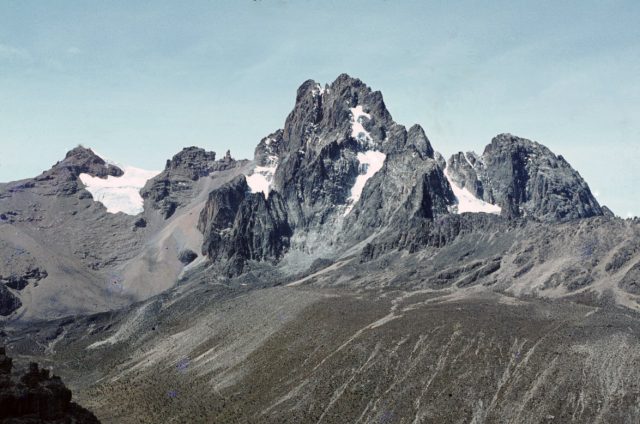
Mount Kenya Deer Park feels like a place where time moves differently, where the past lingers in the rustle of leaves and the distant call of birds. Nestled at the foot of Kenya’s highest mountain, the park occupies land that once belonged to British settlers, a remnant of an era when these slopes were reserved for colonial hunting parties and private estates. Today, it’s a quiet refuge for wildlife, a place where the Africa of old still exists—unfiltered, unhurried, and largely untouched by mass tourism.
The landscape here shifts dramatically as you move through it. Dense forests give way to open savannahs, and the air carries the scent of damp earth and wild herbs. While the park’s name suggests an abundance of deer, they’re not the main attraction. Instead, herds of buffalo graze in the distance, giraffes stretch their necks toward the acacia trees, and zebras move in striped clusters across the grasslands. Leopards and other predators roam the area too, though sightings are rare—more a promise than a guarantee. The real stars of the park are the birds. Over two hundred species thrive here, from the electric-blue flash of a turaco’s wings to the slow, deliberate circles of eagles riding thermal currents above the treetops. Every turn on the trail offers something new, a reminder that this land still belongs to the wild.
The park’s history is woven into its very soil. In the early 1900s, these were the hunting grounds of British aristocrats, a playground for those who saw Africa as a vast, untamed estate. After Kenya gained independence, many such properties were reclaimed, but Mount Kenya Deer Park retained its distinct character. Some of the old stone buildings still stand, their thick walls and wide verandas echoing the colonial era. A few have been repurposed as guest lodges, where visitors can wake to the sound of monkeys chattering in the trees or the distant bellow of a buffalo. The trails, too, bear the marks of the past—some were originally carved out for horseback riders, their paths worn smooth by decades of use. Walking them now, it’s easy to imagine the park as it once was: a private retreat where the outside world felt very far away.
The architecture here is understated but striking. The old stone structures blend seamlessly into the landscape, their rough-hewn walls softened by creeping vines and the patina of time. Inside, the details tell their own story: heavy wooden doors that groan when opened, fireplaces that once crackled with warmth on chilly mountain nights, high ceilings that amplify the sounds of the forest. Staying in one of these lodges isn’t just about comfort—it’s about stepping into a different rhythm, one where the day begins with the first light and ends when the stars take over the sky.
A visit to the park is less about ticking off a checklist of sights and more about settling into the pace of the place. Mornings start early, with mist curling over the savannah and the air alive with birdsong. By midday, the heat slows everything down—animals seek shade, and visitors do the same, lingering under the trees or pausing to watch a herd of impalas graze. Evenings bring a second wave of activity, as the cooler air coaxes creatures from their hiding spots. The nights are dark, the kind of dark that makes the Milky Way seem close enough to touch. Without the glow of cities, the stars here feel almost tangible, a reminder of how small we are in the grand scheme of things.
For those who want to explore beyond the usual safari routes, the park offers guided walks and drives that delve deeper into its secrets. The guides know the land intimately, pointing out not just the animals but the smaller details—the way a certain tree’s bark peels in strips, the meaning behind the names of local plants, the old stories that still circulate among the communities nearby. One of the most enduring tales is that of Mount Kenya itself, a sacred place in local folklore, said to be the home of ancestral spirits. Whether or not you believe in such things, there’s a weight to the stories, a sense that this land holds more than just what meets the eye.
What makes Mount Kenya Deer Park special isn’t its fame or its size, but its quiet authenticity. There are no crowds here, no souvenir stalls or tour buses idling in the parking lot. Instead, there’s space—space to breathe, to listen, to simply be. It’s the kind of place that stays with you long after you’ve left, not because of any single moment, but because of the way it makes you feel: like you’ve glimpsed something rare, something real. You could spend days here, tracking animals through the bush, following trails that wind up into the foothills, or just sitting still and letting the sounds of the wild wash over you. Or you could come for a single afternoon, leaving with the quiet satisfaction of having seen Africa as it was meant to be seen—not as a backdrop for adventure, but as a living, breathing world of its own.
The park isn’t frozen in time, though. Conservation efforts are ongoing, from reforestation projects to wildlife monitoring programs. The goal isn’t just to preserve what’s here now, but to ensure that future visitors will find the same sense of wildness, the same untamed beauty. It’s a delicate balance, one that requires patience and care. And while Mount Kenya Deer Park may not have the name recognition of Kenya’s more famous reserves, that’s part of its appeal. Here, the focus isn’t on spectacle, but on subtlety—the way the light filters through the trees at dawn, the way the wind carries the scent of rain before a storm, the way the land itself seems to exhale when the day is done.
In the end, the park is a reminder of what so many of us seek when we travel: a connection to something larger than ourselves. It’s not about the thrill of seeing a lion or the satisfaction of a perfect photograph. It’s about the quiet moments—the way the air feels after a rain, the sound of a bird calling from a branch just out of sight, the sense that you’re standing in a place where the past and present coexist without conflict. That’s the real draw of Mount Kenya Deer Park. Not the promise of something extraordinary, but the chance to experience the ordinary magic of the wild.