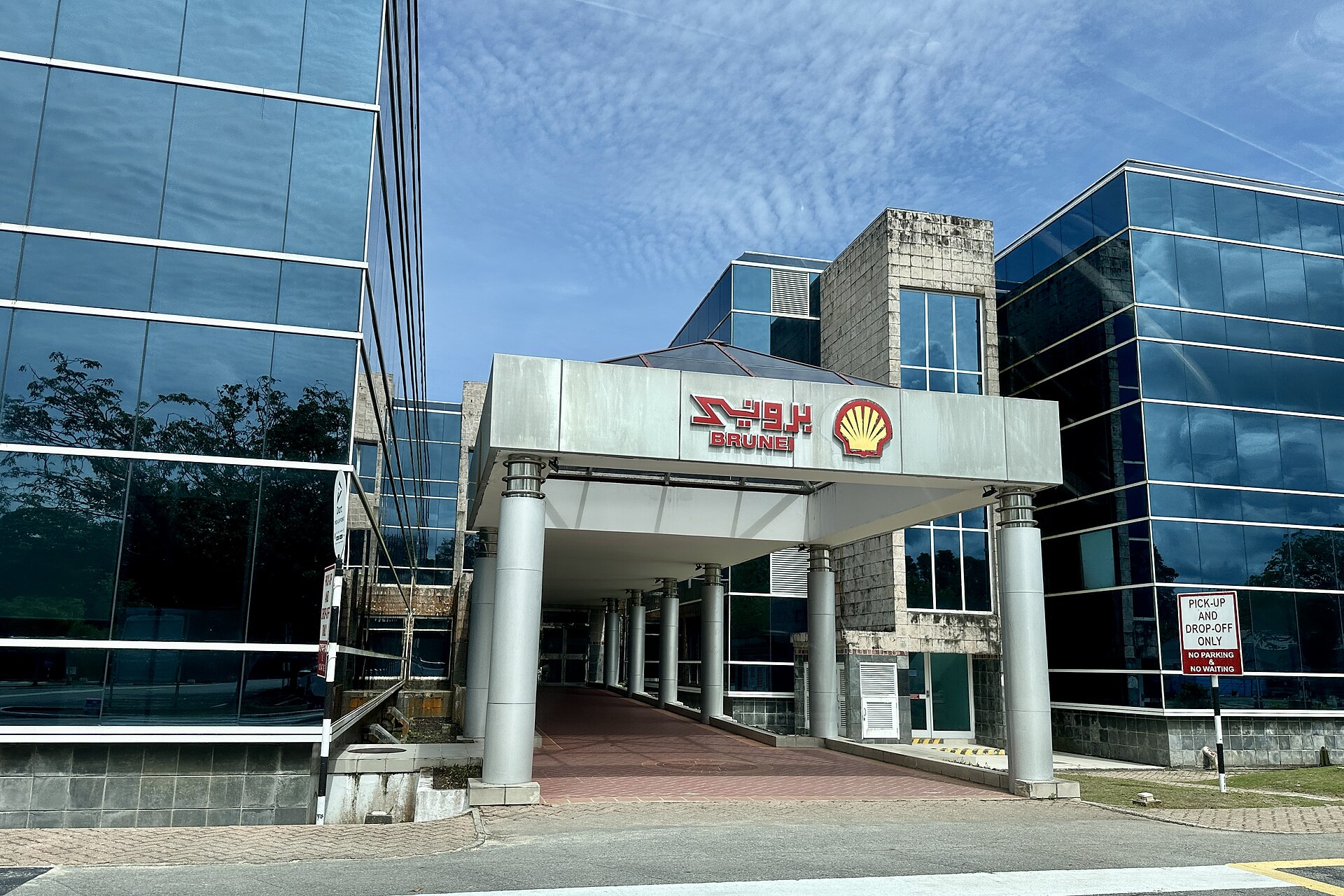
Kuala Belait is often dismissed as just another quiet coastal town on the edge of the South China Sea. Yet beneath its unassuming surface lies a place where Brunei’s modern history, economy, and daily life converge in a single, unremarkable-looking building. The Brunei Shell Petroleum office has stood here for nearly a century, not as a monument to grandeur, but as a quiet testament to the forces that shaped a nation.
The story begins in 1929, when oil was discovered near Seria, a short distance from Kuala Belait. Before that, Brunei was a small, largely agrarian sultanate, its fortunes tied to trade and subsistence farming. The discovery changed everything. Almost overnight, the country found itself sitting on one of the world’s most valuable resources, and the Brunei Shell Petroleum office became the nerve center of this transformation. It wasn’t just an administrative hub—it was where decisions were made that would determine Brunei’s economic future and, in many ways, its political stability.
The building itself is unassuming, designed more for function than for show. There are no soaring arches or intricate carvings, just the straightforward, utilitarian architecture of the mid-20th century. Yet its simplicity carries weight. This is where the real work happens—the calculations, the logistics, the long-term planning that keeps Brunei’s economy running. It’s a place of quiet efficiency, where engineers, geologists, and economists turn abstract numbers into tangible results. There’s no ostentation here, just the steady rhythm of a system that has kept the country afloat for decades.
For the people of Kuala Belait and the surrounding areas, the office is more than just a workplace. Generations of families have been tied to the oil industry, whether through direct employment or the ripple effects of its presence. The city grew up around the industry, and the office became its unofficial heart. Even those who don’t work for the company understand its significance. It’s where the decisions are made that shape their lives—where contracts are negotiated, production targets are set, and the future of Brunei’s energy sector is mapped out.
Oil didn’t just transform Brunei’s economy; it reshaped its society. Before the discovery, the country was poor, its people relying on farming and fishing. The revenue from oil allowed the sultanate to build one of the most comprehensive welfare systems in the region—free healthcare, education, and housing subsidies. The Brunei Shell Petroleum office became a symbol of that shift, a physical representation of how a single resource could lift an entire nation. Of course, oil is finite, and Brunei has long been aware of the need to diversify. But for now, it remains the backbone of the country’s prosperity, and the office in Kuala Belait is where that prosperity is managed.
Compared to the gleaming skyscrapers of Bandar Seri Begawan, the office might seem outdated. But there’s something fitting about its modest appearance. It stands as a reminder of a time when Brunei was just beginning to find its footing, when the promise of oil was still new and uncertain. Inside, the work continues—meetings, reports, projections—because the oil industry never really stops. It’s a place where the weight of responsibility is as present as the hum of computers and the murmur of voices.
For most travelers, the Brunei Shell Petroleum office won’t be a highlight. There are no guided tours, no exhibits, no gift shops. But if you find yourself in Kuala Belait, it’s worth a passing glance. The city doesn’t put on a show for visitors. It’s a place that exists for its own sake, where life moves at a slower pace, and the rhythms of the oil industry set the tempo. The office is part of that rhythm, a quiet but essential piece of the puzzle.
Brunei has been making efforts to attract more tourists, but Kuala Belait remains off the beaten path. There are no pristine beaches or ancient ruins here, just the quiet reality of a town shaped by industry. The office is a part of that reality, a reminder that behind every prosperous nation lies not just luck, but hard work, careful planning, and a willingness to take risks. Sometimes, all it takes is one building to understand how it all comes together.