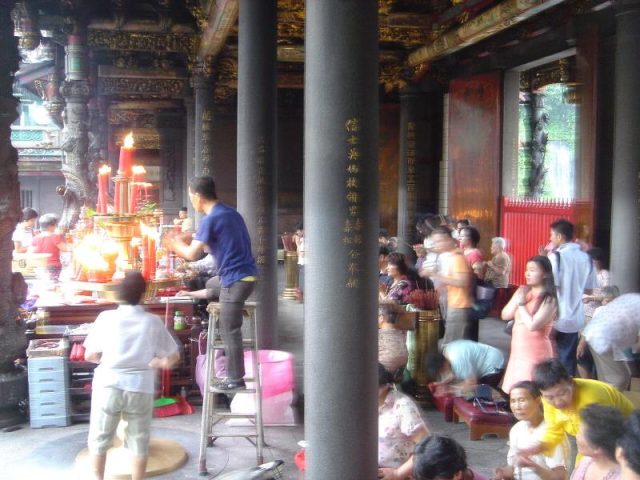
Shilin Night Market is Taipei after dark. When the day’s heat fades, the sizzle of woks, the murmur of haggling, and the smell of five-spice powder take over. It’s crowded, loud, and exactly as Taipei has always been.
The market’s beginnings
In the 1890s, Shilin was a handful of stalls on the edge of a sleepy town. Taipei grew; the market grew with it. By the 1950s, the alleys were packed with vendors selling rice, bolts of cloth, and kitchen knives. The war changed the buildings, not the people who kept coming.
What you’ll find
Clothes hang from hooks, phone cases glitter under fluorescent lights, and second-hand books lean in precarious stacks. But the food stalls are the reason everyone is here.
Walk past the grills and you’ll see:
oysters fried in a crust of sweet potato starch
bubble tea with tapioca pearls the size of marbles
scallion pancakes folded into quarters
meatball soup steaming in porcelain bowls
hot-pot broths that have simmered for hours
Most dishes are cooked in front of you. You can watch the oil bubble, the dough stretch, the sauce thicken.
The space itself
The market is a warren of low ceilings and tight corners. Staircases connect the upper and lower levels; underground corridors were added to spread the crowd. The lights are bright, the ceilings are high where they can be, but the alleys stay narrow—just wide enough for two people to pass.
When to go
Friday and Saturday nights are busiest. Families share tables, tourists take photos, vendors shout prices. The noise doesn’t stop, the smells don’t fade, and the crowd doesn’t thin until after midnight.
Weekday evenings are quieter. You can still eat everything, but you might actually hear the person next to you.
Who comes here
An old man who remembers the market before the war. A student grabbing a NT$50 snack between classes. A couple with a toddler on one hip and a shopping bag on the other. They all move at the same slow pace, stopping to point, to taste, to argue over the last piece of fried chicken.
What to expect
The crowd will press in. The smells will change every three steps—garlic, then soy, then something sweet. You’ll hear Mandarin, Taiwanese, English, Japanese. No one will rush you, but no one will wait forever either.
Bring small bills. Bring an empty stomach. Bring patience for the crush.
Why it matters
Shilin is not a museum. It’s not a curated experience. It’s a place where Taipei eats, shops, and argues every night. The stalls are real, the food is real, the chaos is real. That’s why it’s still here after 130 years.
When you’re in Taipei, skip the malls once. Go to Shilin after dark. Let the crowd swallow you. Taste the food. Watch the city move around you. That’s how you’ll see Taipei the way Taipei sees itself.