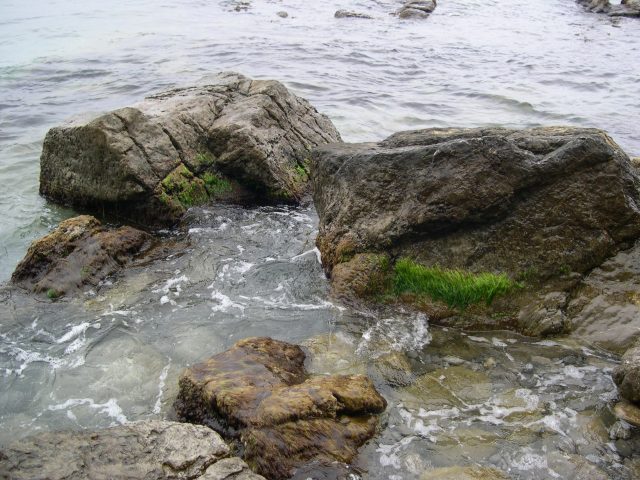
Nikita Lighthouse stands where the Crimean mountains slope into the sea, the air thick with pine and salt. Built in 1862, it was meant to guide ships through these waters. The location wasn’t chosen by chance—the rocky Nikita Cape juts into the waves, offering a clear view of the horizon. For over 170 years, it has stood through wars, changing empires, and earthquakes, its light never faltering.
The lighthouse is simple in design, built for function. The white stone tower, twenty meters tall, was made from local materials. Its top holds a Fresnel lens, once a technological marvel. Now automated, its beam reaches twenty nautical miles, though no keepers tend it anymore. Around the tower, the keeper’s house, storage sheds, and workshops still stand.
Reaching the lighthouse takes effort. From Yalta, you follow the coast east, past vineyards and dachas, until the road narrows. The last stretch is a walk through pines and juniper, where the wind and the sea are the only sounds. The trail steepens, and then, between the trees, the white tower appears.
From the top, the view is worth the climb. Waves crash against the rocks below. On clear days, the Turkish coast shimmers faintly in the distance. At dusk, the lighthouse flickers to life, its beam sweeping the water.
The lighthouse has seen history. During the Crimean War, naval gunfire scarred its tower. In World War II, German forces tried to destroy it to blind Soviet ships, but it survived. After the war, it was restored. Today, its light still guides passing vessels, though its role has changed.
Legends linger here. Some say the keeper’s house still echoes with footsteps. Others claim ghostly lights appear on the rocks during storms. These stories reflect its meaning—it was never just a building, but part of the lives of sailors, keepers, and fishermen.
Nikita Lighthouse remains untouched by mass tourism. No crowds, no souvenir stalls, no loud guides. It’s a place for solitude, history, or the sea’s quiet rhythm. You can climb the tower, touch the lens, then sit on the rocks and listen to the waves.
The sea, the sky, and the light that has burned every night for generations—these are what matter here. People come not to see a monument, but to feel something steady in a world that never stops.