Independence Square in Basseterre is one of those places where the past lingers just beneath the surface. It doesn’t announce itself with grand monuments or towering statues, but if you stand in the center and look around, you’ll notice the layers of history embedded in its quiet corners. The square was originally laid out in the 18th century as Pall Mall Square, a name that hints at its colonial origins, when Basseterre was a bustling hub of sugar trade and British administration. Over time, it became a gathering place for markets, public announcements, and even the occasional execution—a grim reminder of the era’s harsh realities. When Saint Kitts and Nevis gained independence in 1983, the square was renamed to mark the occasion, though its physical appearance has changed little since those earlier days.
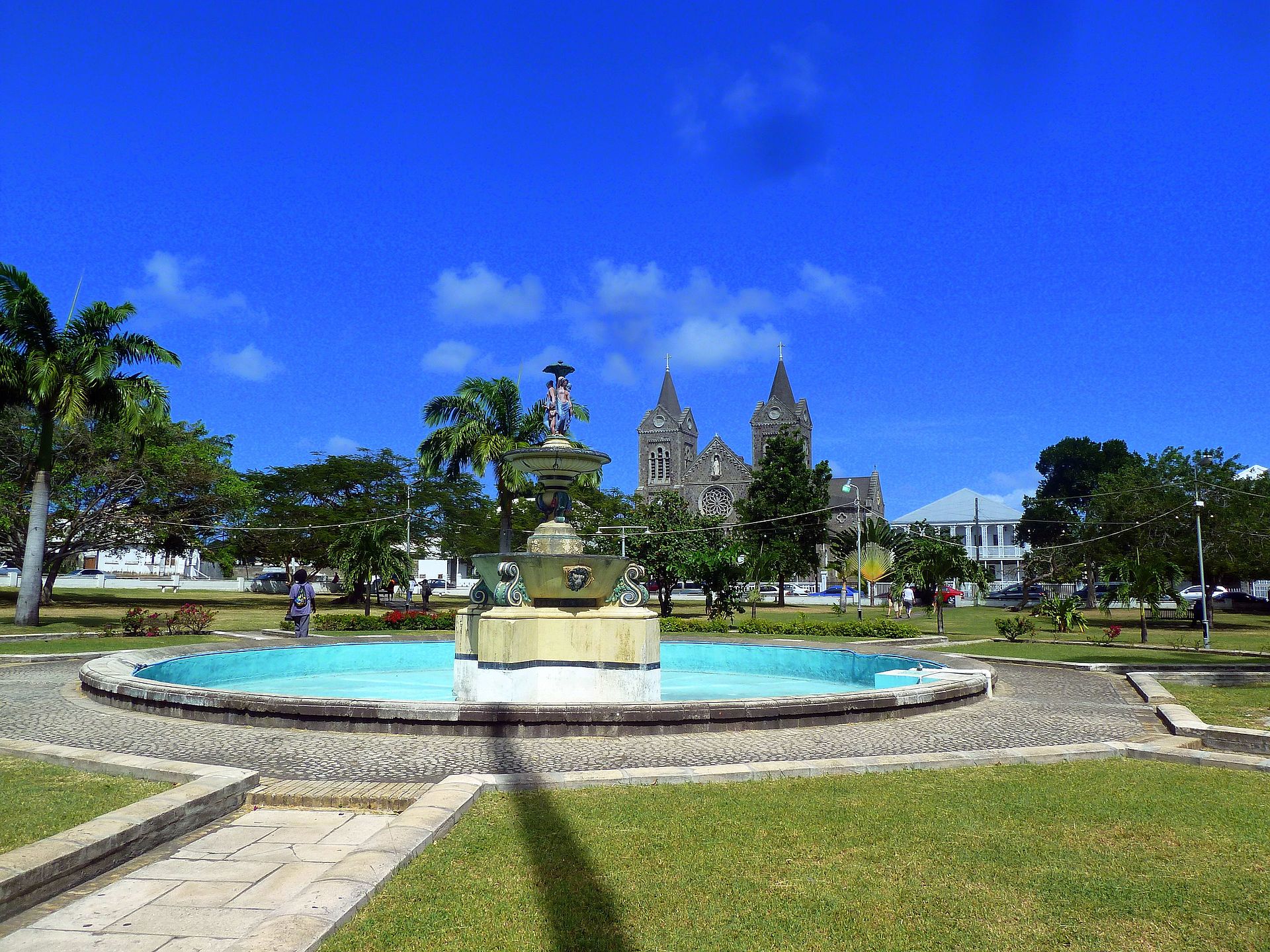
The layout of Independence Square is simple, almost understated. A central fountain, added in the 19th century, serves as a focal point, though it’s often dry these days. Around it, a grid of paved walkways connects the surrounding buildings, most of which date back to the colonial period. The architecture here is a mix of Georgian and Caribbean influences, with wooden shutters, wide verandas, and pastel-colored facades that have weathered hurricanes and time alike. Some of the buildings now house government offices, while others have been repurposed as cafes or small shops, their interiors retaining high ceilings and thick walls that once kept the heat at bay.
One of the most striking features of the square is the absence of modern intrusions. There are no neon signs, no towering glass structures—just the same low-rise buildings that have stood here for generations. This gives the place a timeless quality, as if the 20th century barely touched it. On weekdays, the square is a quiet spot, frequented mostly by civil servants on their lunch breaks or tourists pausing to take photos. But on weekends, especially during festivals or market days, it comes alive with vendors selling fresh produce, handmade crafts, and local snacks like sugar cakes or tamarind balls. The air fills with the scent of spices and the sound of laughter, a reminder that this space still serves its original purpose as a meeting point for the community.
The square’s history is closely tied to the island’s complex past. During the colonial era, it was a place where enslaved Africans were bought and sold, a fact that’s rarely spoken about but impossible to ignore when you know the stories. Later, it became a stage for political rallies and protests, particularly during the push for independence in the mid-20th century. Today, there are no plaques or memorials explicitly acknowledging these events, but the square itself feels like a silent witness to them. Locals might point out the old courthouse on the eastern side, where legal battles over land and freedom were once fought, or the Anglican church nearby, which played its own role in the island’s social hierarchy.
For visitors, Independence Square offers more than just a photo opportunity. It’s a place to sit on one of the benches and watch the rhythm of daily life unfold. In the early morning, elderly men gather to play dominoes under the shade of the trees, their games accompanied by the clink of tiles and the occasional burst of laughter. By midday, the square is busier, with schoolchildren cutting through on their way home and office workers hurrying to grab a quick bite. In the late afternoon, the light softens, casting long shadows across the pavement, and the square takes on a golden hue that makes even the most ordinary moments feel a little magical.
The surrounding streets add to the square’s charm. Just a short walk away, you’ll find the Circus, Basseterre’s other famous landmark, with its Victorian-style fountain and clock tower. The contrast between the two spaces is interesting—where the Circus feels more polished and tourist-oriented, Independence Square retains a raw, lived-in quality. Nearby, the National Museum occupies a former Treasury building, its exhibits offering a deeper dive into the island’s history, from pre-Columbian times to the present. But even without stepping inside, the square itself tells a story, if you’re willing to listen.
What makes Independence Square special isn’t just its age or its architecture, but the way it has adapted over time. It’s not frozen in the past; it’s a living space that continues to evolve. The same benches that once hosted colonial officials now host students cramming for exams. The same pathways that saw processions of enslaved people now see parades celebrating independence. This duality is what gives the square its depth. It’s a place where history isn’t just remembered—it’s still being made, one ordinary day at a time.
If you visit, don’t rush. Take a moment to sit by the fountain, even if it’s empty, and imagine the generations of people who have done the same. Notice the way the light filters through the trees, or how the sound of the town changes as the day goes on. Independence Square isn’t the kind of place that demands attention, but it rewards those who pay it. In a world where so many historic sites feel like museums, this one still feels like home.