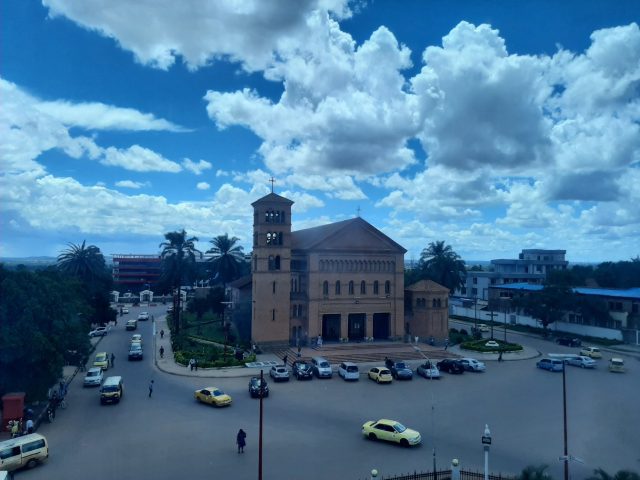
The National Museum of Lubumbashi is one of those quiet places where history isn’t just told through exhibits but through the stillness of its halls and the faint marks of time on its walls. Tucked in the heart of the city, it stands where colonial Élisabethville once thrived, now part of the slower rhythm of modern Lubumbashi. Unlike the grand repositories of artifacts found in European or American museums, this one doesn’t draw crowds or host flashy displays. Instead, it’s a modest building holding fragments of Katanga’s past—its people, its landscapes, and its industrial legacy.
Katanga has always been a place apart in Congo’s story. Rich in minerals, it drew the attention of European powers long before the country gained independence. In the early 20th century, under Belgian rule, the region became a hub of mining activity, and Lubumbashi—then Élisabethville—emerged as a key industrial center. The museum was born from an effort to preserve that era, when the city symbolized both progress and the harsh realities of colonial exploitation. Its collections reflect the tension between tradition and change, between the land’s natural wealth and the forces that sought to control it.
Inside, the exhibits offer glimpses into different layers of Katanga’s history. Traditional artifacts—wooden masks, pottery, tools, and textiles with intricate patterns—speak to the craftsmanship and culture of the region’s peoples, a way of life that persisted alongside colonial influence. Then there are the relics of industry: faded photographs of mines, mineral samples, and the tools of geologists and miners. These remind visitors that copper and cobalt didn’t just shape Katanga’s economy—they made it a place of both opportunity and conflict.
The museum’s architecture is part of its story. Built in the mid-20th century, when Lubumbashi was already an industrial powerhouse but still bore the imprint of its colonial past, the building has the straightforward lines of functionalist design. Inside, the rooms are airy, with high ceilings and large windows that let in natural light. The space feels uncluttered, almost understated, as if the exhibits are meant to speak for themselves rather than be overshadowed by their surroundings.
One of the most compelling sections focuses on Katanga’s natural world. Stuffed animals—antelopes, birds, small predators—stand alongside displays of local flora, offering a glimpse into the region’s biodiversity. The exhibits highlight the ecosystems of nearby national parks, a reminder that Katanga is more than just mines and factories. Of course, the collection isn’t exhaustive; it doesn’t claim to capture everything. Instead, it provides a quiet introduction to a landscape that remains largely unexplored.
The museum plays a subtle but important role in preserving Congo’s complex history. There’s no glorification of the colonial era here, nor is there outright condemnation. The exhibits simply present the past as it was—messy, layered, and full of contradictions. For locals, it’s a place to connect with their roots, to understand how traditions evolved and why the city looks the way it does. For outsiders, it offers a different perspective on Congo, one that goes beyond headlines about conflict or poverty to reveal a place with deep cultural roots.
A visit doesn’t take long; the museum is small enough to explore in an hour or two. But rushing would be a mistake. The real value lies in lingering over the details: the old photographs, the yellowed documents, the faded fabrics. Each piece tells a story, waiting to be noticed. The museum isn’t pristine—some displays look dated, and the building shows its age. Yet that’s part of its charm. There’s no pretense here, no attempt to impress. It exists as it is, honest and unassuming.
Lubumbashi isn’t a city that sees many tourists, and the museum reflects that reality. It doesn’t chase trends or try to attract crowds. Instead, it stands as a quiet witness to history, a place where the past feels present in the simplest of ways. For those who find their way here, it offers something rare: a chance to step away from the noise of the city and into a story that’s still unfolding.