Kinabalu National Park is where Borneo’s wild heart reveals itself in all its untamed variety. Stretching across the northern reaches of Sabah, this protected expanse is dominated by Mount Kinabalu, the tallest peak between the Himalayas and New Guinea. The park spans over seven hundred square kilometers, its landscapes shifting dramatically from steamy lowland rainforests to mist-shrouded alpine meadows and jagged granite summits. It’s not just a sanctuary but a living record of evolution, where plants and animals have adapted in ways found nowhere else on earth.
The mountain itself rises to 4,095 meters, its slopes steeped in legend. For the Dusun people, Kinabalu has always been sacred, believed to be the resting place of ancestral spirits. The name translates loosely as "revered place of the dead," a reflection of its spiritual significance. Western explorers first documented the peak in the 19th century, when British colonial officer Hugh Low described it after a grueling expedition. Since then, Kinabalu has drawn scientists, botanists, and climbers, all drawn to its raw, unspoiled grandeur.
Established in 1964, the park was one of Malaysia’s first national reserves, created to safeguard its fragile ecosystems from logging and unchecked tourism. Today, it’s a UNESCO World Heritage Site, recognized for its staggering biodiversity. Over five thousand plant species thrive here, including the infamous Rafflesia, a parasitic flower that blooms into a meter-wide, foul-smelling spectacle. The forests teem with life—hundreds of bird species, rare butterflies, and elusive mammals like orangutans, sun bears, and clouded leopards.
Climbing Kinabalu is an experience in itself, demanding but accessible to anyone with reasonable fitness. The standard route takes two days, beginning at the park gates and winding eight kilometers uphill to Laban Rata resthouse, perched at 3,270 meters. After a short night’s sleep, climbers set out before dawn to reach the summit by sunrise. The final ascent is steep and exposed, with ropes fixed along the granite slabs. The reward is a view that lingers in memory—endless jungle stretching below, swallowed by clouds, and the quiet pride of standing on Borneo’s roof.
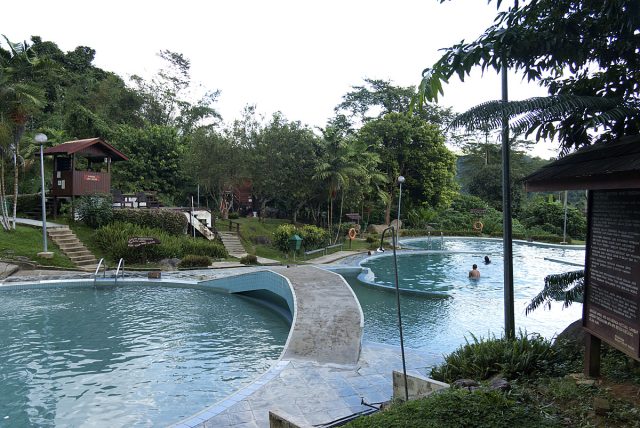
Yet the park offers far more than just the mountain. Gentler trails weave through its lower slopes, revealing hidden waterfalls like Lidon, where a short hike leads to cascading streams and the chance to spot giant insects or hear the calls of macaques. Nearby, the Poring Hot Springs provide a soothing contrast, with natural sulfur pools steaming under the jungle canopy. A canopy walkway here suspends visitors above the treetops, offering a bird’s-eye view of the emerald expanse below.
For those curious about the science behind the scenery, the park’s research center offers insights into its delicate ecosystems. Scientists study everything from climate change impacts to the behavior of rare species, and guided walks explain the bizarre adaptations of carnivorous plants or the putrid scent of the Rafflesia, which lures flies for pollination. The orchid season, from February to April, transforms the forest into a living gallery, with delicate blooms clinging to mossy branches.
The atmosphere in Kinabalu is one of quiet reverence. Unlike crowded tourist hotspots elsewhere in Southeast Asia, the park feels remote and untouched. Days pass to the rhythm of rustling leaves and distant birdcalls, while nights are cool and still, often shrouded in mist that slowly lifts with the morning sun. Accommodations are simple but thoughtful—wooden lodges with verandas overlooking the forest, where a cup of tea after a long hike feels like a small luxury.
This is a place that demands patience. There are no quick snapshots or hurried visits; the real magic unfolds slowly, whether watching clouds drift between peaks or listening to the forest’s strange, shifting sounds. Kinabalu isn’t just a destination—it’s an encounter with something older and wilder than human history. And for many who visit, it’s not a place you leave behind, but one you carry with you, long after the last trail fades into memory.