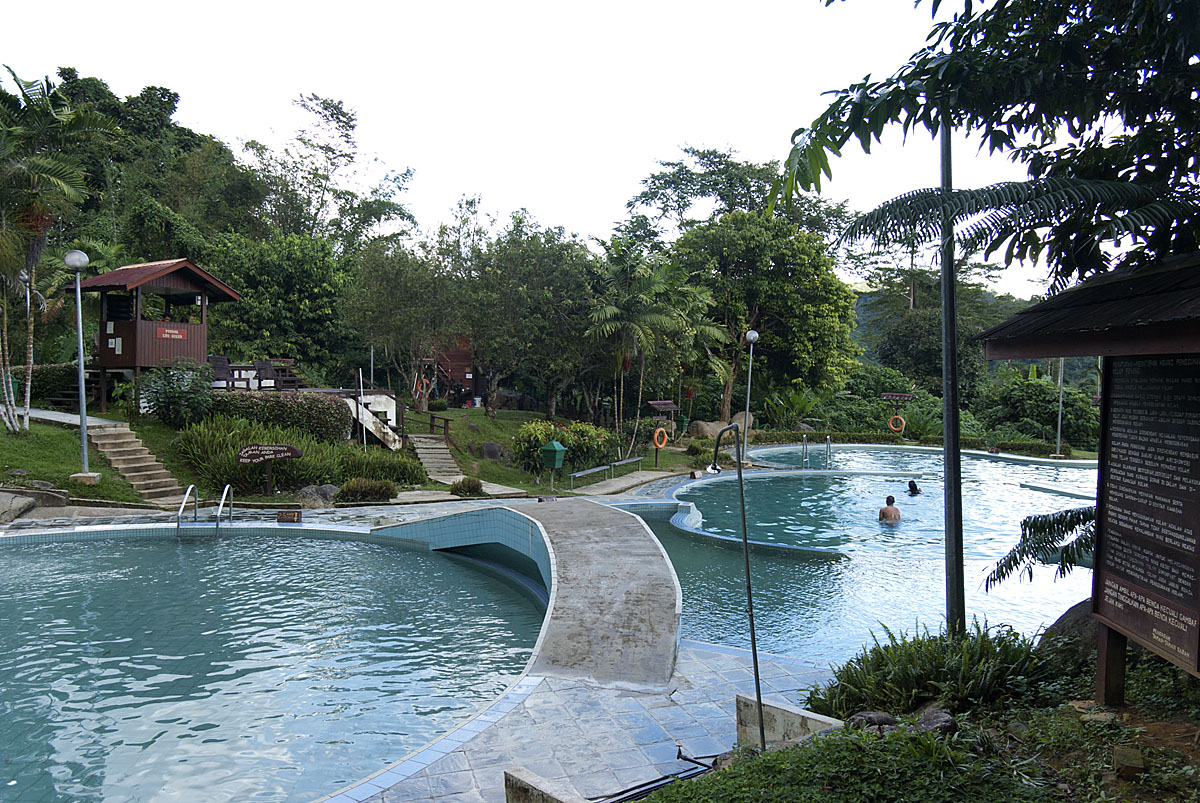
Nestled in the foothills of Mount Kinabalu, Poring Hot Springs feels like a hidden sanctuary where the earth’s warmth meets the quiet rhythm of the rainforest. The name itself comes from the Dusun word for "hot," a simple description that barely hints at the place’s understated magic. Here, mineral-rich waters bubble up from deep underground, their temperatures reaching a near-scalding sixty degrees Celsius, yet the pools are carefully arranged to offer everything from steaming soaks to comfortably warm dips. The springs aren’t just a tourist attraction—they’ve been a natural refuge for centuries, long before anyone thought to build wooden walkways or designate them as part of Kinabalu Park.
The history of Poring is quietly layered, like the sediment in its waters. British colonial settlers in the early 1900s were among the first to recognize the therapeutic potential of the springs, setting up basic bathing facilities that still echo in the modest architecture today. During World War II, the occupying Japanese forces used the site as a makeshift recovery center for wounded soldiers, drawn by the same healing properties that continue to attract visitors. After the war, the springs gradually became a retreat for locals and travelers alike, though they never lost their raw, unpolished charm. Now part of Kinabalu Park—a UNESCO World Heritage Site—Poring remains a place where nature, rather than development, dictates the pace.
The pools themselves are unassuming, designed more for function than spectacle. Wooden decks and bridges weave through the greenery, leading to open-air baths where the steam rises into the humid air. Some pools are tucked beneath the shade of towering trees, while others sit in small clearings, their surfaces rippling with the occasional breeze. The water’s mineral content—rich in sulfur and calcium—gives it a faint, earthy scent, and regulars swear by its benefits for skin, joints, and circulation. There’s no grand spa here, just a series of simple, well-maintained pools where the real luxury is the absence of hurry. Mornings are especially peaceful, with mist curling over the water and the forest waking up around you.
For those willing to venture beyond the springs, the canopy walkway offers a different perspective on the rainforest. Suspended nearly forty meters above the ground, the narrow bridge sways gently as you cross, its planks creaking underfoot. The view from the top is worth the slight vertigo—an endless sea of green, punctuated by the occasional flash of a hornbill’s wings or the distant silhouette of Mount Kinabalu. The walkway isn’t for the faint-hearted, but it’s a rare chance to experience the jungle from above, where the air feels lighter and the sounds of the forest take on a different quality. On clear days, the mountain looms in the distance, its peak often shrouded in clouds, a reminder of the vastness of the landscape.
The rainforest around Poring is alive in ways that are easy to miss if you don’t slow down. Orchids cling to tree trunks, their delicate blooms contrasting with the gnarled bark, while ferns unfurl in the damp shade. The park is home to an astonishing variety of wildlife, though much of it stays hidden—pig-tailed macaques crashing through the branches, the occasional slow loris moving silently at night, or the iridescent flash of a butterfly’s wings. For those who want to explore deeper, trails lead to waterfalls like Latakan, where the cool spray offers a refreshing counterpoint to the heat of the springs. The paths vary in difficulty, from gentle strolls to more challenging hikes, but all of them reward patience with glimpses of a world that feels untouched.
What makes Poring special isn’t just its natural beauty, but the way it encourages you to step out of time. There are no crowds here, no blaring music or neon signs—just the steady hum of insects, the rustle of leaves, and the occasional laughter of families picnicking under the trees. Locals often visit for the day, bringing baskets of food and settling in for hours of soaking and chatting. Tourists, too, find themselves lingering longer than planned, lulled by the warmth of the water and the slow, unhurried atmosphere. Evenings are particularly atmospheric, with the springs shrouded in a thin veil of steam and the forest alive with the calls of nocturnal creatures. It’s the kind of place where you might start the day with a brisk hike and end it floating in a pool, watching the stars appear one by one.
Poring isn’t a destination for those seeking luxury or entertainment. There are no high-end resorts or gourmet restaurants, just a handful of basic guesthouses and campsites for those who want to stay overnight. What it offers instead is something rarer—a sense of connection to a place that hasn’t been sanitized for tourists. The water’s healing properties are part of the appeal, but so is the chance to disconnect, to let the rhythm of the rainforest replace the noise of daily life. Some visitors come for a single afternoon, while others stay for days, using the springs as a base for exploring the surrounding area. The nearby Rafflesia Conservation Area, where the world’s largest flower blooms in all its pungent glory, is a short trip away, as are villages where traditional Dusun culture is still very much alive.
The springs are also a natural starting point for adventures in Kinabalu Park. Mount Kinabalu, the tallest peak in Southeast Asia, dominates the horizon, and many travelers use Poring as a warm-up before attempting the climb. Others come simply to marvel at the mountain’s sheer scale, its slopes a patchwork of forest and granite. For those who prefer to keep their feet on the ground, there are plenty of other ways to explore—rafting down the Padas River, trekking through dense jungle, or visiting the Desa Dairy Farm, where the views of the surrounding hills are almost as impressive as the fresh milk. The region’s mix of natural wonders and cultural richness makes it easy to fill a week with activities, though many find themselves happiest when doing nothing at all.
In the end, Poring Hot Springs is more than just a place to soak—it’s a reminder of how rare it is to find a corner of the world that feels both wild and welcoming. The springs have been a gathering place for generations, a spot where the land’s generosity is on full display. Whether you come for the water, the wildlife, or the quiet, the experience lingers long after you’ve left. It’s the kind of place that doesn’t need to shout to be remembered, where the simplest moments—a dip in warm water, the sight of a butterfly landing on your shoulder, the sound of rain on leaves—are the ones that stay with you. In a region known for its dramatic landscapes, Poring offers something just as valuable: a chance to slow down and listen.