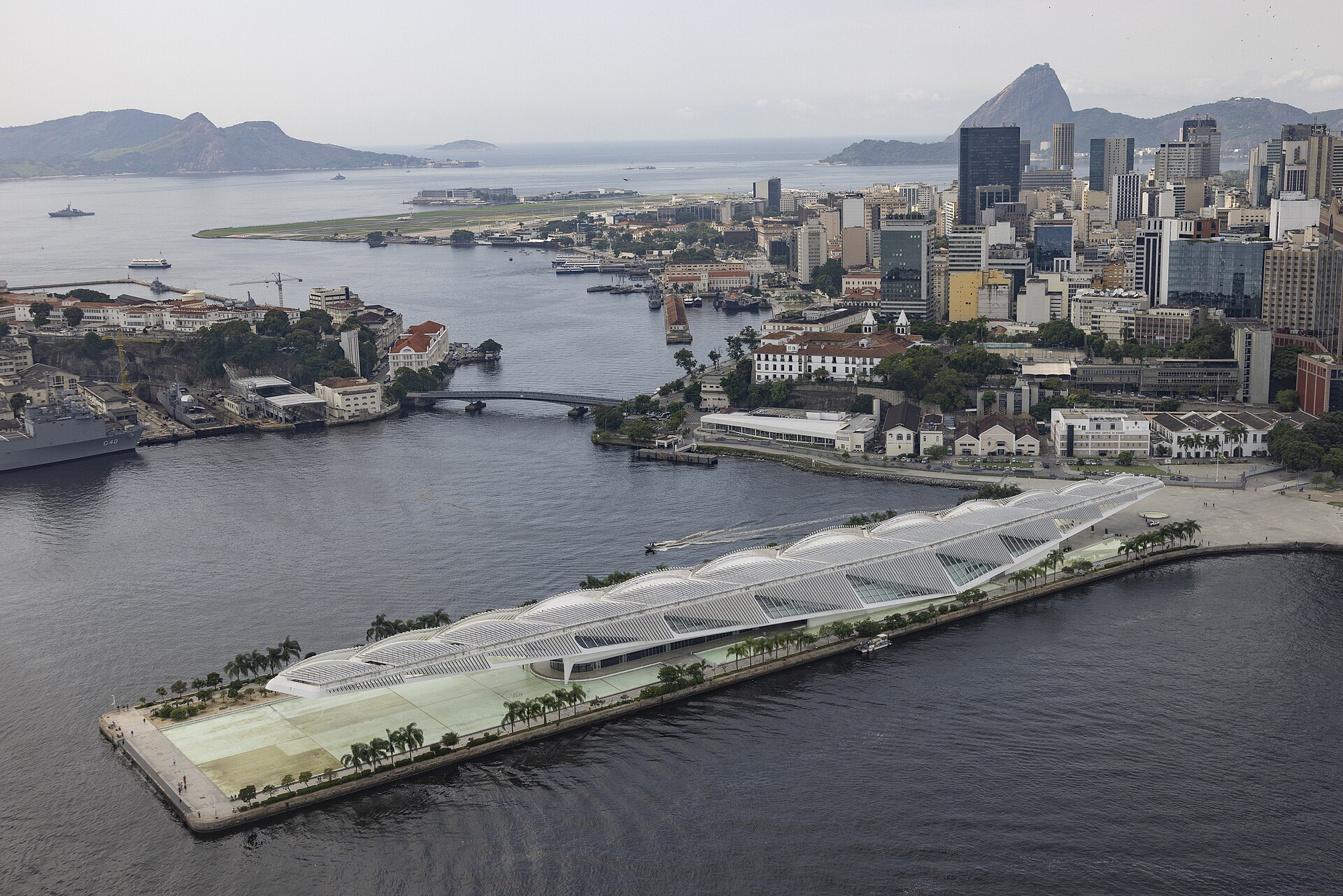
The Museum of Tomorrow in Rio de Janeiro is where science and architecture collide to make the future feel tangible. Perched along the Guanabara Bay waterfront, it stands in the revitalized Porto Maravilha district, an area that was once Rio’s industrial fringe. Today, the neighborhood pulses with modern energy, its streets lined with parks and promenades that offer sweeping views of the bay where Portuguese ships first dropped anchor centuries ago. The museum itself looks like something out of a sci-fi film—a sleek, skeletal structure that seems to hover above the ground, its futuristic design drawing the eye with its organic, almost insect-like forms.
Designed by Spanish architect Santiago Calatrava, the building is a masterpiece of contemporary engineering. Its long, rib-like steel supports stretch toward the sky, while glass facades mirror the shifting colors of the water and clouds. Inside, the space feels fluid and immersive, with no rigid walls or corridors to confine the experience. Instead, exhibits flow seamlessly into one another, inviting visitors to engage rather than observe passively. The museum’s core idea is simple: to show how today’s choices shape tomorrow’s world, not through dry data, but through emotion and interaction.
The exhibits are organized around five themes: Cosmos, Earth, the Anthropocene, Tomorrow, and Us. Each section explores a different facet of humanity’s future. In the Cosmos hall, visitors trace the origins of the universe, while the Anthropocene exhibit confronts the ways human activity is reshaping the planet. Interactivity is key here—you can experiment with climate models, see projections of rising sea levels, or even design a city of the future. The museum doesn’t offer easy answers; it poses questions. What kind of world do we want to live in? What legacy will we leave for those who come after us?
The story of the museum’s location is as compelling as its exhibits. Porto Maravilha was once a neglected industrial zone, filled with abandoned warehouses and decaying docks. In the early 2000s, city planners set out to transform it into a cultural hub, and the Museum of Tomorrow became the centerpiece of that vision. When it opened in 2015, just ahead of the Olympics, it wasn’t just another tourist attraction—it became a symbol of Rio’s reinvention, a statement about the city’s future.
Outside, the museum’s plaza is a lively public space, hosting festivals, concerts, and open-air exhibitions. Nearby stands the iconic *Ethyl* sculpture—a massive hand cradling a globe—another landmark of the revitalized waterfront. A short walk along the promenade leads to Sugarloaf Mountain or the historic colonial buildings of the old port, where the past and present coexist. The Museum of Tomorrow isn’t an isolated monument; it’s woven into the fabric of the city, a place where locals and visitors alike gather to reflect on the future without losing sight of the present.
Inside, a café offers panoramic views of the bay, where sailboats glide past and the city’s skyline stretches into the distance. The museum also hosts lectures and debates on topics ranging from climate change to artificial intelligence, featuring scientists, artists, and futurists. The exhibits evolve over time, incorporating new research and societal shifts, ensuring that even repeat visitors always find something fresh. It’s a place that stays dynamic, much like the future it explores.
Rio de Janeiro is a city of contrasts—where luxury beaches sit beside hillside favelas, and colonial architecture rubs shoulders with modern skyscrapers. The Museum of Tomorrow fits perfectly into this landscape. It doesn’t try to impose order on the city’s chaos; instead, it offers a new way of seeing the world. Here, the boundaries between past, present, and future blur. Everything is connected, and the choices we make today ripple forward. That’s why the museum resonates so deeply, not just with tourists but with *Cariocas*—Rio’s residents. For them, it’s more than a landmark; it’s a space to imagine what their city could become in ten, twenty, or fifty years.
A visit to the Museum of Tomorrow isn’t just a tour—it’s a journey that lingers in your mind long after you leave. Walking through its halls, you start to see everyday actions differently: how you use water, what you buy, how you move through the city. The museum doesn’t preach; it provokes thought. And perhaps that’s its greatest strength. It doesn’t hand out solutions but helps each visitor find their own answers to the questions that matter. After all, the future isn’t some distant abstraction—it’s something we’re shaping right now, with every decision we make.