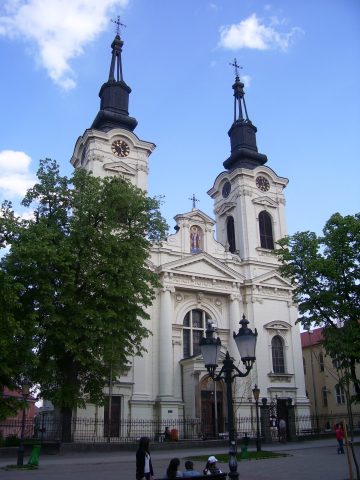
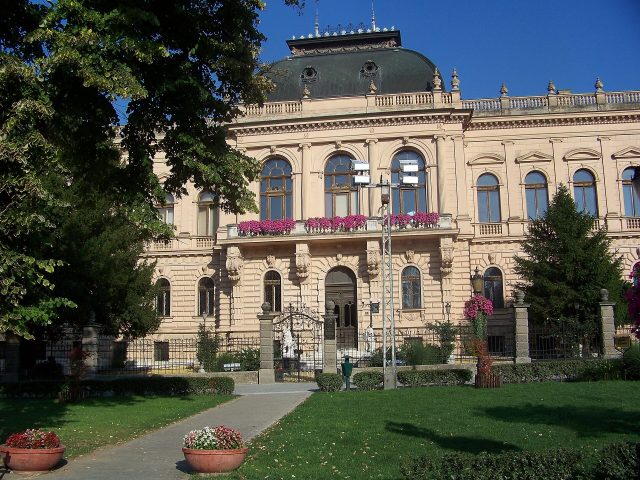
Sremski Karlovci is a town where time seems to move at its own pace, tucked along the banks of the Danube. Its quiet streets, lined with Baroque churches and tiled-roof houses, feel like an open-air museum, but the real heart of its history beats inside the local museum. Housed in a former merchant’s home, the building itself is a piece of the past—thick walls, high ceilings, and a staircase worn smooth by generations of footsteps. There’s no grand spectacle here, just a careful collection of objects that tell the story of a place shaped by centuries of ordinary lives and extraordinary moments.
The museum’s exhibits unfold without hurry, each item chosen for its ability to speak to a different chapter of the town’s history. Old maps and photographs trace the evolution of Sremski Karlovci, while everyday objects—tools, clothing, household items—reveal how its people lived, worked, and adapted over time. There’s no clutter, no overwhelming display of artifacts; instead, each piece feels like a quiet invitation to look closer, to imagine the hands that once held it.
One of the most compelling sections is dedicated to the Karlovci Gymnasium, one of Serbia’s oldest schools. Founded in the 18th century, it was more than an educational institution—it was a hub of intellectual and cultural life, shaping the minds of future scholars, writers, and leaders. The museum preserves this legacy through textbooks, student notebooks, scientific instruments, and personal belongings of both teachers and pupils. Walking through these exhibits, it’s easy to sense the weight of the gymnasium’s influence, not just on the town but on the entire region.
The town’s deep connection to the Serbian Orthodox Church is another cornerstone of its identity, and the museum reflects this in a dedicated collection. Sremski Karlovci was a spiritual center for Serbs under Habsburg rule, hosting pivotal church councils that shaped religious and national life. The exhibits include ecclesiastical robes, icons, and sacred texts, some written in Church Slavonic, their pages yellowed with age. These artifacts aren’t just relics; they’re reminders of how faith sustained communities through turbulent times, offering both solace and a sense of continuity.
Wine has long been part of Sremski Karlovci’s story, and the museum pays homage to this tradition with a display on local viticulture. The town’s vineyards were once renowned, and winemaking was both an economic lifeline and a cultural practice passed down through families. The exhibit features old presses, barrels, bottles, and labels, each telling a story of craftsmanship and adaptation. It’s a testament to how deeply intertwined wine was with daily life, from harvest celebrations to the quiet rituals of sharing a bottle with neighbors.
A reconstructed 19th-century home offers a glimpse into domestic life, its rooms furnished with period pieces—wooden tables, handwoven textiles, family portraits, and simple tools. The space feels lived-in, as if the inhabitants just stepped out for a moment. It’s easy to picture a family gathered around the hearth, children playing on the floor, or a grandmother spinning wool by the window. These details make the past feel tangible, almost within reach.
What makes this museum special is its lack of pretense. There are no flashy displays or crowds jostling for space—just a quiet dialogue between the past and those willing to listen. The guides, often locals with a deep knowledge of the town’s history, share stories that bring the exhibits to life. Their voices, along with the objects themselves, create a sense of connection, as if the town’s history isn’t just something to observe but something to feel.
Sremski Karlovci has always been a place where the past lingers, not as a distant memory but as a living presence. The museum captures this perfectly, offering a space where visitors can step away from the rush of modern life and simply be present with history. It’s not about grand narratives or dramatic revelations; it’s about the quiet accumulation of moments that define a place and its people. And in that quiet, there’s something deeply moving—an invitation to slow down, to look, and to remember.