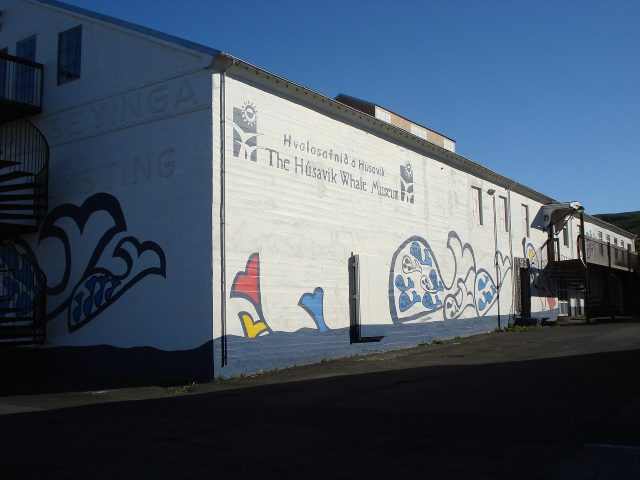
Húsavík has long been known as Iceland’s whaling capital, a title that carries more weight than mere words. For centuries, this small town on the country’s northern coast relied on whaling—not just as a way to survive, but as a cornerstone of its economy and identity. The Whale Museum, tucked into the heart of Húsavík, tells this story without embellishment or judgment. It doesn’t seek to justify or condemn the practice, but instead presents it as a raw, unfiltered part of the town’s history, one that shaped its people, culture, and even its architecture.
The museum is housed in a weathered wooden building that feels like a relic of the past. Constructed in the early 20th century, it once served as a warehouse for a local whaling company. The scent of salt and fish still lingers in the air, a quiet reminder of the days when the town pulsed with the rhythm of whaling ships coming and going. Inside, the exhibits are arranged to give visitors a sense of what the work entailed—from the preparation of harpoons to the grueling process of butchering whales on the shore. There’s no grandeur here, just the straightforward presentation of tools, photographs, and documents that speak to the harsh realities of the trade.
One of the most compelling aspects of the museum is its focus on the people behind the industry. Whaling wasn’t just the work of hunters at sea; it involved entire communities. Women processed whalebone and blubber, children helped with smaller tasks, and dockworkers played their part in the operations. The exhibits include personal items—letters, diaries, and tools—that belonged to those who lived this life. A rusted harpoon, once wielded by a seasoned Húsavík captain, sits alongside a faded photograph of a whaling crew from the early 1900s. These details make it clear that whaling wasn’t just a job; it was a way of life that bound families and neighbors together.
The museum doesn’t shy away from the more contentious aspects of whaling, either. It explores how attitudes toward the practice have shifted over time, both in Iceland and globally. Visitors can see newspaper clippings from different eras, documenting debates over bans, quotas, and the ethical dilemmas of the industry. The exhibits don’t take a definitive stance but instead invite reflection on how values change and how difficult it can be to reconcile tradition with modern concerns. It’s a nuanced approach, one that acknowledges the complexity of the issue without passing judgment.
A separate section of the museum is dedicated to the biology of whales and their role in the ocean’s ecosystem. Here, visitors can examine skeletons of different species, learn about their migration patterns, and understand their behaviors. A full skeleton of a humpback whale, recovered from Iceland’s coast, dominates the space, offering a stark reminder of the creatures at the center of this history. The exhibits present facts without bias, leaving visitors to draw their own conclusions about the importance of conservation and the ethical questions surrounding whaling.
Húsavík today is a town in transition. While its whaling past is still very much a part of its identity, the town has also become a hub for eco-tourism. Many visitors now come to see whales in their natural habitat, a shift that has brought new economic opportunities. The museum doesn’t frame these two realities as opposing forces but instead shows how they coexist. One exhibit highlights the growing popularity of whale-watching tours, which have become a major draw for the town. Photographs of tourists on boats, hoping to catch a glimpse of humpbacks or even the elusive blue whale, illustrate how the town’s relationship with these animals has evolved.
Walking through the museum leaves a lasting impression, one that lingers between fascination and unease. It’s a place that doesn’t seek to shock or lecture but instead presents history as it was—messy, complicated, and full of contradictions. There’s no attempt to soften the edges or offer easy answers. Instead, it encourages visitors to think about humanity’s relationship with nature and the marks we leave behind.
After leaving the museum, a stroll along Húsavík’s waterfront offers a tangible connection to its past. The old docks, rusted winches, and the ever-present scent of the sea serve as reminders of the town’s whaling days. Yet the town is far from stuck in the past. Tourists snap photos of the colorful houses, locals sip coffee in seaside cafés, and the harbor is filled with both fishing boats and whale-watching vessels. The Whale Museum doesn’t just preserve history; it helps visitors see how the past and present intertwine, shaping the town’s identity in ways that are still unfolding.