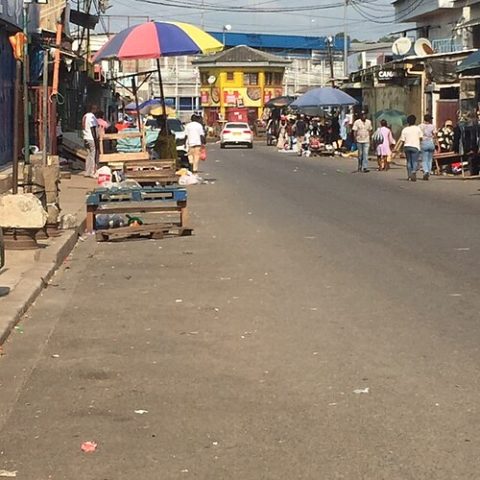
The Museum of Arts and Traditions sits in Ovendo, a suburb of Libreville. The building is low and unadorned, blending into the neighborhood. Inside, the air smells of wood and old cloth. There are no grand halls or dramatic lighting—just rooms where Gabon’s history is kept in objects, not words.
The exhibits focus on the Fang, Punu, and Mitsogo peoples. Masks and sculptures fill the cases, but the Fang reliquaries stand apart. These carved containers once held ancestral remains. Their designs show patterns repeated for generations, each line serving a purpose—some for protection, others for remembrance. The museum labels explain what the objects were used for: ceremonies, healing, or marking a life event.
A section shows the tools of daily work. Looms for weaving, clay pots shaped by hand, and carving knives worn smooth from use. One display includes a half-finished basket, its fibers still attached to the frame, as if the weaver just stepped away. Another shows a wooden stool in progress, the chisel marks visible where the carver stopped.
Contemporary art appears in temporary exhibitions. A recent show featured paintings where traditional motifs were redrawn in bold, uneven lines. One sculpture combined metal and raffia, materials from different eras. The artists’ statements talk about change—what it means to be Gabonese now, not just in the past.
Instruments take up one room. Drums of different sizes line the walls, their skins stretched tight or sagging with age. A ngombi, a harp-like instrument, rests in a glass case, its strings frayed. Nearby, a recording plays: the sound of a flute accompanying a song about the harvest. The label notes that some of these instruments are still used in villages today.
The building’s roof slopes like those of rural homes. Inside, the floors are concrete, but the walls have wooden panels carved with geometric patterns. The layout follows no strict path—visitors can walk from masks to textiles to instruments in any order. Some stop for a long time in front of a single case; others move quickly through the rooms.
Workshops happen here. A recent one taught basket-weaving using palm leaves. Another demonstrated how to play the ngombi. Schoolchildren visit on weekdays, their voices filling the halls as they ask questions about the objects. For many Gabonese, the museum is a place to see their own culture represented—something they might not find in books or on television.
After leaving, the objects stay with you. A mask’s blank eyes. The rough texture of a woven bag. The hollow sound of a drum when tapped. The museum doesn’t just show things—it shows how those things were used, why they mattered, and who made them. Because of that, the past doesn’t feel distant. It feels like something you could reach out and touch.