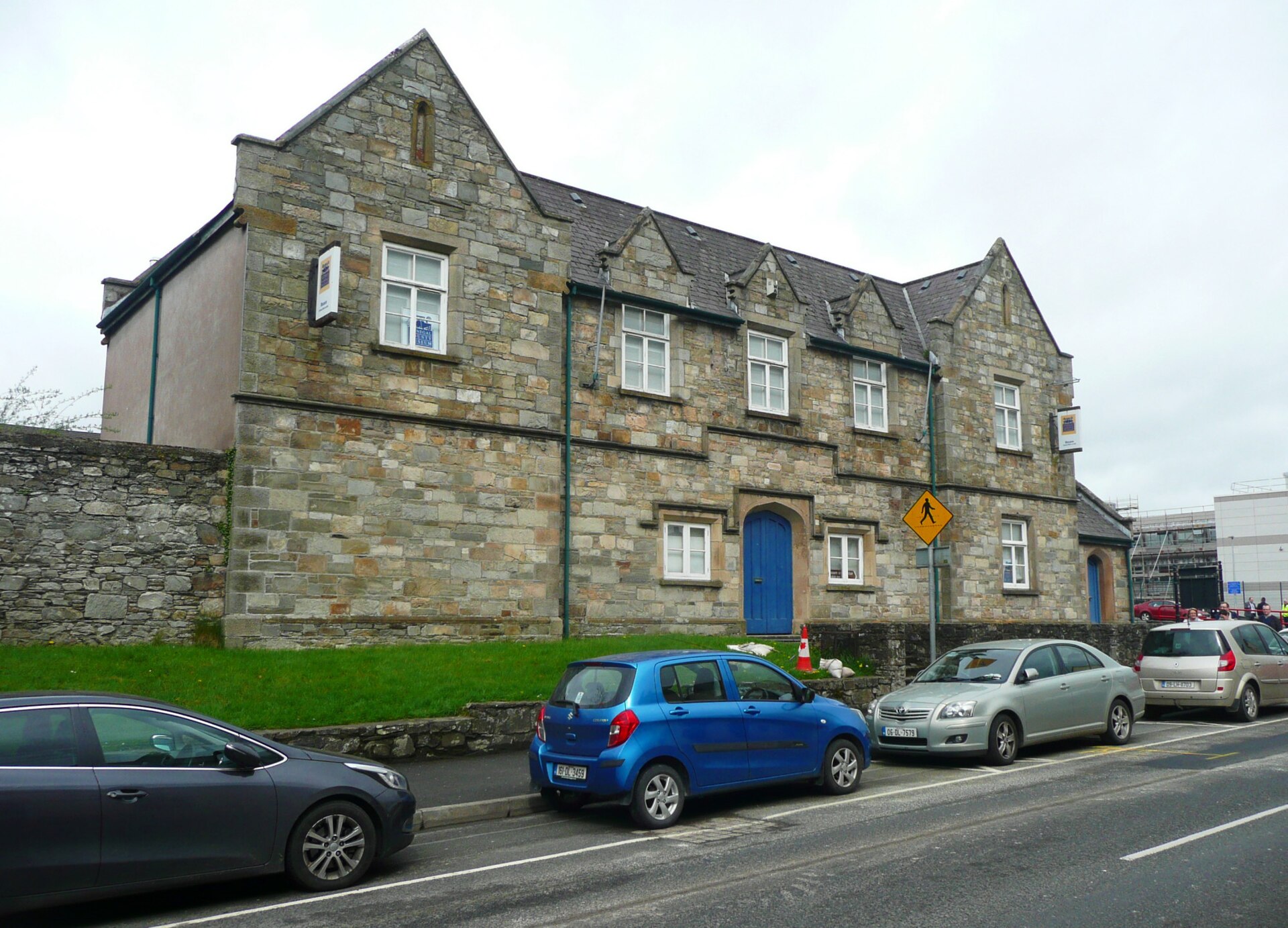
The Donegal County Museum in Letterkenny is one of those rare places where history feels less like a distant lesson and more like a conversation with the past. Housed in a former nineteenth-century prison, the building itself carries the weight of its own story. Thick stone walls, heavy iron doors, and narrow barred windows still hint at its original purpose, though today they frame exhibits that tell a far broader tale. The structure was built in 1843, a time when Letterkenny was still a small market town, and its imposing Gothic architecture was meant to convey authority. Now, instead of cells, its rooms hold artifacts that piece together the everyday lives of the people who shaped Donegal over centuries.
The museum’s collection spans from ancient Celtic settlements to the modern era, offering a quiet but thorough look at how life in the region has changed—or, in some ways, stayed the same. You’ll find simple objects that once filled ordinary homes: clay pots, wooden tools, coins worn smooth by use, and jewelry that might have been a family’s only luxury. One of the most sobering sections deals with the Great Famine of the 1840s, a period that left deep scars across Ireland. Here, personal letters, workhouse records, and even a child’s shoe serve as reminders of how quickly hardship could unravel lives. The exhibits don’t dramatize the suffering but let the objects speak for themselves, leaving visitors to fill in the gaps with their own imagination.
A separate gallery is devoted to Donegal’s cultural traditions, where the past feels almost tangible. Musical instruments take center stage—fiddles with worn fingerboards, bagpipes that once played at weddings and wakes, and flutes carved from local wood. Nearby, traditional clothing and handwoven textiles showcase the craftsmanship that has long been a point of pride in the region. The museum doesn’t just display these items; it gives them context, pairing them with old photographs of village fairs and recordings of long-dead musicians. The effect is immersive, as if the walls themselves are humming with the tunes that once filled the air.
The building’s architecture is worth lingering over. Designed in the Gothic Revival style, it was one of the first structures in Letterkenny to embrace the fashion for medieval-inspired design. High ceilings, pointed arches, and sturdy columns give the interior a sense of solemnity, though the craftsmanship is undeniable. After the prison closed in the 1920s, the building stood empty for decades, its future uncertain. By the late twentieth century, however, it found new life as a museum. The restoration was careful, preserving the original character while making space for exhibits. The result is a place where the past and present coexist without one overshadowing the other.
What makes the museum particularly engaging is its refusal to be static. Temporary exhibitions rotate through its galleries, covering everything from the history of fishing in Donegal’s coastal villages to the rise and fall of local industries. Occasionally, the museum hosts workshops where visitors can try their hand at traditional skills—weaving baskets from willow, spinning wool, or even learning a few steps of an Irish dance. For children, there are interactive programs that turn history into a hands-on experience, whether through dressing up in period clothing or handling replica artifacts. These moments of participation make the past feel less like something locked behind glass and more like a living tradition.
One of the museum’s most compelling sections is dedicated to the Irish language. Donegal is one of the few places where Gaelic is still spoken in daily life, and the exhibits here reflect that enduring connection. Yellowed manuscripts, old schoolbooks, and posters in Irish line the walls, while recordings of native speakers fill the room with the cadence of a language that has survived centuries of suppression. The museum doesn’t just preserve these artifacts; it actively supports efforts to keep the language alive, hosting talks and events that bring together linguists, writers, and local communities.
Walking through the museum, it’s hard not to feel the presence of the people who once passed through these same spaces—whether as prisoners, guards, or later, as visitors. There’s no attempt to romanticize the past or gloss over its hardships. Instead, the exhibits present history as it was: messy, resilient, and deeply human. The objects on display aren’t just relics; they’re fragments of lives that, in their own small ways, shaped the county. A chipped teacup, a farmer’s ledger, a child’s toy—each tells a story that might otherwise have been forgotten.
What sets the Donegal County Museum apart is its lack of pretension. It doesn’t try to dazzle with grandeur or overwhelm with scale. Instead, it invites visitors to look closely, to listen, and to connect. The building’s former life as a prison adds a layer of poignancy, a reminder that history isn’t just about kings and battles but about ordinary people navigating the circumstances they were given. In that sense, the museum isn’t just a record of Donegal’s past—it’s a quiet testament to the endurance of its people. And perhaps that’s why, long after you’ve left, the place lingers in your mind, not as a collection of exhibits, but as a conversation that’s still unfolding.