- Home
- South Africa
- Soweto
- Apartheid Museum
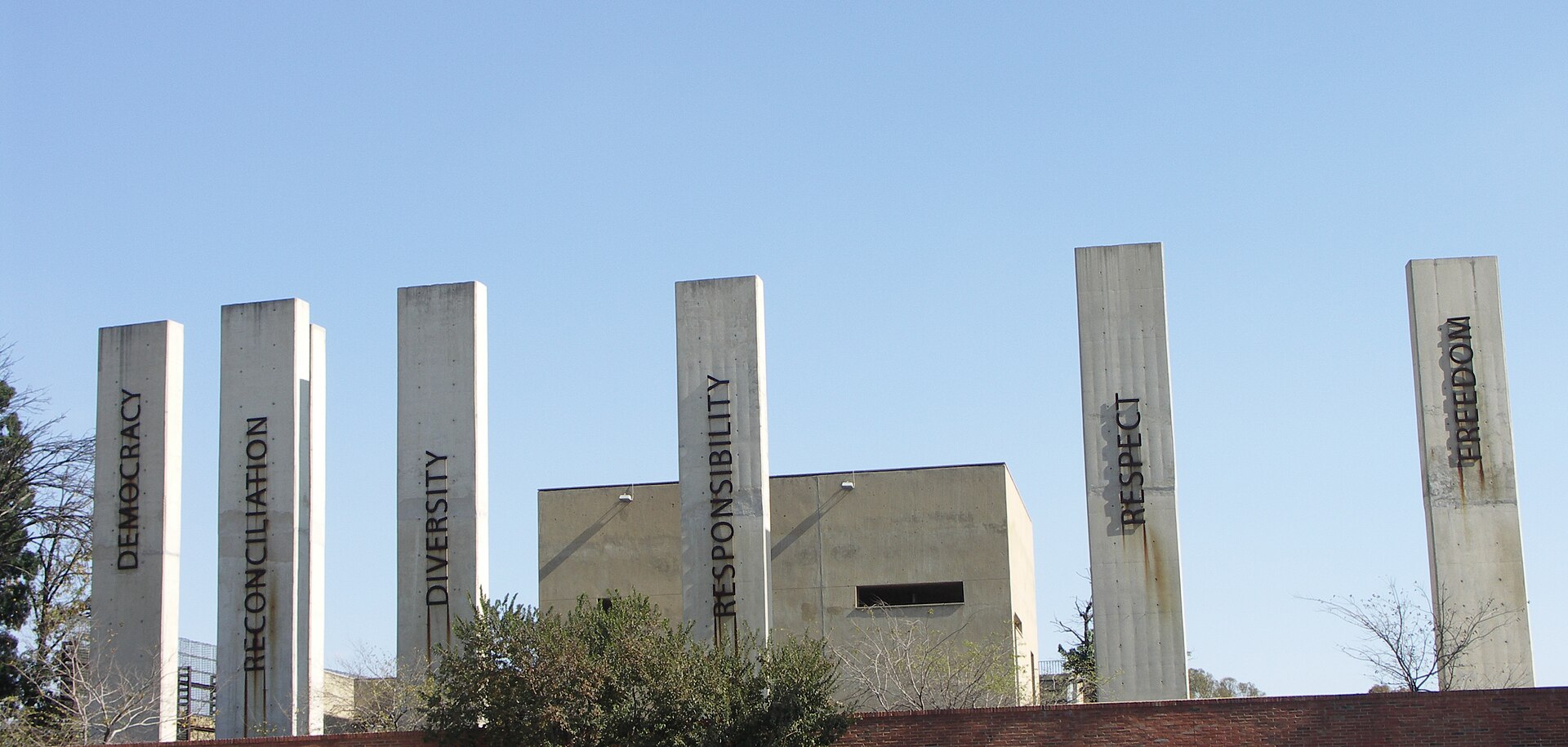
Photo: NJR ZA, CC BY-SA 3.0
Apartheid Museum
out of 5 0 ratingsThe Apartheid Museum in Soweto is one of those rare places where history isn’t just recounted—it’s felt. Walking through its exhibits, you don’t just learn about South Africa’s past; you confront it in a way that lingers long after you leave. The museum doesn’t rely on dramatic storytelling or moralizing. Instead, it presents the raw, unfiltered reality of apartheid through documents, photographs, and personal accounts that speak for themselves. There’s no need for embellishment when the facts are this stark.
The building itself is a deliberate part of the experience. Constructed on the site of what was once a prison for political detainees, its architecture mirrors the themes of division and reconciliation. Visitors enter through one of two doors—one marked for whites, the other for non-whites—a chilling reminder of the segregation that defined daily life in South Africa until 1994. It’s a simple but powerful gesture, immediately transporting you into the mindset of those who lived under such arbitrary rules.
The museum’s exhibits span the entire arc of apartheid, from its early 20th-century roots to its eventual collapse. You’ll see everything from newsreel footage and newspaper clippings to the personal belongings of activists and ordinary citizens. Interactive displays help contextualize the scale of what happened, while key events—the Sharpeville massacre, the Soweto uprising, the long struggle led by Nelson Mandela and others—are given careful attention. The museum also doesn’t shy away from the global response, showing how the world reacted to South Africa’s policies, from condemnation to economic sanctions.
One of the most affecting sections focuses on the everyday realities of segregation. Recreated interiors of homes, schools, and public spaces illustrate the absurdity and cruelty of the system. Black South Africans were barred from using the same buses, restaurants, and even neighborhoods as whites. Photographs and videos capture the human cost—how these restrictions shaped families, careers, and childhoods. The stories of children growing up in a world where their rights were restricted from birth are particularly moving, a reminder of how deeply injustice can scar a society.
Yet the museum doesn’t end with the fall of apartheid. It also explores the difficult process of reconciliation that followed. The Truth and Reconciliation Commission, a groundbreaking effort to address past crimes without mass retribution, is given significant space. The exhibits show how South Africa grappled with its legacy, balancing the need for justice with the necessity of moving forward. This part of the museum is a sobering reminder that history doesn’t conclude with the end of a regime—it continues to shape the present.
Soweto, where the museum is located, is more than just a backdrop. This township, once a marginalized outpost of Johannesburg, became the epicenter of resistance against apartheid. It was home to Nelson Mandela and Desmond Tutu, the site of mass protests, and the birthplace of the freedom movement. Today, Soweto is a place where history and modernity coexist—where memorials to fallen heroes stand alongside vibrant streets filled with music, street food, and the energy of daily life. The Apartheid Museum isn’t just situated here by chance; it’s part of a larger story, a physical embodiment of the struggle for equality that continues in different forms.
Visiting the museum is an emotional experience, one that leaves you with more questions than answers. There’s the weight of injustice, the anger at how people were treated, but also a sense of hope. South Africa’s story proves that change is possible, even in the darkest of times. The museum doesn’t tell you what to think; it invites you to reflect, to sit with the discomfort, and to consider what it means to remember. For many, this isn’t just a tourist stop—it’s a lesson in humanity that stays with you.
What makes the Apartheid Museum so powerful is its refusal to simplify history. It doesn’t offer easy resolutions or neat conclusions. Instead, it presents the past in all its complexity, leaving visitors to grapple with the contradictions and the lingering effects of apartheid. Whether you’re South African or a visitor from halfway across the world, the museum challenges you to engage with history on a personal level. It’s not a place for passive observation; it demands something from you, and that’s why it resonates so deeply. In a world where history is often sanitized or forgotten, this museum insists on remembering—honestly, unflinchingly, and without apology.
Day around this place
Where else to go on the same day
Building the day…
Where it is
-26.23806, 28.00889