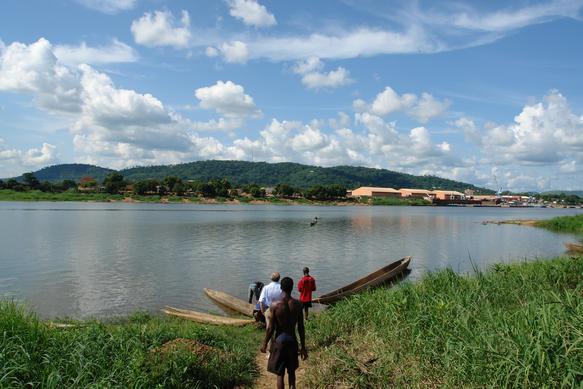
The Ubangi Bridge in Bangui is one of those structures that doesn’t just connect two banks of a river—it connects histories, lives, and the quiet rhythm of a city that has grown around it. Stretching across the wide, brown waters of the Ubangi River, this bridge is more than a feat of engineering; it’s a daily witness to the movement of people, goods, and stories between the Central African Republic and its neighbor, the Democratic Republic of the Congo. For decades, it has been a vital link, not just for trade and travel, but for the very pulse of life in this part of Africa.
The bridge was built in the 1960s, a time when many African nations were asserting their independence and investing in infrastructure that would bind their new borders together. Before its construction, crossing the Ubangi River was a slow, unreliable affair, dependent on ferries that struggled with the river’s shifting currents and seasonal changes. The bridge changed that, offering a steady, permanent passage that transformed Bangui from a riverside outpost into a more connected urban center. It wasn’t just about convenience; it was about possibility. Suddenly, markets could expand, families could visit more easily, and the city could grow beyond the limits of its riverbank.
Standing on the bridge today, you can feel the weight of its purpose. The structure itself is unassuming—functional rather than grand, designed to endure the river’s floods and the wear of constant use. Its steel girders and concrete pillars have weathered decades of heat, rain, and the occasional political upheaval that has swept through the region. Yet it remains standing, a quiet testament to the resilience of the people who rely on it. The bridge doesn’t demand attention like a monument might; instead, it hums with the everyday life that flows across it—vendors selling fruit from baskets, motorbikes weaving through traffic, and the occasional truck laden with goods bound for distant markets.
The Ubangi River itself is a character in this story. One of the largest tributaries of the Congo River, it carves a path through the heart of Central Africa, shaping the landscape and the lives of those who live along its banks. In Bangui, the river is both a resource and a challenge. During the dry season, its waters recede, revealing sandbanks where children play and fishermen mend their nets. In the rainy season, it swells, sometimes threatening to spill over its banks, testing the bridge’s strength. The river’s moods dictate the pace of life here, and the bridge is the steady hand that keeps things moving, no matter what.
For many in Bangui, the bridge is a backdrop to memories. It’s where young lovers might steal a moment in the evening, watching the sun dip below the horizon as the river glows in the fading light. It’s where traders set up their stalls early in the morning, hoping to catch the first wave of commuters heading to work. It’s where, during festivals or political rallies, the bridge becomes a stage, crowded with people celebrating or voicing their hopes for the future. These moments aren’t recorded in guidebooks or official histories, but they’re the threads that weave the bridge into the fabric of the city.
The bridge also tells a story of connection beyond borders. On the other side of the Ubangi lies Zongo, a town in the Democratic Republic of the Congo, and the bridge is the only direct link between the two countries in this region. For families split by colonial-era borders, it’s a lifeline. For traders, it’s a gateway to markets where goods from Bangui’s workshops find buyers, and where Congolese produce makes its way into Central African kitchens. The bridge doesn’t erase the complexities of cross-border relations, but it does make them a little easier to navigate, one step at a time.
Yet the bridge is not without its challenges. Over the years, maintenance has been sporadic, and the wear of time is visible in the rusted railings and the occasional pothole in the road. During periods of conflict or instability, the bridge has sometimes become a flashpoint, a strategic chokepoint that can be closed or controlled. For those who depend on it, these disruptions are more than inconveniences—they’re reminders of how fragile the connections we take for granted can be. Still, the bridge endures, repaired and reopened, because the alternative—going back to ferries and isolation—is unthinkable.
In a city like Bangui, where history is often overshadowed by the immediacy of daily struggles, the Ubangi Bridge stands as a quiet anchor. It doesn’t have the grandeur of a cathedral or the drama of a palace, but it has something just as important: a sense of continuity. It’s a place where the past and present meet, where the river’s ancient flow intersects with the modern need for movement. Whether you’re crossing it for the first time or the hundredth, the bridge offers a moment to pause and consider the currents—both literal and metaphorical—that shape this corner of the world.
For travelers passing through Bangui, the bridge might not be the reason they came, but it’s often one of the things they remember. It’s not just a way to get from one side of the river to the other; it’s a way to understand the city and the people who call it home. Standing on the bridge at dawn, watching the first light catch the water, or at dusk, when the air is filled with the sounds of the city winding down, you get a sense of Bangui’s rhythm. It’s a rhythm that’s been playing for decades, and the Ubangi Bridge is one of its most enduring notes.