The Gustavi Bridge reveals its charm when you look closer. It stretches across a narrow strait in the Parainen archipelago off Finland’s southwestern coast, connecting islands where the Baltic Sea meets the land. There’s nothing flashy about it—just a long, gently curving road carrying cars and cyclists between pine-covered shores. The water below shifts with the wind, sometimes calm, sometimes choppy. It’s the kind of place where you might slow down without realizing why.
The Parainen archipelago is a world of granite outcrops, windswept pines, and rocky inlets. Before the bridge, ferries were the only way between islands. They had their charm but weren’t always reliable. The Gustavi Bridge changed that in the mid-20th century, linking communities without altering the archipelago’s quiet character. It was a practical solution, nothing more.
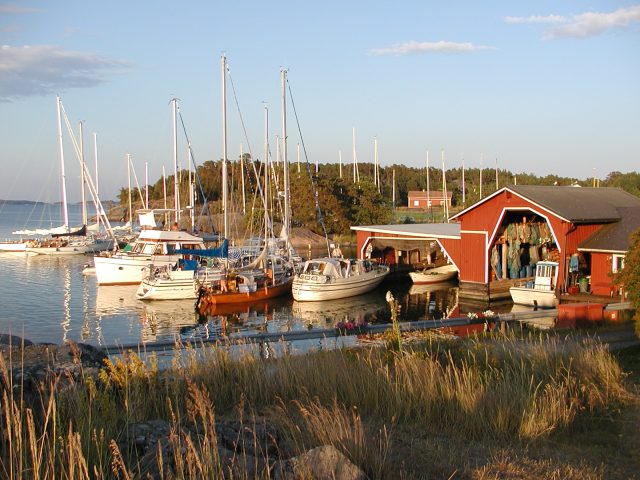
The bridge is unassuming. Its concrete spans rest on sturdy piers anchored in the water. On clear days, the view is simple: boats cutting through the water, distant islands fading into the horizon, the occasional seal. In winter, when the strait freezes, the bridge becomes part of a monochrome world of snow and ice. It’s a reminder of how closely people and nature coexist here.
For locals, the Gustavi Bridge is more than a road. It connects them to work, school, and shops. In summer, cyclists pedal across, mapping routes between islands. In autumn, mushroom and berry pickers return with full baskets. The bridge doesn’t demand attention, but life here unfolds around it—steady, unhurried, tied to the land and sea.
There are no museums or tourist attractions near the bridge. That’s what makes it special. You can pull over, step out, and stand for a while. Watch the water. Listen to the gulls. The wind carries the scent of salt and pine. The silence isn’t empty—it’s full of the creak of boats, the distant hum of an engine. It’s a place where the islands’ rhythm is easy to feel if you’re not in a hurry.
The Gustavi Bridge isn’t a destination. It’s a pause. If you drive across it, stop. Walk along the edge. Breathe in the Baltic air. Watch the sky meet the water. There’s no grand revelation, just the quiet understanding that some places don’t need to shout. They let you find them on your own terms. The bridge is one of those—a simple link between land and sea, where time moves at its own pace.