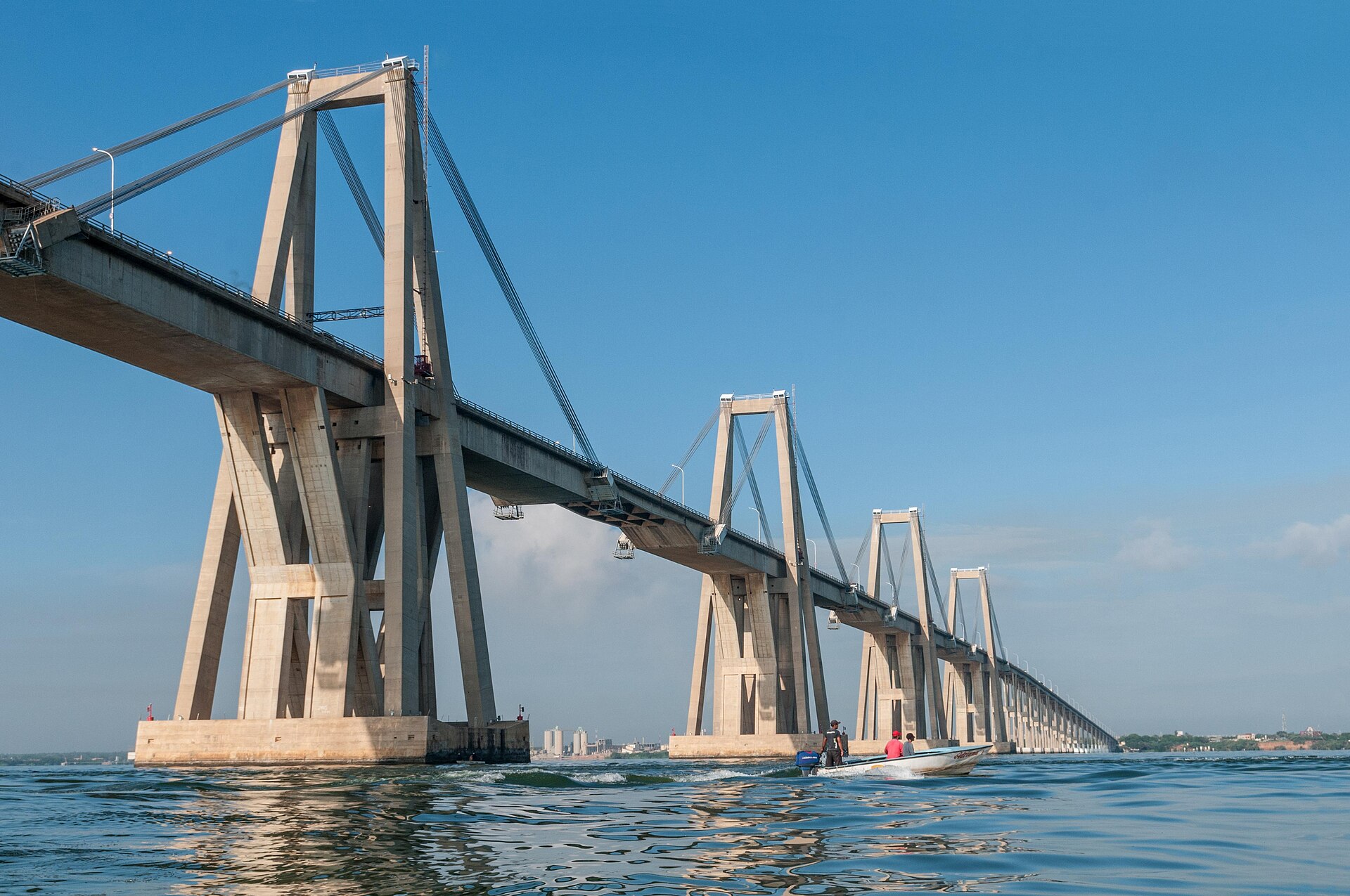
Lake Maracaibo is a place where the past and present collide in unexpected ways, and nowhere is this more evident than on the General Rafael Urdaneta Bridge. Stretching across the narrowest point of the lake, this massive concrete structure is more than just a feat of engineering—it’s a lifeline for the region, a silent witness to decades of change, and a symbol of Venezuela’s ambitions and challenges.
The bridge was completed in 1962, a time when Venezuela was riding high on oil wealth and looking to modernize its infrastructure. Before its construction, crossing Lake Maracaibo was a slow, unreliable affair, often dependent on ferries that struggled with the unpredictable weather and strong currents. The need for a permanent connection was obvious, not just for local communities but for the country’s economy, which relied heavily on the oil fields beneath the lake. The bridge was named after General Rafael Urdaneta, a Venezuelan military leader and hero of the country’s independence movement, a nod to the nation’s pride in its history even as it reached for the future.
At nearly nine kilometers long, the General Rafael Urdaneta Bridge was, at the time of its completion, the longest prestressed concrete bridge in the world. Its design was a collaboration between Venezuelan engineers and Italian firm Società Anonima Elettrificazione, which had experience with large-scale infrastructure projects. The bridge’s most striking feature is its series of V-shaped piers, which not only provide structural support but also give it a rhythmic, almost sculptural quality when viewed from a distance. The piers rise from the water like the ribs of some great beast, their symmetry broken only by the gentle curve of the roadway above. The bridge was built to withstand the region’s seismic activity, a necessity given Venezuela’s location along fault lines, and its durability has been tested over the decades by everything from tropical storms to the occasional earthquake.
For locals, the bridge is an everyday reality, something they cross without much thought, but for visitors, it can be a revelation. Driving across it offers a unique perspective on Lake Maracaibo, one of the oldest and largest lakes in South America. The water below is a shifting palette of blues and greens, sometimes calm, sometimes choppy, reflecting the sky above. On clear days, the distant mountains of the Sierra de Perijá rise on the horizon, their peaks often shrouded in mist. At night, the bridge is illuminated, its lights stretching into the darkness like a string of pearls, a stark contrast to the inky blackness of the lake.
The bridge’s construction wasn’t without controversy. The project required the displacement of some local communities, and the environmental impact on the lake’s delicate ecosystem was a concern even then. Over the years, the bridge has also become a site of tragedy, with accidents and suicides casting a shadow over its utilitarian purpose. Yet, despite these darker aspects, it remains a vital artery for the region. Without it, the flow of goods, people, and oil—Venezuela’s economic lifeblood—would grind to a halt. The bridge connects the city of Maracaibo to the rest of the country, linking the oil-rich west to the capital and beyond.
Maracaibo itself is a city that feels both connected to and separate from the rest of Venezuela. It’s a place where the heat is relentless, where the air hums with the sound of motorcycles and the scent of fried plantains, and where the lake is never far from view. The bridge is a constant presence here, looming in the background of daily life, a reminder of the city’s dependence on the water and the resources beneath it. For those who live in the neighborhoods near the bridge, it’s a part of the landscape, as familiar as the palm trees and the colonial architecture of the old town.
The General Rafael Urdaneta Bridge is also a testament to the ingenuity and resilience of the people who built it and those who maintain it. Over the years, it has weathered economic crises, political upheavals, and the wear and tear of heavy traffic. Maintenance has been a challenge, particularly in recent decades as Venezuela’s infrastructure has struggled under the weight of economic difficulties. Yet, the bridge endures, a relic of a time when the country was looking forward with optimism. It’s a reminder that even in places where progress feels fragile, the marks of human ambition remain.
For travelers, the bridge offers more than just a way to cross the lake. It’s a chance to reflect on the scale of human achievement and the complexities of progress. Standing on its span, you can feel the vibrations of the traffic beneath your feet, the wind coming off the water, the weight of history pressing in from all sides. It’s a place where the past and present coexist, where the practical and the symbolic intertwine. Whether you’re crossing it by car, gazing at it from the shore, or simply contemplating its place in Venezuela’s story, the General Rafael Urdaneta Bridge is a structure that demands attention—not just for its size, but for what it represents.