The bridge over the Komo River in Ovendo is one of those places that doesn’t announce itself with grand monuments or tourist crowds, yet it quietly holds together the rhythm of daily life in Gabon. It spans one of the country’s major waterways, linking the industrial hub of Ovendo with Libreville and the rest of the nation. For locals, it’s an unremarkable part of their routine—a way to get to work, run errands, or visit family. For visitors, it’s a glimpse into the Gabon that exists beyond postcard images, where the pulse of the country isn’t in its wildlife reserves but in the steady flow of people and goods across this stretch of water.
The Komo River itself is a force that shapes the landscape. Rising deep in the interior of the continent, it winds its way toward the Atlantic, its character shifting with the seasons. During the rainy months, the river swells, its banks lush and green, while in drier periods, it narrows into a calmer, more subdued current. After heavy rains, though, it can transform into a powerful surge, a reminder of the raw energy that courses through this part of Africa. The bridge, standing firm against these changes, becomes part of the scenery, as much a feature of the river as the mangroves or the birds that nest along its edges.
Built in the mid-20th century, the bridge arrived at a time when Gabon was investing in its infrastructure, laying the groundwork for the country it would become. Ovendo was emerging as an industrial center, and the bridge was a practical solution, connecting factories and workers to the capital and the port. There’s nothing ornate about its design—just long spans resting on sturdy piers, painted in the kind of utilitarian shade you’d expect from a structure meant to endure. At dusk, the streetlights flicker on, their reflections dancing on the water below, turning the river into a shifting mirror of light and shadow.
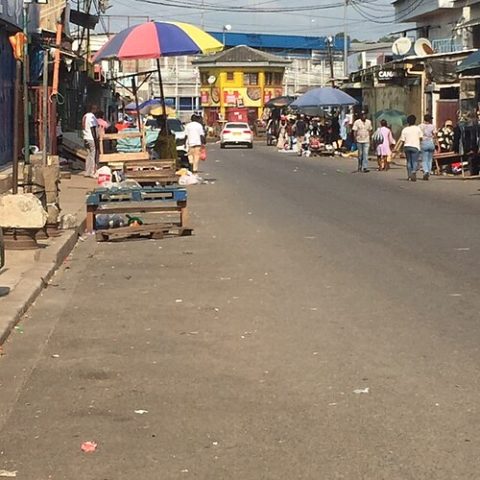
What makes the bridge worth noticing isn’t its architecture but the life that moves across and around it. Trucks rumble by, carrying goods to and from the port, their drivers focused on the road ahead. Buses and cars weave through traffic, ferrying people between home and work. If you pull over and step out, you might see fishermen launching their boats into the water, their movements practiced and unhurried. Nearby, women sell fruit or fried plantains from roadside stalls, their voices blending into the hum of the city. It’s an ordinary scene, but one that reveals how deeply connected the people here are to the land and the river.
For travelers accustomed to seeking out the exotic, the bridge over the Komo might not seem like much at first. There are no guided tours, no souvenir stands, no carefully curated experiences. But that’s precisely what makes it interesting. It’s a place where you can watch Gabon unfold in real time—the way the river dictates the pace of life, how the road ties together communities, and how nature and industry coexist, sometimes uneasily, in the same space. The bridge doesn’t try to impress; it simply does its job, day after day, while the world moves around it.
The area around Ovendo still carries traces of the wild. Crocodiles occasionally surface in the river, a reminder of the untamed world that lies just beyond the city limits. Birds nest along the banks, their calls mixing with the sounds of traffic. The bridge itself is a kind of threshold, a point where the human-made and the natural intersect without fanfare. On one side, the dense forests of Gabon stretch out, home to elephants, gorillas, and other species that draw visitors from around the world. On the other, the hum of industry and the steady flow of vehicles mark the presence of a country forging its own path.
In many ways, the bridge is a silent witness to Gabon’s history. When the country gained independence, infrastructure projects like this one became symbols of progress, a way to assert control over the landscape and connect distant regions. Over the decades, the bridge has seen the country change—economies shift, governments rise and fall, and the rhythms of daily life evolve. Yet it remains, a constant in a place where so much else is in flux. For some, it’s just a way to get from one side of the river to the other. For others, it’s a marker of time, a place where the past and present overlap.
If you find yourself in Ovendo, don’t expect sweeping vistas or dramatic scenery. The bridge over the Komo isn’t that kind of destination. It’s for those who want to see Gabon as it is, not as it’s packaged for outsiders. There’s no grand narrative here, no storybook ending—just the quiet persistence of a river, a bridge, and the people who rely on both. It’s a place where you can stand for a moment and watch the world go by, where the water below and the road above tell their own version of what it means to be part of this country. And sometimes, that’s enough.