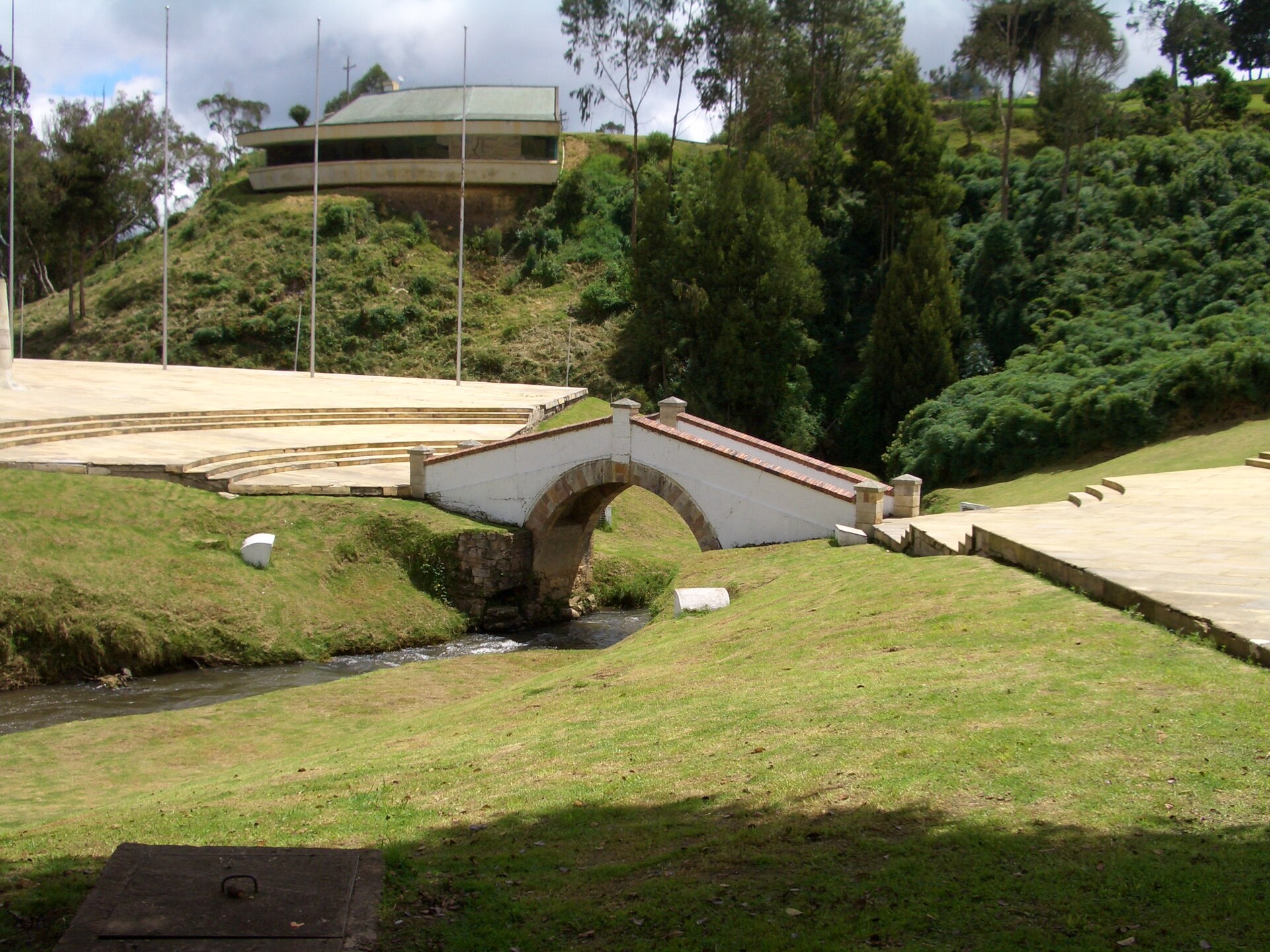
The Boyacá Bridge is one of those places that seems unremarkable at first glance, yet it holds a story capable of altering the fate of an entire nation. Stretching across the Teatinada River near the city of Tunja, it lies along the road to Bogotá, a quiet crossing that most travelers pass without a second thought. For Colombians, however, this bridge is far more than a simple structure—it is a symbol of independence and courage.
Built in the 18th century when the region was still part of the Spanish colony of New Granada, the bridge was originally a modest engineering feat, essential for connecting key trade and administrative hubs. Yet its true significance emerged in August 1819, when the decisive Battle of Boyacá unfolded on its approaches. Simón Bolívar’s army—a mix of Venezuelans, Colombians, and mercenaries from various nations—clashed with Spanish forces led by José María Barreiro. The victory here marked a turning point: the Spanish lost control of the region, and Colombia took its first steps toward full independence, declared the following year.
Today, the bridge looks much as it did two centuries ago. A low stone structure with arches supporting the road, it now carries cars and buses where soldiers once marched. Time has left its mark—the stones darkened in places, the mortar between them softened by weeds, the railings worn by the elements. But it is this very simplicity that makes the bridge special. There are no gilded monuments or grand inscriptions, just a quiet witness to history that needs no embellishment.
The surrounding landscape is classic Boyacá—rolling hills, patchwork fields, and small villages where life moves at the same unhurried pace it has for generations. Locals rarely linger here; for them, the bridge is just part of the daily scenery. But visitors from Bogotá or other cities often pause to walk across it, running their hands over the stones and imagining the soldiers who once marched here. The air feels different when you stand in a place where history was made, not just recorded.
Nearby, a small memorial complex honors the battle. A statue of Simón Bolívar and his allies stands alongside a modest museum displaying weapons, maps, and documents from the era. The exhibits are simple, but the atmosphere is powerful, a reminder of how ordinary people—farmers and laborers who had never left their villages—became part of something far greater than themselves. The museum doesn’t need flashy displays; the weight of the place speaks for itself.
Unlike many tourist attractions, the Boyacá Bridge doesn’t clamor for attention. There are no souvenir stalls, no guided tours, no bright signs pointing the way. And that’s precisely what makes it worth visiting. It doesn’t try to impress—it simply exists, as history itself does, without the need for dramatic staging. For those who care about Colombia’s past, this is where abstract dates and names take on real meaning.
The best time to visit is early morning, when mist curls over the river and the air is cool. It’s easy then to picture the pre-dawn stillness before the battle, the creak of wagon wheels, the restless horses. Or come in the evening, when the setting sun turns the stones golden and stretches the shadows long. That’s when you understand why this place still holds the memory of those events—not as a museum piece, but as a living part of the land.
The Boyacá Bridge reminds us that history is often made not in grand palaces or city squares, but on ordinary roads, far from the eyes of most. It doesn’t demand admiration, but it earns respect—as any silent witness to change does, standing patiently in place, waiting to be noticed.