Moray
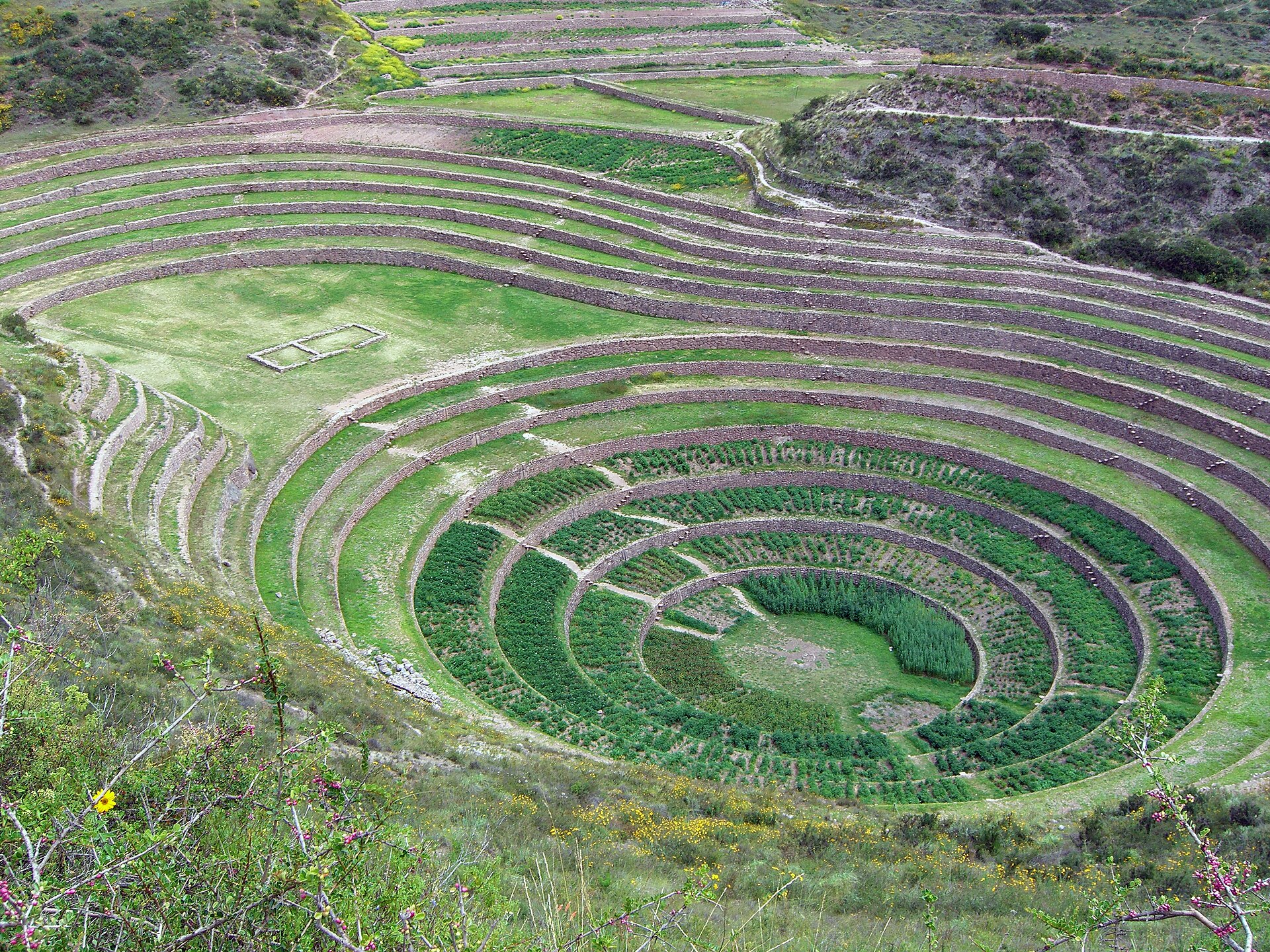
Moray sits near Cusco, carved into the earth like a series of vast, concentric bowls. These circular terraces descend into the ground, their purpose unclear at first glance. For the Inca, this was an agricultural laboratory at over 3,500 meters above sea level, where thin air, intense sun, and cold nights became tools for experimentation.
The design is precise. Each terrace has its own drainage and irrigation system. Temperature shifts subtly between levels—sometimes by several degrees—creating distinct growing conditions. The Inca grew potatoes and quinoa here, crops that sustained their empire. They may have also tested plants from lower elevations, pushing the limits of what the highlands could support.
Before the Spanish arrived, Moray was part of a network of Inca settlements across the Andes. Many were abandoned or destroyed after the conquest, but Moray survived. Its remote location and unclear purpose likely spared it. Today, scientists study its secrets, tracing how the Inca developed advanced techniques without modern tools.
Visiting Moray feels like stepping into a landscape frozen in time. The terraces curve into the earth, framed by valleys and mountains. On clear days, the Andes rise in the distance. The air is quiet, broken only by wind or the murmur of other visitors. Local guides say Moray was sacred, where rituals tied to agriculture and fertility took place. For the Inca, farming was more than survival—it was spiritual.
Moray sees fewer visitors than Machu Picchu or the Sacred Valley. There are no crowds, just open space and the weight of history in every stone. You can wander at your own pace, imagining the farmers who once worked these terraces, tending crops under the gaze of the mountains. The lack of tourist infrastructure leaves the site’s raw beauty untouched.
If you’re exploring the area, pair Moray with the nearby Maras salt mines. Salt has been harvested there the same way for centuries. The contrast is striking—one site shows agricultural innovation, the other enduring traditions of resource extraction. Together, they reveal how the Inca and their descendants adapted to the Andes.
Moray has no grand temples or monuments. Its strength lies in its simplicity and the quiet ingenuity of its design. The Inca didn’t just conquer their environment—they studied it, shaped it, and worked with it. Standing on those terraces, you feel the weight of what they achieved. And how much we still don’t understand.