Monument to the Bandeiras: São Paulo’s Stone Chronicle
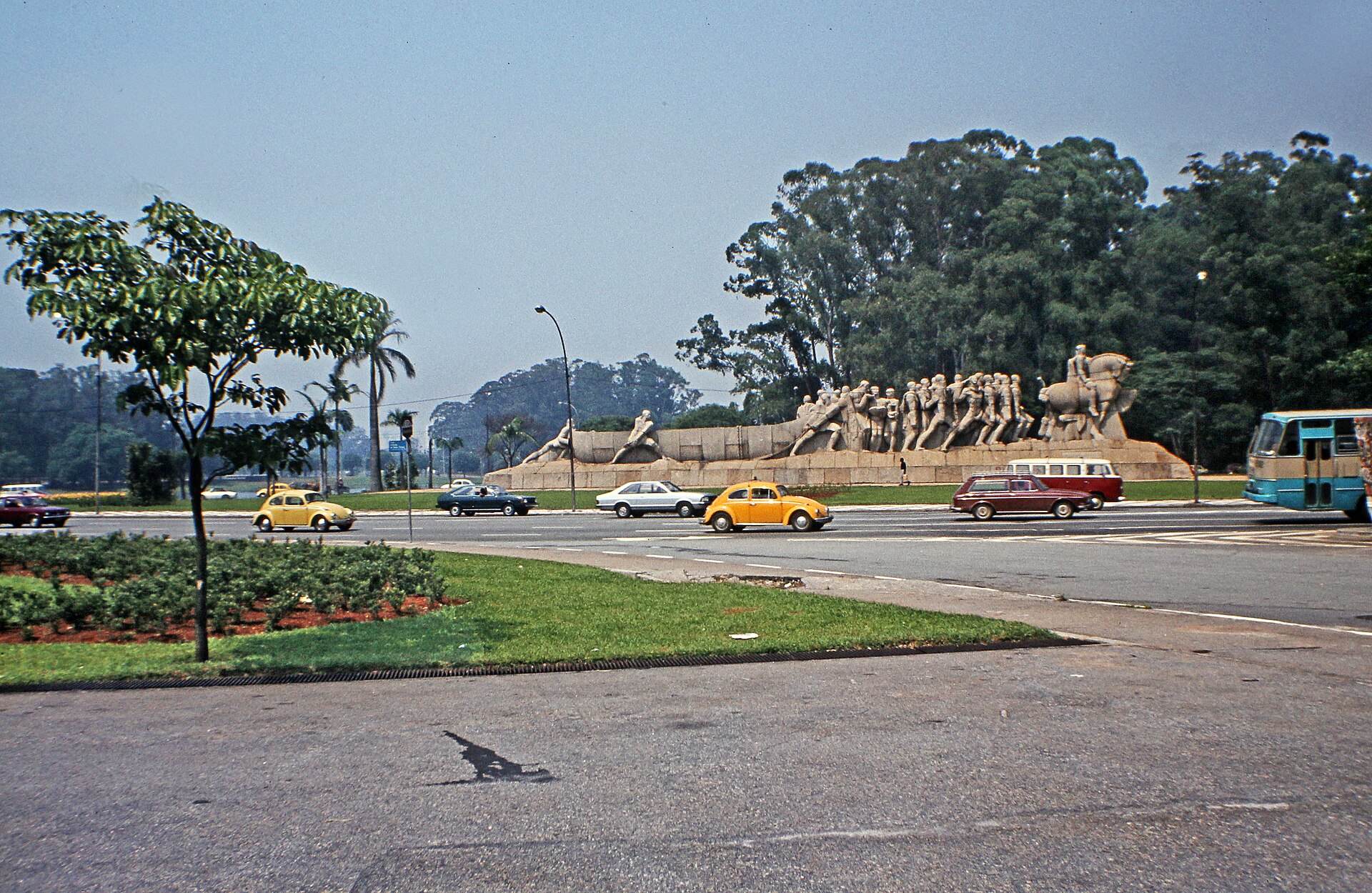
At the corner of Ibirapuera Avenue and Rua Bandeirantes in Moema, the Monument to the Bandeiras rises from the pavement. It’s a tribute to the bandeirantes—Portuguese-Brazilian explorers who pushed into Brazil’s interior between the 16th and 18th centuries. They sought gold, gemstones, and new land. Their expeditions redrew the country’s borders, but they also brought violence and disease to Indigenous communities. That tension lingers.
Victor Brecheret, one of Brazil’s most celebrated mid-20th-century sculptors, designed the monument. Construction took nearly ten years. It was unveiled in 1954, part of São Paulo’s 400th-anniversary celebrations. The sculpture shows a group of bandeirantes hauling a boat on wheels, a nod to the rivers and jungles they traversed. Around them stand Indigenous people, Africans, and mestizos who worked as porters or guides. The figures seem to strain against an invisible force, as if the entire scene might shift at any moment.
The monument is carved from local granite. It weighs fifty tons, stretches fifty meters long, and stands twelve meters high. Brecheret wanted it to be seen from afar, so it wouldn’t disappear into the city’s sprawl. Today, the square around it is a small park with lawns and trees. People come here to picnic, meet friends, or take a break from the city’s noise. On weekends, families, tourists, and photographers gather, drawn by the way the stone catches the light.
What the monument means has changed over time. Once, the bandeirantes were seen as heroes. Now, many Brazilians—especially Indigenous groups—view them as symbols of colonial oppression. In 2020, protesters painted slogans on the monument’s base, demanding a reevaluation of history. The city cleaned it quickly, but the incident showed how contested its legacy still is.
For most Paulistanos, the monument is part of the city’s fabric. It appears in films, music videos, and ads. On holidays, the square hosts concerts and events. On ordinary days, artists sketch it, and photographers wait for the golden hour, when the granite glows.
The square sits next to Ibirapuera Park, once home to an Indigenous village. The contrast is sharp: the granite figures stand still, while cars and pedestrians rush by. Behind them, children play in the park.
Look closely, and you’ll see details you might miss. One figure holds a carved map of the bandeirantes’ routes. Another shows symbols of Indigenous tribes. Brecheret didn’t just aim for scale—he wove meaning into every part. The design originally included fountains, but they were left out due to technical challenges. The stone speaks for itself.
The Monument to the Bandeiras is more than a statue. It’s a question. Some see it as a tribute to the pioneers who shaped Brazil. Others see a reminder of the violence that came with expansion. Either way, it forces you to look—and think.