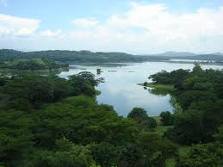
Montecristo is one of those rare places in El Salvador where the country’s wild heart still beats untamed. Tucked away near the town of Metapán, close to the borders with Guatemala and Honduras, this national park feels like a world apart from the rest of the country. There are no crowded trails or tourist traps here—just the quiet rustle of leaves, the distant call of birds, and the cool mountain air that carries the scent of damp earth and pine. Unlike the sunbaked lowlands that define much of El Salvador, Montecristo offers a different kind of beauty, one shaped by misty valleys, dense forests, and a climate that lingers somewhere between spring and autumn year-round.
Perched at around 2,400 meters above sea level, Montecristo is one of the highest protected areas in the country. The altitude keeps the temperatures mild, rarely climbing above twenty degrees Celsius, even in the height of summer. Mornings often arrive wrapped in thick fog, softening the outlines of the trees and giving the landscape an almost dreamlike quality. As the day progresses, the mist lifts, revealing a patchwork of ecosystems—tropical cloud forests give way to oak and pine groves, and the air hums with the kind of quiet energy that comes from places where nature has been left to its own devices. For anyone weary of the heat and noise of the cities below, Montecristo is a refuge, a place where time seems to slow down.
The park’s origins are rooted in El Salvador’s efforts to protect its dwindling natural spaces. Established in the late twentieth century, Montecristo was created to safeguard the region’s unique ecosystems, which have come under threat from deforestation and agricultural expansion. Today, it serves as a sanctuary for species that have all but disappeared elsewhere in the country. Among them is the resplendent quetzal, a bird with iridescent green and red plumage that has become a symbol of Central America. While its image adorns the Guatemalan coat of arms, spotting one in the wild is a rare privilege, and Montecristo is one of the few places where it still thrives. The park is also home to orchids, ferns, and towering trees that have stood for centuries, their branches forming a canopy so dense that sunlight barely filters through.
There are no grand monuments or man-made wonders in Montecristo—the real attraction is the landscape itself. The trails wind through the forest, leading to viewpoints that offer sweeping vistas of the surrounding mountains and valleys. One of the most striking spots is known as El Trifinio, where the borders of El Salvador, Guatemala, and Honduras converge. From this vantage point, the three countries stretch out before you, their political boundaries invisible against the unbroken expanse of forest. It’s a reminder that nature doesn’t recognize borders, and in Montecristo, the land feels more connected to the earth than to any nation.
This isn’t the kind of park where you’ll find paved paths, visitor centers with air conditioning, or souvenir stands. Montecristo is unpolished, a place for those willing to put in a little effort to experience something authentic. The trails vary in difficulty—some are gentle, while others require a bit of scrambling over roots and rocks—but the reward is worth it. Along the way, you might stumble upon a hidden waterfall, a cluster of wildflowers, or a clearing where the forest suddenly opens up to reveal the sky. The lack of crowds means you often have these moments to yourself, the only sounds being your own footsteps and the occasional rustle of leaves as a bird or small animal moves through the underbrush.
The weather in Montecristo is as changeable as the landscape. Mornings can be chilly and shrouded in fog, afternoons warm and bright, and evenings cool as clouds roll back in. The best time to visit is during the dry season, from November to April, when the trails are firmer underfoot and the skies more predictable. But even in the rainy season, the park has its own kind of magic. The forests become lusher, the waterfalls fuller, and the air even fresher. That said, some paths can become slippery or overgrown, so it’s worth checking conditions before setting out.
For locals, Montecristo is more than just a tourist destination—it’s a place woven into the fabric of their lives. Families from Metapán and nearby villages often come here on weekends, packing picnics and spending the day wandering the trails or simply sitting by a stream. There are no luxury resorts or fancy restaurants, but that’s part of the appeal. A few rustic cabins and camping spots are available for those who want to stay overnight, though nights can be cool and damp, so it’s best to come prepared. The lack of modern comforts only adds to the sense of stepping back in time, of experiencing the land as it once was.
Montecristo also serves as a quiet reminder of the fragility of nature. El Salvador has lost much of its original forest cover to logging and farming, and places like this are increasingly rare. The park is one of the last strongholds for species that have nowhere else to go, a living example of what the region might have looked like before human intervention. Walking through its forests, it’s hard not to feel a sense of responsibility—to the land, to the creatures that call it home, and to the future of a country where wild spaces are disappearing.
A visit to Montecristo isn’t just about seeing a pretty place; it’s about feeling a connection to something larger than yourself. There are no crowds here, no rush to take the perfect photo, no noise beyond the natural soundtrack of the forest. It’s a place where you can walk for hours without seeing another soul, where the air is so clean it almost tastes sweet, and where the silence is broken only by the wind in the trees. For those who want to experience El Salvador beyond its beaches and cities, Montecristo offers something far more precious: a glimpse of the country’s untamed soul.