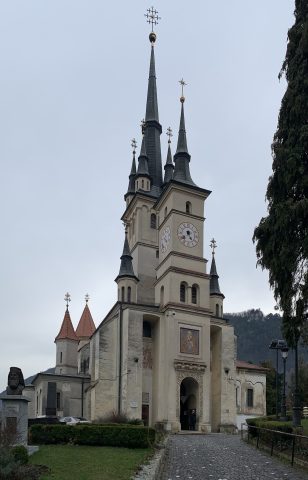
Nestled on the edge of Zărnești, where the foothills of the Carpathians roll into quiet valleys, the Monastery of the Holy Trinity feels like a place where time has settled into a slower rhythm. The hills around it shift with the seasons—lush and green in summer, then ablaze with gold and crimson in autumn—while the monastery itself remains unchanged, a steady presence against the changing landscape. There are no crowds here, no tour buses or guided groups, just the occasional chime of a bell and the rustle of leaves in the wind. It’s the kind of place where silence isn’t just the absence of noise, but something almost tangible, a quiet that invites you to pause and listen.
The monastery’s history is woven into the broader story of Orthodox monasticism in Transylvania, a region where faith and identity have often been tested. Founded in the early 1700s, when these lands were under Habsburg rule, it emerged during a time when Orthodox practices faced restrictions. Monasteries like this one became more than just places of worship; they were strongholds of tradition, preserving language, rituals, and a sense of belonging. The Holy Trinity survived wars, political upheavals, and periods of repression, enduring not through grand gestures but through quiet persistence. Today, it continues to follow the same monastic rule established centuries ago, though the community of monks here is small, their lives governed by rhythm rather than numbers.
The architecture reflects this unassuming steadiness. There’s no ornate grandeur, no soaring domes or gilded facades—just a modest whitewashed church with a low bell tower, its walls adorned with simple stucco details. Inside, the frescoes follow the traditional Byzantine style, their colors muted but enduring, telling stories of saints and scripture in a language of symbols. The iconostasis, carved from wood by local craftsmen, bears the marks of time and devotion, its details worn smooth by generations of hands. Around the church, a handful of buildings—cells, a refectory, workshops—cluster together, enclosed by a low stone wall. Beyond it, an orchard stretches out, its trees heavy with fruit in late summer.
This isn’t a major pilgrimage site, and most visitors don’t come seeking miracles or grand revelations. Instead, people arrive for the stillness, for the chance to step away from the noise of daily life. In summer, the paths leading into the nearby forest are cool and shaded, while benches beneath the old linden trees offer a place to sit and watch the light filter through the leaves. Winter transforms the monastery into something even more serene: snow blankets the rooftops, smoke curls from chimneys into the crisp air, and the whole place seems suspended in time. It’s easy to imagine that nothing has changed here for decades, or even centuries.
Though it lies off the usual tourist routes, the monastery plays a quiet but vital role in the life of the surrounding area. Services, baptisms, and weddings are held here, drawing not just the people of Zărnești but also those from neighboring villages. The monks don’t just tend to spiritual matters; they work the land, keep bees, and grow vegetables, their days shaped by the same cycles of labor and prayer that have defined monastic life for centuries. In the monastery’s small shop, you can find honey, candles, and hand-painted icons—simple things, made with care and offered without fanfare.
For those curious about Romania’s history and culture, the monastery offers a glimpse into a way of life that has endured despite the upheavals of the modern world. There are no museum displays or interpretive signs, just the quiet weight of the place itself. The walls of the church, the worn wooden floors, the scent of incense lingering in the air—all of it speaks of the people who have passed through here, the prayers that have been whispered, the lives that have unfolded within these stones. The monastery’s library holds old books and manuscripts, though access is limited; these aren’t relics to be studied, but living parts of a tradition that continues to this day.
Visiting the monastery doesn’t require much planning. From Zărnești, it’s a short walk or a ride on local transport, and there’s no admission fee. But it’s worth remembering that this is a working monastery, not a tourist attraction. The usual rules of respect apply—no loud conversations, no photography without permission, no intrusive behavior. The best time to come is in the morning, when the air is cool and the light soft, casting long shadows across the courtyard. If you’re there during a service, you can stand quietly in the back, listening to the chanting, letting the rhythm of the liturgy wash over you. Afterward, a walk through the grounds feels like a natural extension of the visit, a chance to let the quiet settle in.
The Monastery of the Holy Trinity isn’t the kind of place that dazzles you at first sight. There’s no dramatic architecture, no sweeping vistas, nothing that demands your immediate attention. Instead, its appeal lies in the way it reveals itself slowly, like a story unfolding at its own pace. What you find here isn’t spectacle, but something more enduring—a sense of continuity, of roots stretching deep into the past. It’s the kind of place that stays with you long after you’ve left, not because of what you saw, but because of how it made you feel. And perhaps that’s why people return, even from far away. Some places aren’t just meant to be seen; they’re meant to be experienced.