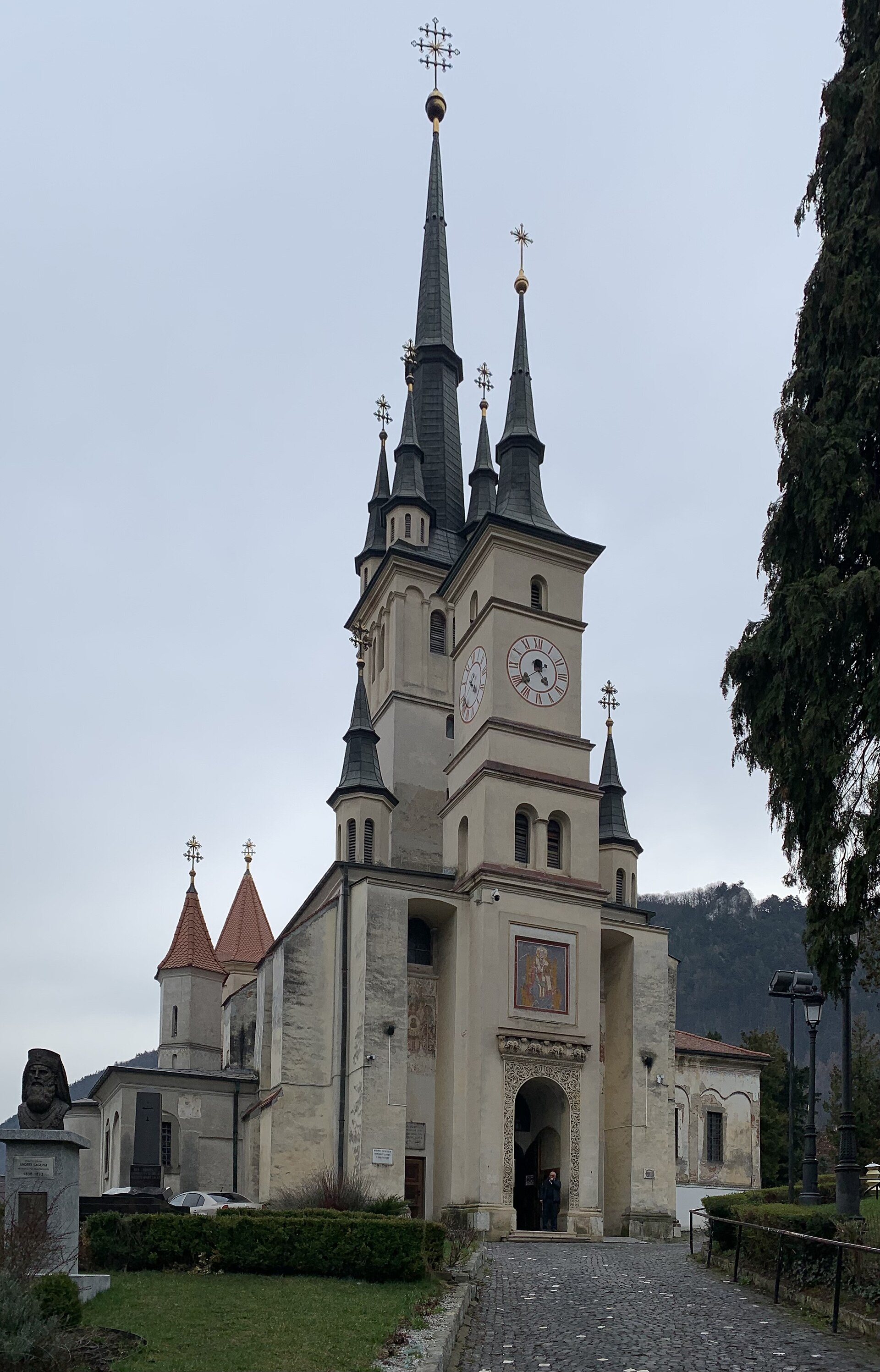
St. Nicholas Church in Zărnești is one of those quiet places that don’t demand attention but leave a lasting impression. Tucked away on the edge of town, surrounded by low houses and gentle green hills, it feels like a remnant of a slower time, when faith was woven into the fabric of daily life. The church itself is small, its modest size belying its significance—here, it’s not just a building but a place where history, tradition, and memory intertwine.
The architecture is classic for an 18th-century Romanian Orthodox church. Whitewashed walls, a squat bell tower topped with a sharp spire, and wooden doors darkened by years of use give it a sense of warmth and stillness. Inside, the space follows the traditional Orthodox layout: a narthex, nave, and altar, each serving its purpose in the rhythm of worship. The walls are adorned with frescoes, not as vivid as those in more famous monasteries, but no less meaningful. They depict biblical scenes through the eyes of local artisans—simple, earnest, and free of unnecessary grandeur.
The church’s history is deeply tied to that of Zărnești itself. Nestled at the foot of the Carpathians, the town has long been a crossroads of trade and culture. When the church was built in the 18th century, this region was part of the Austro-Hungarian Empire, yet Orthodox faith remained a cornerstone of Romanian identity. The community came together to fund its construction—merchants, craftsmen, and ordinary villagers saw it not just as a place of prayer, but as a symbol of their unity.
The church took on a special role in the 19th century, when Romania was fighting for independence. In those turbulent years, it became more than a spiritual center; it was a gathering place where people shared news, found support, and preserved their traditions amid political upheaval. Even after the unification of the principalities and the formation of the Romanian state, St. Nicholas Church continued to serve its community, though its role became quieter, less dramatic.
Today, the church remains active, its doors open to anyone who wishes to step inside. The air is thick with the scent of wax and aged wood, the silence broken only by the rustle of prayer books or the soft footsteps of worshippers. On Sundays, services draw not just locals but visitors from across Romania. For travelers, the church is less a tourist attraction and more an invitation to pause and reflect on how much of the world is held together by simple, enduring traditions.
A small garden surrounds the church, where roses bloom in summer and fallen leaves crunch underfoot in autumn. Benches offer a place to sit, gazing at old gravestones that mark the resting places of those who once built and worshipped here. The inscriptions are worn by time, but the stones themselves carry the memory of people for whom this church was a part of life. In this garden, time moves differently—slower, softer, as if urging visitors to linger and consider what endures.
Zărnești isn’t a town that draws crowds, and St. Nicholas Church isn’t the kind of place featured on the first pages of guidebooks. That’s part of its charm. There’s no rush here, no need to hurry or document every moment. You can simply arrive, stand at the entrance, step inside, and feel the quiet atmosphere that makes such places special. It’s not a museum or a typical landmark, but a living piece of history that continues to exist on its own terms.
If you ever find yourself in this part of Romania, don’t pass it by. Zărnești and its St. Nicholas Church offer a glimpse of the country as it once was—unhurried, genuine, and truly alive. There’s no opulence here, no famous names, but there is something rare in big cities: authenticity. And perhaps that’s what makes places like this so valuable.