Vukova Ulica Memorial Park in Sežana is a place where history lingers in the quiet. It wasn’t built as a tourist attraction but as a tribute to those who endured one of the darkest chapters of World War II. Here, on the outskirts of a small Slovenian town, a concentration camp stood in 1943, holding political prisoners, POWs, and civilians. The camp operated for only a short time, yet its impact was profound—both on the lives of those who suffered there and on the land itself.
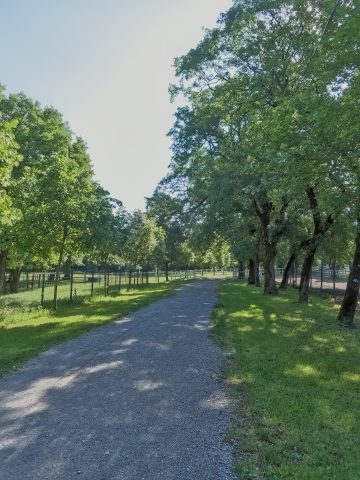
Today, the park appears peaceful, with trees, pathways, and benches inviting visitors to pause. But beneath the surface, the ground still bears the scars of the past. Fragments of barrack foundations, rusted barbed wire embedded in concrete—these remnants serve as silent witnesses to what happened here over eighty years ago. The park doesn’t hide these traces; instead, it encourages reflection. There are no grand monuments, only modest plaques and sculptures that speak of loss without exaggeration.
Vukova Ulica is more than a memorial—it’s part of Sežana’s own story. During the war, this area became a crossroads of conflicting forces: occupying authorities, partisan resistance, and local residents. The camp was first established by Italian fascists, then taken over by German forces after Italy’s surrender in 1943. People of different nationalities—Slovenes, Croats, Serbs, Italians, Jews—were held here. Many perished from hunger, disease, or execution. The exact number of victims remains uncertain, but historians agree it was in the thousands.
The park’s design is simple and unadorned. There are no ornate structures or decorative flourishes—just open space that allows visitors to sit with their thoughts. A central path leads to a small memorial, a stone stele engraved with the names of those who could be identified. Nearby lies a mass grave where the remains of prisoners were buried after the war. Occasionally, commemorative events are held here, but on most days, the park is quiet, its stillness amplifying the weight of history.
For Slovenia, Vukova Ulica is more than a memorial—it’s a fragment of national memory. The country endured a turbulent 20th century: two world wars, shifting political regimes, and a struggle for independence. Many sites tied to these events have been forgotten or erased, but this park remains. Perhaps because it lies off the main tourist routes, or perhaps because the memory of war is preserved here with particular care. Some Slovenians still have relatives who passed through camps like this, making Vukova Ulica a place of personal significance, not just historical record.
Visiting the park doesn’t require preparation. There are no guided tours, audio guides, or interactive displays—just the space itself. All you need is the willingness to understand what happened on this patch of land. You can walk the paths, sit on a bench, or examine the remnants of the camp’s structures. Time moves slowly here, allowing the scale of the tragedy to sink in. The park doesn’t aim to shock or overwhelm; it simply exists as a reminder that for some, the war never truly ended.
Sežana is better known for its karst caves and proximity to the Italian border. Most travelers pass through without realizing Vukova Ulica is here. But for those interested in history, it offers an unexpected discovery. Unlike traditional memorials with their formal ceremonies and speeches, this place is unassuming. There are no crowds, no souvenir shops, no cafes—just silence, trees, and memory.
In recent years, Slovenia has placed greater emphasis on preserving sites like Vukova Ulica. They serve as reminders that history isn’t just about victories and progress, but also about mistakes that must not be repeated. The park doesn’t claim to be the country’s most important memorial, yet its quiet presence in Sežana’s landscape gives it a unique significance. It doesn’t demand tears or grand gestures—just a moment of reflection on what it means to be human in a world where such places still exist.