The People’s Heroes Memorial Park in Yangon is one of those quiet places where history feels tangible, not just as dates and events, but as something lived and remembered. Tucked away in the heart of the city, it doesn’t draw the same crowds as the golden pagodas or the crumbling colonial buildings that dominate most travel guides. Instead, it offers a different kind of encounter with Myanmar’s past—one that’s more intimate, more human, and often overlooked.
The park was established in the early 2000s, a time when Myanmar was only beginning to emerge from decades of isolation. Its creation was part of a broader effort to reclaim a national narrative that had been suppressed or distorted under military rule. Here, the focus isn’t on grand victories or sweeping political movements, but on the individuals who shaped them—leaders of anti-colonial uprisings, activists who pushed for democracy, and ordinary people who resisted oppression in ways both small and large. Their stories are etched into stone and bronze, each monument a fragment of a much larger story about how Myanmar came to be.
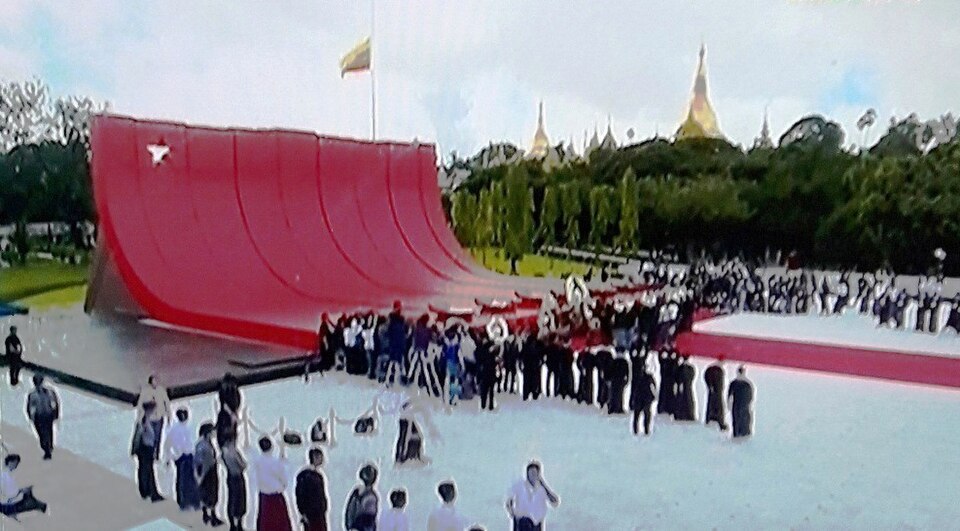
Walking through the park, you notice how understated the design is. There are no towering statues or ornate arches, just wide, tree-lined paths leading to a central plaza where a simple but striking sculpture stands. It’s meant to symbolize unity, though the figures are abstract enough that the interpretation is left open. Around it, smaller memorials take different forms—some echo the curves of traditional Buddhist stupas, others are stark and modern. The materials vary too, from weathered stone to polished bronze, reflecting the many influences that have shaped Myanmar over centuries.
One of the most striking aspects of the park is its recognition of women who played pivotal roles in the country’s struggles. In a society where gender roles have long been rigidly defined, their contributions were often sidelined in official histories. Here, though, their names and stories are given space. Some were organizers of underground networks, others supported guerrilla movements, and a few simply refused to back down in the face of repression. Their memorials don’t stand out in size or grandeur, but in the quiet dignity of their presence.
The park isn’t just a static monument to the past—it’s a place that continues to evolve. On certain days, ceremonies are held to mark historical anniversaries, though they’re low-key affairs, more about reflection than spectacle. Locals come here for different reasons: some to pay respects, others to escape the city’s heat under the shade of the trees. For many in Yangon, it’s become part of daily life, a place where parents bring their children to talk about history or where office workers take a quiet lunch break. In that sense, it serves multiple purposes—as a memorial, a classroom, and a green refuge in the middle of a bustling city.
What makes the park unusual is its lack of pomp. There are no grand speeches or elaborate rituals, no attempt to turn history into a spectacle. Instead, it feels like a place where memory is honored in a way that’s personal and unforced. The absence of crowds or tourist trappings only adds to that sense of authenticity. For visitors, it can be a refreshing contrast to the more famous sites in Yangon, offering a glimpse into how Myanmar remembers its past without the layers of myth or propaganda that often accompany official narratives.
On hot afternoons, the park is a cool retreat, the trees casting long shadows over the paths. In the evenings, soft lights illuminate the memorials, creating a peaceful atmosphere. You’ll often see locals leaving flowers or lighting incense at the monuments, a small but meaningful gesture that ties the park to Buddhist traditions of ancestor veneration. These quiet rituals make the place feel alive, not just as a collection of statues but as a space where history is still being tended to, in small, everyday ways.
For first-time visitors to Yangon, the park might not seem like an obvious stop. It doesn’t have the visual drama of Shwedagon Pagoda or the faded grandeur of the colonial-era buildings. But that’s part of its appeal. There’s no grand narrative here, no attempt to sum up Myanmar’s history in one sweeping gesture. Instead, it offers fragments—stories of resistance, sacrifice, and resilience—that invite you to piece together a more nuanced understanding of the country. It’s the kind of place that rewards patience, where the real significance reveals itself slowly, the longer you stay.
In the end, the People’s Heroes Memorial Park isn’t about spectacle. It’s about the quiet weight of history and the people who carried it. Like Myanmar itself, it’s complex, sometimes contradictory, and not always easy to grasp at first glance. But that’s what makes it worth visiting—not for the answers it provides, but for the questions it leaves you with.