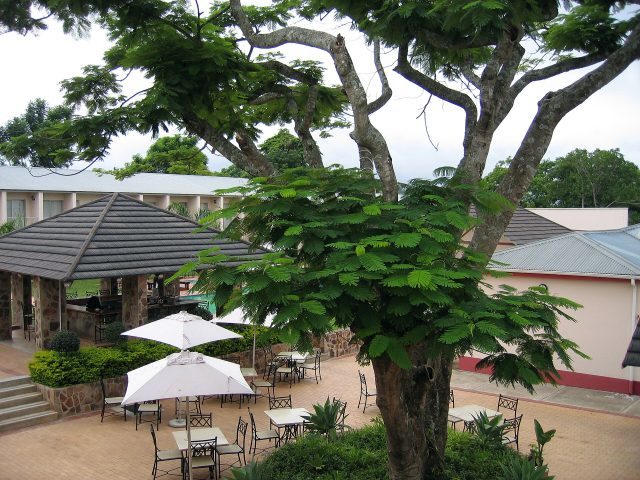
King Sobhuza II Memorial Park in Manzini is one of those quiet places where history feels present without demanding attention. There are no grand monuments here, no crowds of visitors snapping photos, just wide pathways shaded by trees and a sense of stillness that lingers even in the middle of the city. The park doesn’t try to impress with scale or spectacle—it’s more like a well-tended garden where people come to walk, sit, or simply be for a while. The lawns are neatly kept, the flowerbeds arranged without fuss, and the benches invite you to pause rather than rush past.
Sobhuza II was a king who shaped Eswatini in ways that still resonate today. He ascended to the throne in 1921 at just twenty-two years old and ruled for sixty-one years, a reign so long it spanned colonial rule, independence, and the early years of a nation finding its footing in the modern world. His leadership was marked by a careful balance—holding onto tradition while navigating the pressures of change. Some call his era a golden age, though like any long period of history, it had its complexities. What remains undeniable is his role as a unifying figure, someone who guided Eswatini through transformations without erasing its identity.
The park reflects this legacy in subtle ways. Instead of a towering statue, there’s a bronze bust of Sobhuza II on a modest pedestal, his expression calm and thoughtful, as if watching over those who visit. Nearby, plaques in English and siSwati outline key moments of his reign, a nod to the country’s dual languages and the idea that history belongs to everyone. The design is understated—no ornate carvings or dramatic flourishes, just clean lines and practical materials. The pathways are paved, the lampposts unremarkable, the benches sturdy but unadorned. It’s the kind of place that doesn’t announce its importance but quietly insists on it.
Manzini itself is a city of movement—markets buzzing, traffic flowing, people going about their day. The park sits near the center, a counterpoint to all that energy. In the early mornings, when the air is cool and the light soft, it’s especially peaceful. Locals come here not just as tourists but as part of a living connection to the past. You might see school groups on field trips, elders chatting on benches, or families pointing out the plaques to children. There’s no scripted experience, just the quiet understanding that this is a place where history is remembered, not performed.
Eswatini is a country where the past and present coexist without much fanfare, and the park embodies that. There are no strict rules here, no signs scolding visitors to behave a certain way. Yet people treat the space with respect—no litter, no loud voices, no plucking flowers from the beds. It’s as if the park’s atmosphere carries its own unspoken code, one that recognizes this isn’t just a memorial but a thread in the fabric of the nation’s story.
For travelers, the park offers a chance to step away from the usual tourist trail. You don’t need to be a history buff to appreciate it. Just walking the paths, sitting on a bench, or reading the plaques can be enough. The place doesn’t ask for reverence, just a moment of quiet. And in that quiet, it’s easy to reflect on how much one person’s life can shape a country—how leadership, tradition, and change intertwine in ways that aren’t always visible but are deeply felt.
If you find yourself in Manzini, it’s worth stopping by, even briefly. The park isn’t the kind of place that leaves you breathless with awe, but it might leave you with something quieter—a sense of connection, a pause in the day, a reminder that history isn’t just about grand events but also about the spaces where people remember, reflect, and carry on. In Eswatini, those spaces are everywhere, if you know where to look.