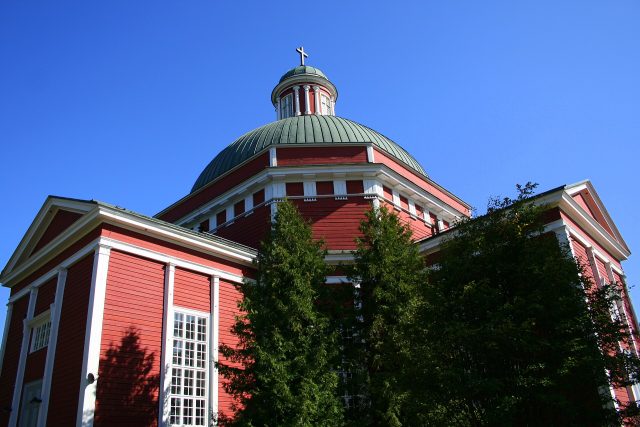
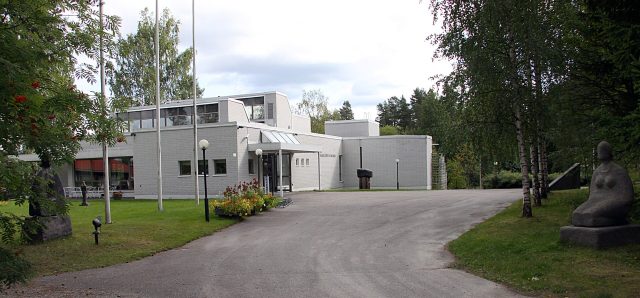
The war memorial in Saarijärvi is a quiet place where the past lingers in the stillness of Finland’s northern landscape. It stands on a gentle hill, surrounded by the forests and lakes that define this part of the country. There are no city noises here, only the wind through the pines and the occasional murmur of visitors paying their respects. The memorial doesn’t demand attention—it’s unassuming, almost blending into the surroundings. Yet that very simplicity makes it all the more meaningful. It wasn’t built to impress, but to offer a moment of reflection.
Saarijärvi, like many Finnish towns, bore the weight of the Second World War in its own way. Though far from the major battlefields, the town still lost its share of men—soldiers who never returned, families left without providers. The memorial is dedicated to them, to those whose names might not appear in history books but whose absence shaped the life of this small community. It wasn’t erected immediately after the war; only later, when the need to preserve their memory in something more lasting than stories became clear, did the idea take shape.
The design of the memorial is as understated as Finnish architecture often is. At its center stands a granite stele, its surface etched with names, surrounded by low stone blocks bearing dates and symbols of lives cut short. A small park with winding paths leads to the monument. In winter, snow blankets the ground; in summer, wildflowers grow between the stones. The natural surroundings seem to guard the place, as if time itself moves more slowly here.
Visitors come throughout the year, not just on Remembrance Day or anniversaries of key events. Locals bring flowers, parents bring their children to explain why the past matters. Sometimes, travelers passing through stumble upon the memorial, pausing to read the inscriptions before standing in silence. There’s no loud conversation, no laughter, no posing for photos. The place sets its own tone, and everyone who enters follows it without question.
For Saarijärvi, the memorial is more than a landmark—it’s a shared memory. There are no museum exhibits or interactive displays, nor is there a need for them. The weight of the place comes from the quiet moments spent in front of those stones, from the wind and the way it carries the unspoken. History here isn’t just about dates and battles; it’s about the people who never came home.
Time feels different at the memorial. In summer, the sun lingers late, casting long shadows across the granite. In winter, snow softens the edges of the stones, making the place seem almost hidden, yet no less present. The landscape itself seems to protect it, ensuring that the memory endures even when no one is around. There are no crowds, no rush—just stillness and the echoes of the past.
This isn’t a place for guided tours or grand narratives. There are no speeches about heroism, no documentaries playing in the background. Instead, there’s silence—a silence that speaks volumes. Each visitor finds something different in it: for some, it’s a tribute; for others, a reminder of how fragile peace can be; for a few, simply a chance to be alone with their thoughts.
Finland has many war memorials, but this one stands out for its modesty. It doesn’t aim to be grand or imposing; it simply exists, a quiet testament to the fact that war touched every corner of the country, even the smallest, most unassuming towns. Saarijärvi may not be a capital or a major city, but it has its own stories, its own losses, its own heroes. The memorial keeps their names alive, so they won’t be forgotten.