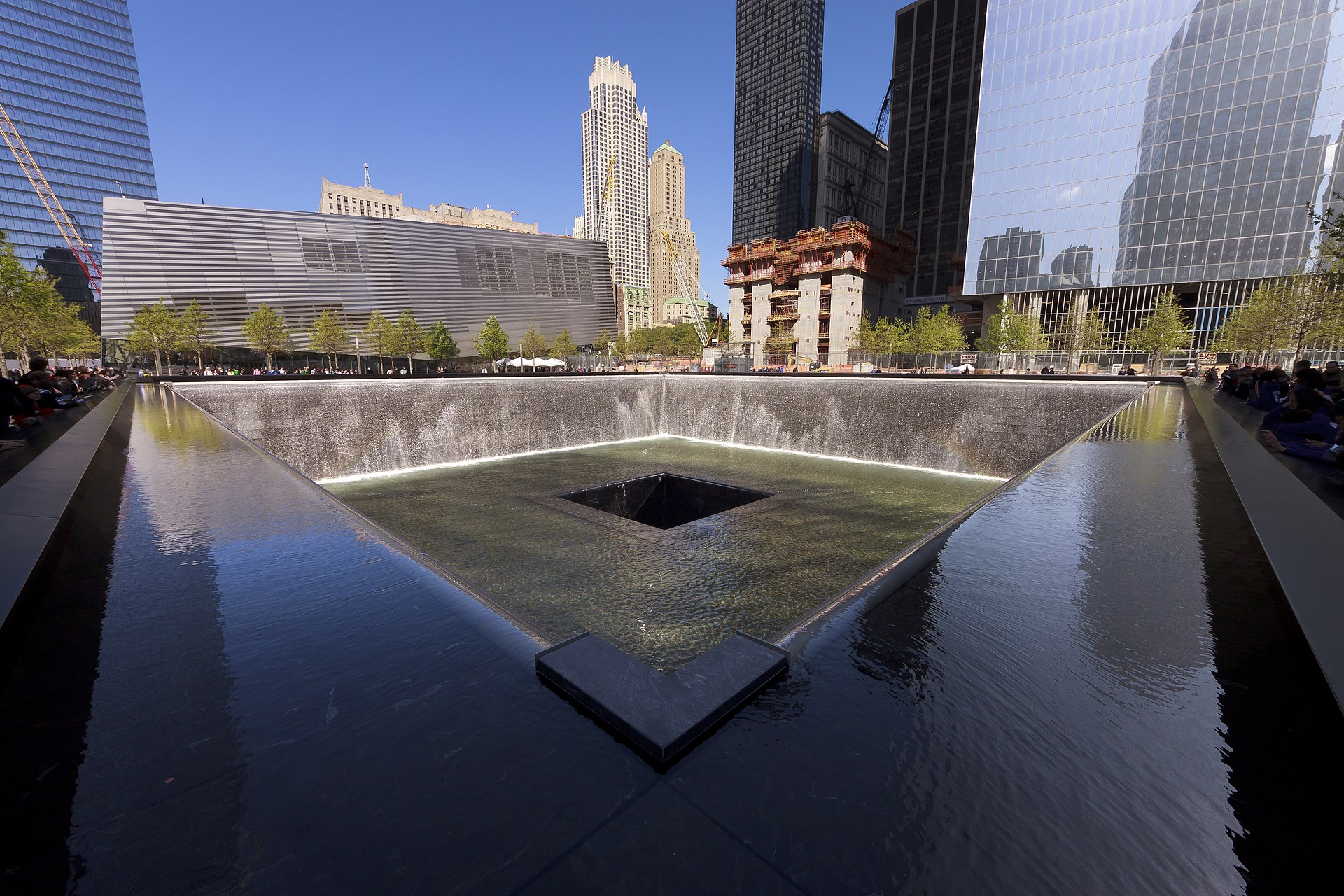
The September 11 Memorial and Museum in New York stands where the World Trade Center once did, a place where grief takes physical form. The two vast reflecting pools, set into the footprints of the fallen Twin Towers, dominate the space. Water cascades down their sides into a central void, a quiet but powerful symbol of loss and the persistence of life. Around each pool, bronze parapets bear the names of nearly three thousand people who died in the 2001 attacks and the 1993 bombing. At dusk, the lighting softens the inscriptions, making them seem almost spectral, yet their presence remains undiminished.
Beneath the plaza, the museum descends into the earth, its entrance marked by a long ramp that leads visitors downward. The underground galleries preserve fragments of the original structures—steel beams twisted by the force of the collapse, a surviving column that once held up the towers. The exhibits don’t just display artifacts; they weave together personal stories—recorded voices of survivors, last messages left by those trapped in the buildings, the urgent radio transmissions of first responders. The design of the space, from the temperature of the air to the carefully calibrated lighting, ensures that visitors don’t just observe but feel the weight of what happened here.
One of the most striking sections is the Memorial Hall, where photographs of every victim line the walls. Each face is accompanied by a brief biography, a reminder that these were ordinary people—office workers, firefighters, tourists, children—whose lives were cut short. Nearby stands the Last Column, the final piece of steel recovered from the wreckage in May 2002. Its surface is covered in messages, drawings, and tributes left by rescue workers who spent months sifting through the debris. These marks, made by human hands, make the history tangible in a way that no plaque ever could.
Rising beside the memorial is One World Trade Center, also known as the Freedom Tower. At 1,776 feet, its height is a deliberate reference to the year the Declaration of Independence was signed. The building’s glass facade reflects the sky, giving it an almost weightless appearance, though its presence is anything but light. The observation deck on the 100th floor offers sweeping views of the city, stretching far beyond Manhattan on clear days. Yet even here, high above the streets, the events of that September morning are impossible to forget.
The memorial doesn’t soften the harshness of what happened. There’s no grand rhetoric, just silence occasionally broken by the sound of falling water or the muffled sound of someone crying. Around the pools, white oak trees stand tall—chosen for their resilience and ability to endure harsh winters. Some were brought from places connected to the attacks, including the Pennsylvania field where Flight 93 went down. Each tree carries its own meaning, another layer in the story this place tells.
Visiting the memorial and museum isn’t like seeing any other landmark. It’s an experience that lingers, forcing you to confront difficult questions—about the fragility of life, the way people come together in the face of disaster, and how a city and a nation rebuild after such a profound loss. New York didn’t bury this chapter of its history; instead, it turned the site into a public space where anyone can pay their respects. There’s no script for how to feel here, no right or wrong way to react.
When the memorial first opened, some worried it would become just another tourist attraction, stripped of its deeper meaning. But that hasn’t been the case. Locals visit as often as tourists do, along with family members of the victims and first responders who worked at the site. Some leave flowers by the names of loved ones; others sit quietly on the benches, watching the water. The power of the place lies in its openness—it doesn’t tell you how to behave, but gives you the space to find your own connection.
The design of the memorial and museum is a story in itself. The winning proposal by Michael Arad and Peter Walker was selected from over five thousand entries in an international competition. Their vision was simple yet profound: to create a space where architecture and nature could help people process their grief. The pools mirror the outlines of the original towers, replacing steel and glass with water and sky. The museum, designed by Snøhetta, burrows underground, shielding visitors from the city’s noise while remaining an integral part of it.
The memorial feels timeless. In the early morning, it’s nearly empty, the stillness broken only by the occasional passerby. By midday, voices fill the space, but the atmosphere remains one of quiet reflection rather than sorrow. At night, the lighting transforms the site—the water glows from within, and the names on the bronze panels seem to fade, like memories that grow fainter with time. Yet they don’t disappear. That, perhaps, is the most important message this place carries.