Fes is often called the spiritual heart of Morocco, and nowhere is this more evident than in its medina, a place where time seems to have stood still for centuries. Walking through its narrow, winding streets, you step into a world that has barely changed since the Middle Ages. The cobblestone alleys twist and turn, leading past ancient mosques, madrasas, and caravanserais where merchants once traded goods from the Sahara, Europe, and the Middle East. There are no cars here—only pedestrians, donkeys laden with wares, and the occasional motorbike squeezing through the crowds. The sounds of the medina are a constant hum of life: the calls of vendors, the echo of the muezzin’s prayer, the rhythmic tapping of craftsmen’s tools, and the soft shuffle of footsteps on stone.
Founded in the late 8th century, the medina of Fes, known as Fes el-Bali, has long been a center of political, religious, and intellectual life in Morocco. It served as the capital of the Idrisid dynasty before becoming a key stronghold of the Marinids, who transformed it into a hub of Islamic scholarship. Scholars, philosophers, and theologians flocked here, and the city’s libraries and universities gained fame far beyond Morocco’s borders. Among its most enduring institutions is Al Quaraouiyine, the world’s oldest continuously operating university, founded in 859. Even today, it remains a symbol of knowledge and tradition, drawing students and researchers from around the globe.
The architecture of Fes el-Bali is a testament to the layers of history that have shaped it. Over the centuries, Berber, Arab, and Andalusian influences merged to create a distinctive style. Homes are built from clay and stone, with flat roofs and inner courtyards where families gather. The facades often feature intricately carved wooden balconies and latticework that filters sunlight into delicate patterns. The madrasas, or religious schools, are particularly striking, with their walls and floors covered in elaborate mosaic tiles, wooden ceilings adorned with geometric patterns, and Arabic calligraphy woven into the design. Each detail tells a story of craftsmanship passed down through generations.
One of the most iconic landmarks of the medina is Bab Bou Jeloud, the grand gate that serves as the main western entrance to the old city. Built in the 13th century, its massive wooden doors and ornate tilework reflect the defensive needs and artistic sensibilities of the time. Passing through it feels like stepping into another era, where every street and alley holds its own secrets. Hidden fountains, adorned with colorful mosaics, appear around unexpected corners, while the minarets of secluded mosques rise above the rooftops, their interiors off-limits to visitors but their presence a constant reminder of the city’s spiritual life.
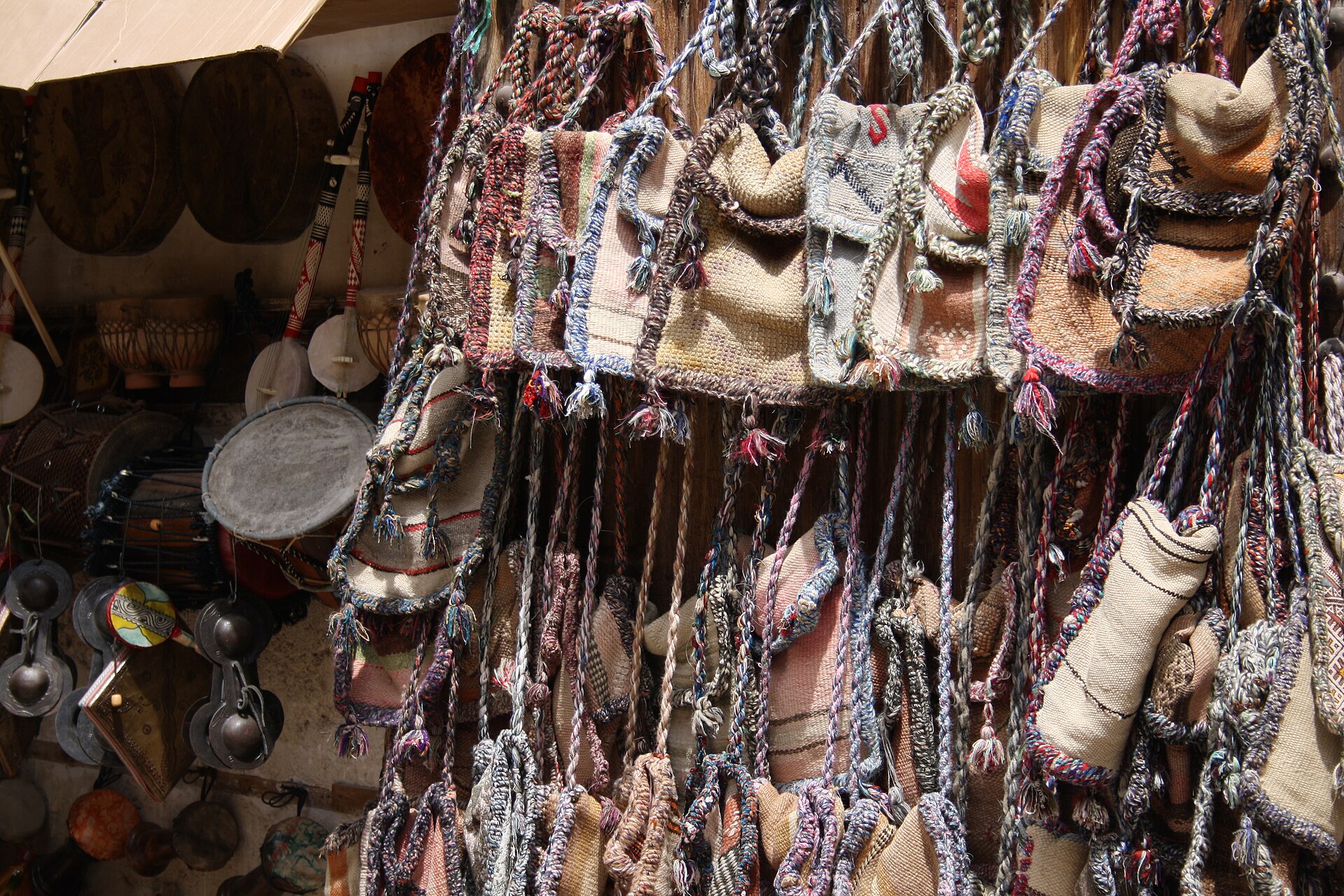
Life in the medina moves to a rhythm that has remained largely unchanged for centuries. The day begins with the call to prayer, after which the streets gradually fill with activity. Shopkeepers open their stalls, offering everything from spices and ceramics to silk fabrics and leather goods. One of the most fascinating sights is the tanneries of Chouara, where leather has been processed using traditional methods for generations. From the terraces of nearby workshops, you can watch the dyeing vats filled with natural pigments, their pungent scent a reminder of the medina’s enduring traditions. The process is labor-intensive, but the results—vibrant, handcrafted leather—are worth the effort.
Beyond its historical and architectural significance, the medina of Fes is a place where you can experience the pulse of everyday Moroccan life. Unlike some tourist-heavy destinations, it hasn’t been sanitized for visitors. Tourists are present, but they blend into the flow of locals going about their daily routines. On the rooftops of cafes, you can sip mint tea as the sun sets behind the minarets, while in small family-run restaurants, you can taste dishes like tagine, pastilla, or harira—recipes that have been perfected over generations. The food here is simple but deeply flavorful, made with ingredients sourced from the medina’s markets.
Exploring the medina can be overwhelming, but that’s part of its charm. There are no straight paths, and it’s easy to get lost, but every wrong turn leads to something unexpected. A sudden fountain appears in a quiet square, or an old caravanserai reveals itself, its arched doorways hinting at the merchants who once rested here. In the workshops, artisans patiently carve wood or weave textiles, their skills honed over years of practice. The medina isn’t a museum frozen in time; it’s a living, breathing place where history is woven into the fabric of daily life.
Despite its age, Fes el-Bali is far from stagnant. Artisans still train apprentices in traditional crafts, and new cafes and guesthouses open to accommodate modern travelers. Yet these changes are made with care, ensuring that the medina retains its character. Buildings are restored to preserve their original beauty, and new constructions follow the same architectural principles that have defined the city for centuries. This balance allows the medina to remain a unique place where the past and present coexist seamlessly.
Visiting the medina of Fes is more than just a sightseeing trip—it’s a journey into another time. You could spend days wandering its streets and still discover something new around every corner. Some are captivated by its authenticity and beauty, while others find its chaos and noise overwhelming. But one thing is certain: there’s nowhere else quite like it. The medina lives by its own rules, and those who take the time to immerse themselves in its rhythm will leave with memories that linger long after they’ve gone.