Sultan Hassanal Bolkiah Mosque in Sengkurong is one of those places where Brunei’s modern identity and deep-rooted traditions come together in quiet harmony. Named after the country’s reigning monarch, the mosque is more than a place of worship—it’s a symbol of national unity, where Islamic values shape the fabric of daily life and public ceremony. State events, royal milestones, and community gatherings often unfold here, making it a living part of Brunei’s social and spiritual landscape.
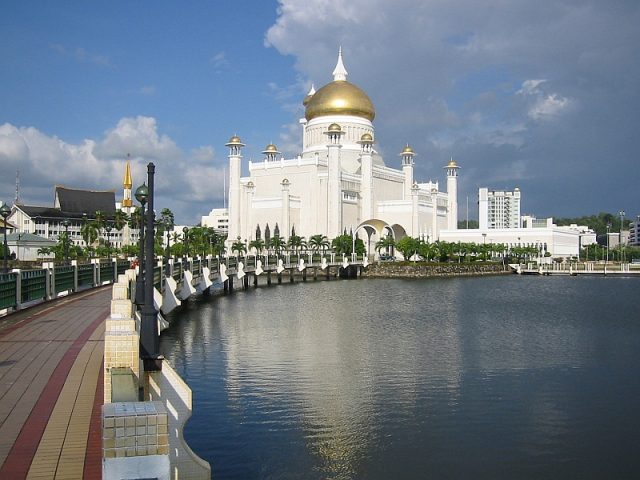
From the outside, the mosque is striking in its simplicity and scale. White marble gleams under the tropical sun, while golden domes and towering minarets rise against the sky, their curves echoing the traditional roof designs of Brunei. The architecture balances Islamic principles with local aesthetics, blending seamlessly into the surrounding greenery. Well-tended gardens with fountains and palm trees offer shade and tranquility, a welcome respite from the midday heat.
Inside, the mosque reveals a world of meticulous craftsmanship. The main prayer hall is adorned with intricate carvings, the work of artisans from across the Muslim world, reflecting Brunei’s connections beyond its borders. Geometric patterns weave across the carpets, while crystal chandeliers cast a soft glow over gilded details. The mihrab, the niche pointing toward Mecca, is particularly striking—its marble surface inlaid with semi-precious stones, a testament to the care taken in every element of the design. There’s a sense of purpose in the space, where beauty and devotion are inseparable.
For locals, the mosque is a central part of community life. On Fridays, worshippers fill the halls for congregational prayers, and during festivals like Eid al-Fitr and Eid al-Adha, the grounds become a hub of activity. Visitors are welcome at certain times, but the mosque remains a functioning religious site, and respect for its customs is essential. Modest dress, the removal of shoes, and quiet behavior are expected—not as formalities, but as natural expressions of reverence.
The mosque’s construction in the late 20th century coincided with a period of growth for Brunei, as the country expanded its infrastructure while staying rooted in tradition. Materials were chosen with care: Italian marble stands alongside local granite, and decorative panels draw from classical Bruneian motifs. The result is a building that feels both timeless and distinctly of its place, a bridge between the past and the present.
Beyond its religious significance, the mosque offers a glimpse into Brunei’s interpretation of Islamic culture. The rhythm of daily prayers, the call of the muezzin, and the quiet conversations among worshippers create an atmosphere of calm focus. Unlike the bustling mosques found in other parts of the world, this one carries a sense of stillness, where even visitors find themselves slowing down, drawn into the unhurried pace of the surroundings.
Sengkurong itself is worth exploring. A quiet suburb of Bandar Seri Begawan, it offers a contrast to the capital’s busier streets. Traditional stilt houses, small markets, and local eateries serving Bruneian dishes provide a sense of everyday life outside the city center. A visit to the mosque can easily be paired with a walk through the neighborhood, where the blend of old and new feels organic rather than forced.
More than just an architectural landmark, Sultan Hassanal Bolkiah Mosque is a reflection of Brunei’s evolving identity. It embodies the country’s commitment to preserving its heritage while engaging with the wider world. For travelers, it’s an opportunity to see Islamic culture not as a monolith, but as something lived and breathed—a tradition that is both deeply personal and shared, woven into the story of a nation.