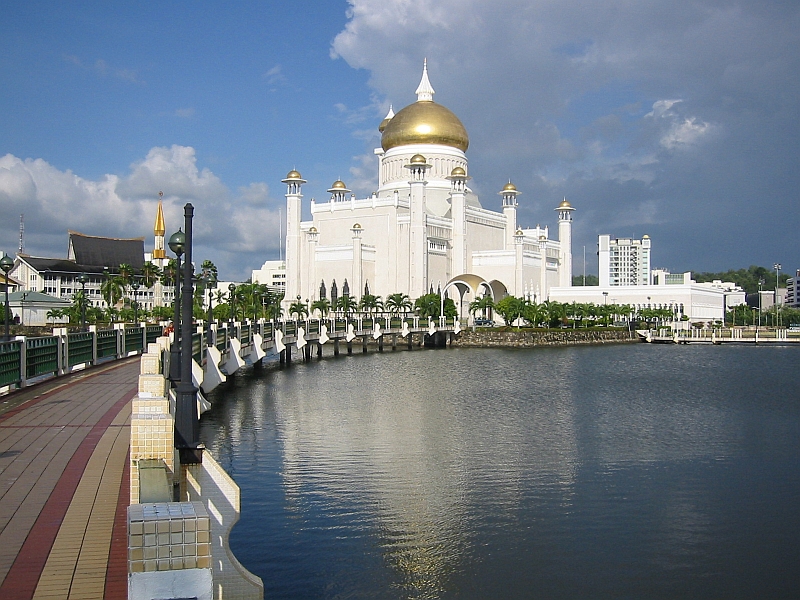
The Sultan Omar Ali Saifuddien Mosque stands as one of Brunei’s most recognizable landmarks, its golden dome catching the light from miles away. Built along the edge of an artificial lagoon in the heart of the capital, the mosque was completed in the late 1950s, a time when the country was still under British protection but already asserting its identity. Named after the 28th Sultan of Brunei, who ruled during its construction, the mosque was made possible by the nation’s oil wealth, which allowed for ambitious architectural projects that blended tradition with grandeur.
The design of the mosque reflects a fusion of Islamic and Renaissance influences, a deliberate choice that sets it apart from more conventional Islamic architecture. The main dome, covered in real gold leaf, dominates the skyline, while four towering minarets rise around it, their surfaces adorned with intricate mosaics and carvings. Inside, the prayer hall is a study in elegance—marble columns support high ceilings, Persian carpets soften the floors, and crystal chandeliers cast a warm glow over the space. The minbar, the pulpit from which sermons are delivered, is crafted from rare woods and inlaid with gold, a testament to the craftsmanship that went into every detail.
When the mosque opened in 1958, it was more than just a place of worship. At a time when Brunei was navigating its path toward independence, the structure became a symbol of the country’s revival of Islamic traditions and its aspirations for the future. Today, it remains a central part of religious life in Brunei, drawing locals and visitors alike. Friday prayers, in particular, fill the mosque with hundreds of worshippers, creating a sense of community that extends beyond its walls.
The artificial lagoon surrounding the mosque adds to its beauty, especially in the evenings when the lights come on and the domes and minarets are reflected in the still water. A stone bridge arches over the lagoon, leading to a small mausoleum designed in the style of traditional Malay architecture. The water’s surface mirrors the mosque’s silhouette, turning the entire scene into something almost surreal, especially at dusk when the golden dome seems to glow from within.
Visitors are welcome during designated hours, though there are a few simple rules to follow. Modest clothing is required, shoes must be removed before entering, and silence is expected out of respect for those praying. Inside, you can explore the main prayer hall, a small museum showcasing Islamic artifacts and historical items related to Brunei’s religious heritage, and a library with texts on Islamic studies. Photography is allowed, but only without flash and in certain areas. Occasionally, guides offer insights into the mosque’s architecture and the religious customs observed here, though these aren’t always available.
Beyond its religious significance, the mosque is a place where history and culture intersect. Brunei, despite its small size, has managed to preserve its heritage while creating something truly remarkable. Even for those who don’t practice Islam, the atmosphere inside is striking—calm, dignified, and imbued with a sense of reverence. The quiet hum of prayers, the soft light filtering through stained glass, and the cool marble underfoot all contribute to a feeling of tranquility that lingers long after you leave.
The mosque is set within a lush park, a green space that locals often visit to relax or take a leisurely stroll. Benches line the paths, offering a place to sit and enjoy the surroundings, whether it’s the sight of families picnicking or children playing near the water. During major Islamic holidays like Eid al-Fitr and Eid al-Adha, the area transforms into a hub of activity. Prayers, processions, and charitable events draw crowds, and the mosque becomes the heart of celebrations that bring the community together. For many Bruneians, this place holds personal memories—childhood visits, family gatherings, and moments of reflection.
If you find yourself in Brunei, the Sultan Omar Ali Saifuddien Mosque is worth a visit, not just for its beauty but for the sense of peace it offers. Unlike the bustling pilgrimage sites of larger Muslim-majority countries, this mosque provides a quieter experience, one where time seems to slow down. Whether you’re standing by the lagoon, watching the water ripple under the weight of the reflected domes, or stepping into the prayer hall, the space invites contemplation. It’s a place where you can glimpse the soul of Brunei—its past, its faith, and the quiet pride of a nation that has crafted something enduring.