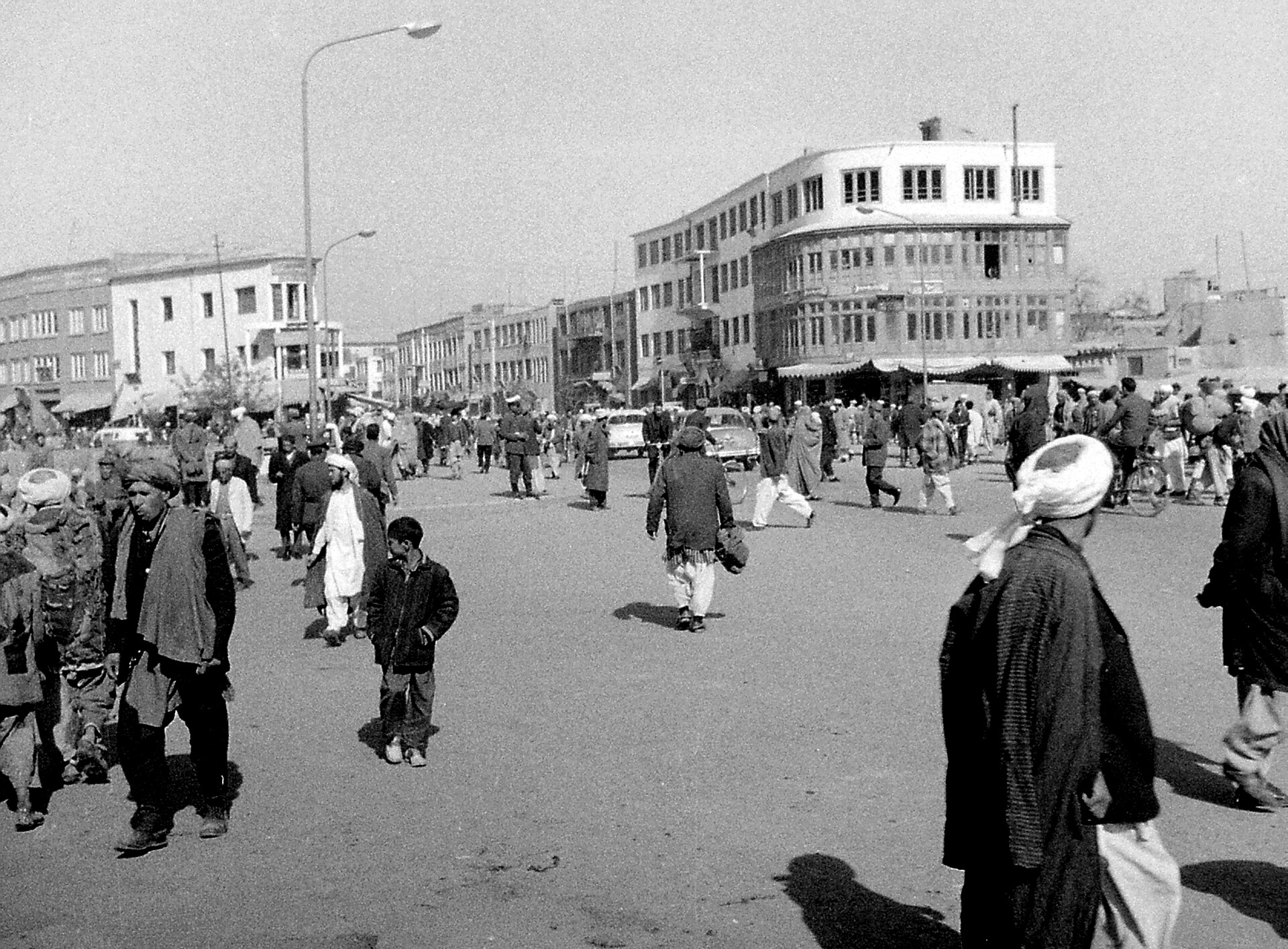
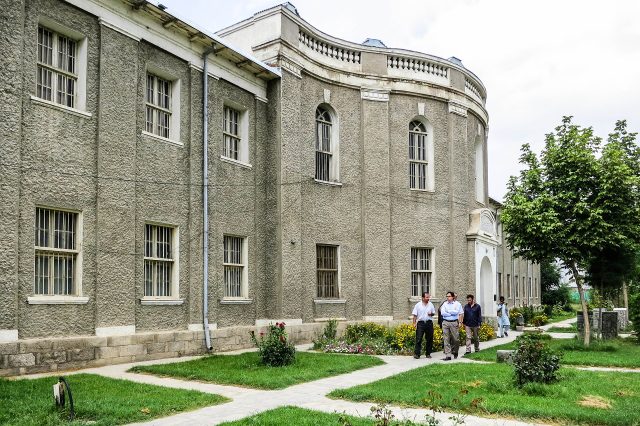
Puli-Hishti Mosque stands quietly in the heart of Kabul, a city that has seen centuries of change. Built in the 19th century during the reign of Amir Dost Mohammad Khan, it was one of the first major mosques constructed in the capital after a long period of instability. The name itself—*Puli-Hishti*—means "eight-arched bridge," though the mosque has no direct connection to a bridge. Some say the name comes from a nearby structure, while others believe it refers to the eight arches that once supported a covered bazaar in the area. Whatever the origin, the mosque has become a familiar landmark, its blue-tiled dome rising above the surrounding streets.
The architecture of Puli-Hishti reflects the traditional Afghan style, blending influences from Central Asia and the Indian subcontinent. The main prayer hall is spacious, with high ceilings and thick walls that keep the interior cool even in Kabul’s summer heat. The dome, covered in intricate blue and white tiles, is the most striking feature, visible from a distance. Inside, the mihrab—the niche indicating the direction of Mecca—is simple but elegant, adorned with geometric patterns that avoid the figurative art forbidden in Islamic tradition. The minaret, though modest in height, adds to the mosque’s balanced proportions, standing as a silent witness to the city’s daily rhythms.
For much of its history, Puli-Hishti has been more than just a place of worship. It has served as a gathering point for the community, a refuge during times of conflict, and a symbol of resilience. During the civil wars of the 1990s, when much of Kabul was reduced to rubble, the mosque remained standing, though not unscathed. Its walls bore the scars of bullets and shrapnel, and the surrounding neighborhood suffered heavy damage. Yet, like the city itself, Puli-Hishti endured. After the fall of the Taliban in 2001, restoration efforts began, though progress was slow. The mosque was gradually repaired, its tiles replaced, and its structure reinforced, allowing it to reclaim its place in the life of the city.
Today, Puli-Hishti is one of the most active mosques in Kabul, particularly during Friday prayers and religious festivals. The courtyard fills with worshippers, their voices rising in unison as the call to prayer echoes through the streets. The atmosphere is one of quiet devotion, a moment of stillness in a city that has known little peace. Outside, the surrounding bazaar buzzes with activity—vendors selling spices, fabrics, and secondhand goods, while children weave between the stalls. The mosque’s presence lends a sense of continuity to the neighborhood, a reminder that life in Kabul, despite its challenges, carries on.
The significance of Puli-Hishti extends beyond its religious role. It is a place where history and daily life intersect. The mosque has hosted scholars, poets, and political figures over the years, its walls absorbing the debates and discussions that have shaped Afghanistan. During the 1960s and 70s, when Kabul was a more cosmopolitan city, the mosque was a meeting point for people from all walks of life. Even now, it remains a space where the old and the new coexist—the traditional call to prayer mingling with the hum of motorbikes and the distant sound of construction.
Visitors to Puli-Hishti will find it less grand than some of Afghanistan’s other mosques, such as the Great Mosque of Herat or the Blue Mosque in Mazar-i-Sharif. Its beauty lies in its simplicity and its connection to the everyday. The mosque is not a tourist attraction in the conventional sense, but for those who take the time to observe, it offers a glimpse into the soul of Kabul. The worn steps leading to the entrance, the faded tiles on the dome, the way the light filters through the arched windows—all of these details tell a story of a place that has seen both triumph and tragedy.
The neighborhood around Puli-Hishti is just as telling. The streets are narrow and winding, lined with shops that have been in the same families for generations. The scent of freshly baked naan drifts from small bakeries, while the clatter of metalworkers’ hammers fills the air. In the early morning, the area is quiet, but by midday, it is alive with the sounds of bargaining and conversation. The mosque stands at the center of this web of activity, its presence a constant in a city that is always changing.
For those who know Kabul well, Puli-Hishti is more than just a building. It is a part of the city’s identity, a place that has adapted to war, occupation, and reconstruction without losing its essence. It has been a sanctuary for the weary, a meeting place for the hopeful, and a symbol of endurance for those who call Kabul home. In a city where the past is never far from the present, the mosque serves as a quiet reminder of what has been, what is, and what might still be.