The Ketchaoua Mosque sits in the heart of Algiers, where the old city’s pulse still lingers. Its minaret rises above the rooftops, slender and unmistakable, a remnant of the days when the call to prayer echoed across Ottoman Algiers. Today, it remains one of the few places in the capital where history isn’t cordoned off behind glass or reduced to a plaque. The mosque isn’t just a monument—it’s a living part of the city, where people still gather, though not as often as they once did.
Built in the early 17th century, when Algiers was a cornerstone of the Ottoman Empire, the mosque stands on ground that has seen countless transformations. Beneath its foundations lie the remnants of an earlier mosque, and before that, a Roman temple. This layering of history is typical of Algiers, where each era has left its mark on the same patch of earth. For the Ottomans, Ketchaoua was more than a place of worship—it was a statement of power, a way to anchor Islam in a city shaped by trade, piracy, and shifting alliances.
The mosque’s architecture blends Ottoman grandeur with local restraint. Inside, a spacious courtyard with a fountain for ablutions is framed by arched colonnade, while the prayer hall is crowned with domes. The walls bear simple stucco work and Arabic calligraphy, and the mihrab—the niche pointing toward Mecca—is elegant without being ornate. Unlike the lavish mosques of Istanbul or Cairo, Ketchaoua feels almost austere, as if to remind visitors that faith, not decoration, is what matters here.
When France took control of Algiers in the 19th century, the mosque’s fate changed dramatically. In 1832, it was converted into the Cathedral of St. Philippe, and its minaret was repurposed as a bell tower. The French cleared surrounding buildings to expand the square, turning the mosque into a symbol of foreign rule. Only after Algeria gained independence in 1962 was it returned to the Muslim community. Today, traces of both periods remain—Arabic inscriptions alongside fragments of Christian frescoes that were never painted over.
Ketchaoua isn’t the kind of place that draws crowds for selfies or guided tours. Even when the square outside buzzes with traffic and vendors, the mosque itself is quiet. The interior stays cool, sunlight filtering through lattice windows to cast soft patterns on the floor. In the mornings, elderly men come to pray and linger in the courtyard’s shade. During the day, passersby drop in—some out of curiosity, others out of habit. The mosque asks little of its visitors: just that they remove their shoes and show respect.
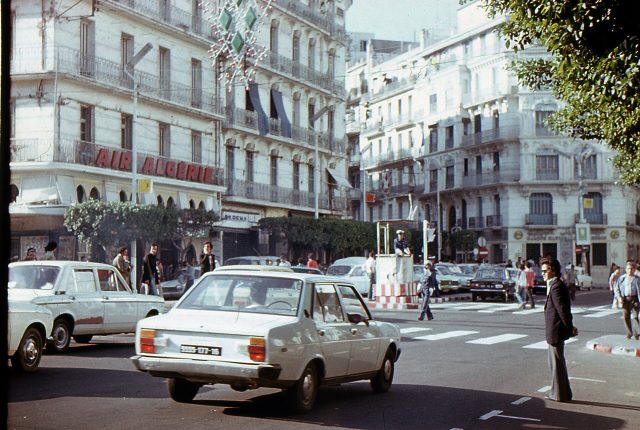
The area around Ketchaoua moves to its own rhythm. Place du Gouvernement, as the square is now called, is a marketplace for spices, fruit, and cheap electronics, while the alleys behind the mosque hide small cafés serving strong coffee and fresh flatbread. It’s easy to imagine what Algiers looked like a century or two ago—the same narrow streets, the same smells of grilled meat and oranges, the same voices blending Arabic and French. The mosque stands as a quiet guardian of this everyday life, a reminder that the city changes but doesn’t rush to forget its past.
For Algerians, Ketchaoua is more than a landmark—it’s a piece of national memory. It has outlasted Ottoman rule, French colonization, and the struggle for independence, remaining a steadfast witness to change. On religious holidays, the mosque fills with families, children playing in the courtyard while elders share stories of what it was like in their youth. In those moments, it reclaims its role as a gathering place, just as it was intended four centuries ago.
Visiting Ketchaoua offers a glimpse of Algiers without the gloss. There are no tourist traps, no pushy guides, no souvenir stalls—just an old building that breathes history and the people for whom it still matters. Perhaps that’s why the mosque retains its power: it doesn’t try to impress. It simply exists, as enduring as the mountains beyond the city or the sea at its edge. And in that quiet persistence lies its greatest value.