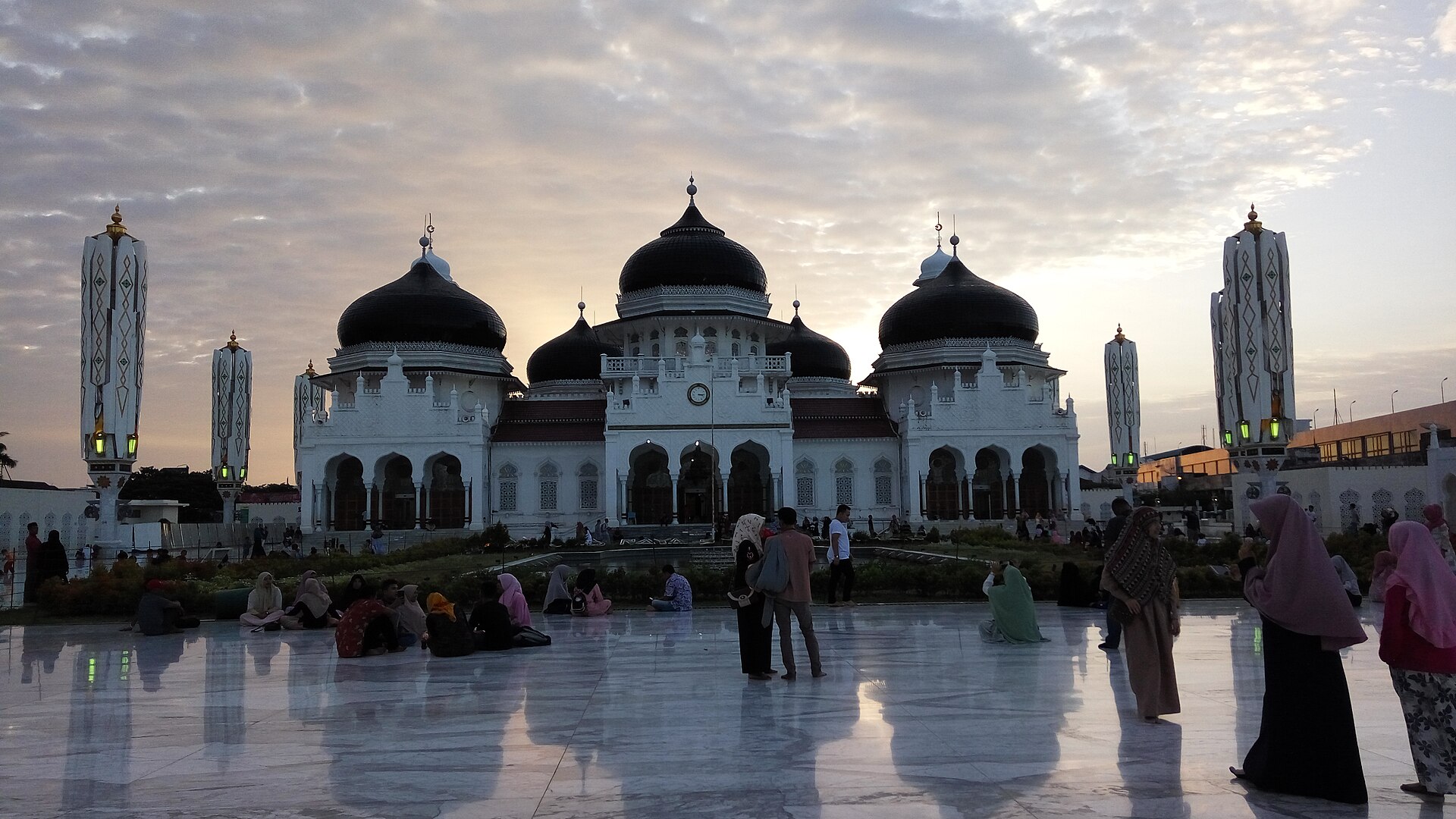
Baiturrahman Grand Mosque in Banda Aceh is one of those rare places where history and the present exist side by side so seamlessly that it feels as though time moves differently here. Built in the late 19th century, it is more than just a place of worship—it has become a symbol of the city’s resilience, standing through decades of change and hardship. Its white walls, crowned with black domes and flanked by towering minarets, rise above the surrounding streets, drawing the eye even from a distance. Whether you’re drawn to architecture or not, there’s something about the mosque that makes you pause, as if inviting you to look closer.
The mosque’s origins are tied to a complicated chapter in Aceh’s history. Construction began in 1879 under the orders of the Dutch colonial government, but this was no act of generosity. Years earlier, in 1861, a devastating earthquake and tsunami had destroyed the previous mosque, and the local people saw the disaster as divine retribution for foreign rule. They refused colonial assistance, but the Dutch insisted on rebuilding the mosque, framing it as a gesture of reconciliation—or perhaps a calculated move to assert control. For years, the Acehnese remained wary of the new structure, but over time, Baiturrahman became woven into the fabric of the city, its walls bearing witness to Indonesia’s journey toward independence and beyond.
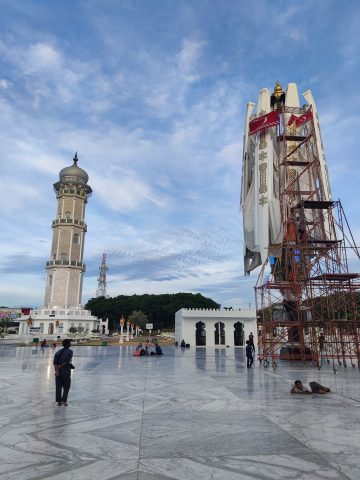
What makes the mosque architecturally striking is the way it blends traditional Indonesian elements with colonial influences. The seven domes represent the seven heavens of Islam, while the two minarets echo the design of those in Mecca. Inside, the space feels vast and airy, with high ceilings supported by slender columns that create a sense of lightness. Stained-glass windows filter sunlight, casting soft hues across the marble floors. There’s no excess of gold or ornate decoration—just a quiet harmony that encourages reflection. The simplicity of the design feels intentional, as if every detail exists to serve a purpose beyond mere aesthetics.
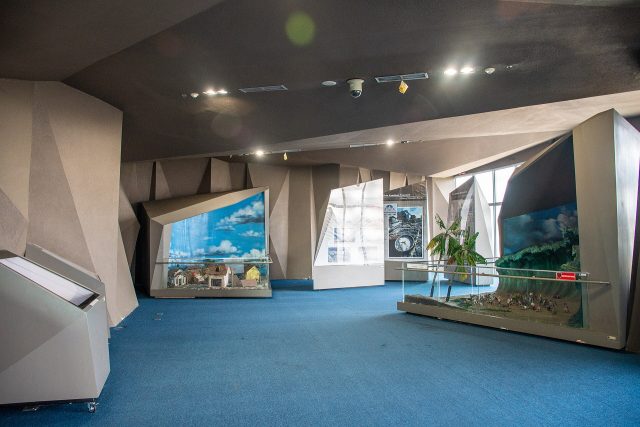
Baiturrahman has endured more than just the weight of colonial history. In 2004, the Indian Ocean tsunami struck Banda Aceh with catastrophic force, leveling much of the city. Yet the mosque remained standing, its structure largely unscathed. For many locals, its survival was nothing short of miraculous. In the aftermath, the mosque became a refuge—a place where survivors gathered, where aid was distributed, and where the first steps toward rebuilding began. Today, memorial plaques inside the mosque bear the names of those lost, and a clock in the courtyard remains frozen at the moment the waves hit. The mosque’s role in the disaster has only deepened its significance, turning it into a living monument to both tragedy and hope.
Despite the pain associated with its past, Baiturrahman remains a vibrant part of daily life in Banda Aceh. Each morning, worshippers arrive for dawn prayers, while later in the day, students gather in the courtyard to study, and elderly men play chess under the shade of trees. During Ramadan, the mosque transforms—strung with lights, filled with the scent of food, and alive with the sounds of shared iftars after sunset. Even visitors who come primarily for photographs often find themselves lingering, drawn in by the atmosphere. There’s a quiet strength here, a sense of continuity that feels both grounding and inspiring.
For the people of Aceh, Baiturrahman is more than just a building. It embodies the region’s history, its struggles, and its enduring spirit. It has been a gathering place during times of conflict, a sanctuary in moments of grief, and a symbol of unity in the face of adversity. The mosque has witnessed protests for independence, served as a shelter during natural disasters, and stood as a beacon of resilience when the city needed it most. In many ways, it has become inseparable from Banda Aceh itself—a quiet but unshakable presence at the heart of the community.
Beyond its architectural beauty and historical weight, Baiturrahman offers a glimpse into the rhythm of life in Aceh. The surrounding neighborhoods still hold traces of the old city, with wooden houses adorned with intricate carvings and bustling markets where the air is thick with the aromas of spiced curries, fresh seafood, and sweet coconut-based desserts. In the evenings, as the sun dips below the horizon, the mosque is bathed in soft light, its reflection shimmering in the puddles left by the day’s heat. There’s a sense of timelessness here, not in the way of stagnation, but as if the city and its most cherished landmark have found their own unhurried pace—a quiet, steady heartbeat that carries on, no matter what.