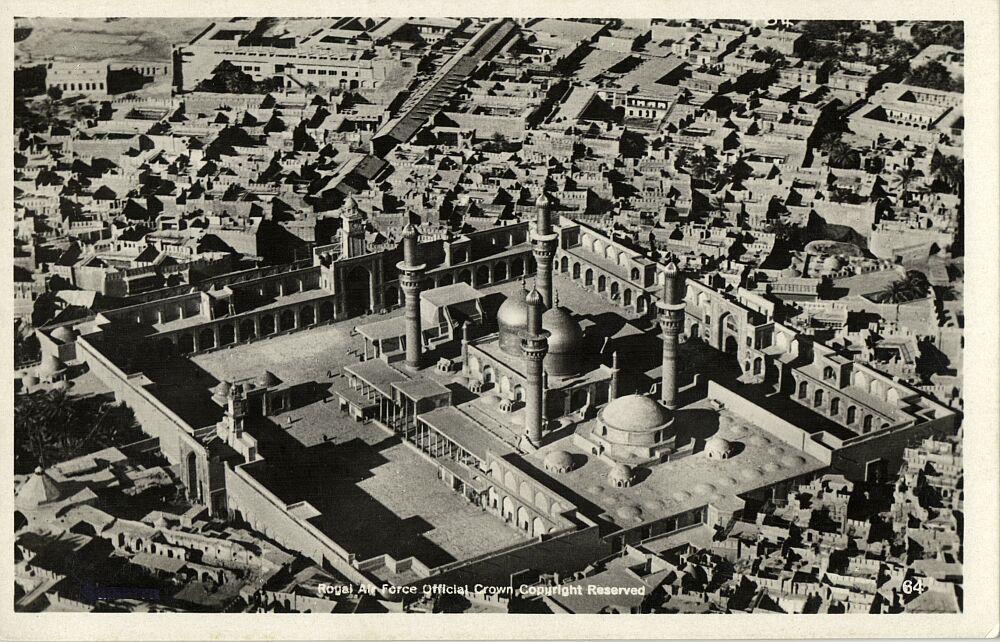
Al-Kadhimiya Mosque stands in the heart of Baghdad, a place where history feels alive in every stone and shadow. This is one of the most revered sites in Shia Islam, a sanctuary that has drawn pilgrims for centuries. The mosque is named after Musa al-Kadhim, the seventh Shia Imam, whose tomb lies beneath its golden dome. His grandson, Muhammad al-Jawad, the ninth Imam, is also buried here, making the site a focal point of devotion and reflection.
The architecture of Al-Kadhimiya is a testament to the layers of time that have shaped it. The original structure dates back to the 8th century, though what visitors see today is the result of numerous expansions and restorations. The most striking feature is the twin golden domes, shimmering under the Iraqi sun, their surfaces covered in thousands of gold-plated tiles. These domes rise above the mosque’s courtyard, which is surrounded by high walls and arched gateways, creating a sense of seclusion from the bustle of the city outside.
Inside, the mosque’s interior is a blend of intricate craftsmanship and solemn grandeur. The walls are adorned with elaborate calligraphy, verses from the Quran rendered in flowing Arabic script. The mihrab, the niche indicating the direction of Mecca, is a masterpiece of geometric design, framed by mosaics that catch the light in shifting patterns. The tombs of the Imams are enclosed in ornate silver grilles, their surfaces polished by the touch of countless hands over the years. The air is thick with the scent of incense and the murmur of prayers, a quiet hum that fills the space with a sense of reverence.
The mosque has not always been a place of peace. Over the centuries, it has witnessed conflict, destruction, and renewal. During the Mongol invasion in the 13th century, the original structure was heavily damaged, and it was later rebuilt under the Ilkhanate rulers. In the 16th century, the Safavids, who championed Shia Islam, restored the mosque to its former glory, adding many of the decorative elements that remain today. More recently, the mosque has endured the turbulence of modern Iraq, yet it has remained a symbol of resilience for the Shia community.
For those who visit, Al-Kadhimiya is more than just a historical monument. It is a living part of Baghdad’s identity, a place where faith and history intersect. The streets around the mosque are lined with shops selling religious artifacts, prayer beads, and books on Islamic scholarship. Pilgrims from across Iraq and beyond come here to pay their respects, their presence a reminder of the mosque’s enduring significance. The atmosphere is one of quiet devotion, but there is also a sense of community, as families gather in the courtyard or share a meal in the nearby cafes.
The mosque’s location in the Kadhimiya district adds to its character. This is one of Baghdad’s oldest neighborhoods, a maze of narrow alleys and traditional houses that have stood for generations. The area has a distinct rhythm, slower than the rest of the city, as if time moves differently here. The Tigris River flows nearby, its waters reflecting the golden domes of the mosque, a silent witness to the centuries that have passed.
Visiting Al-Kadhimiya is not just about seeing a historic site; it’s about experiencing a place that has shaped the spiritual and cultural life of Iraq. The mosque is a bridge between the past and the present, a reminder of the enduring power of faith. Whether you come as a pilgrim or a traveler, the sense of history here is palpable, woven into the very fabric of the place. It’s a corner of Baghdad where the weight of centuries feels both heavy and comforting, a sanctuary that has stood firm through the rise and fall of empires.