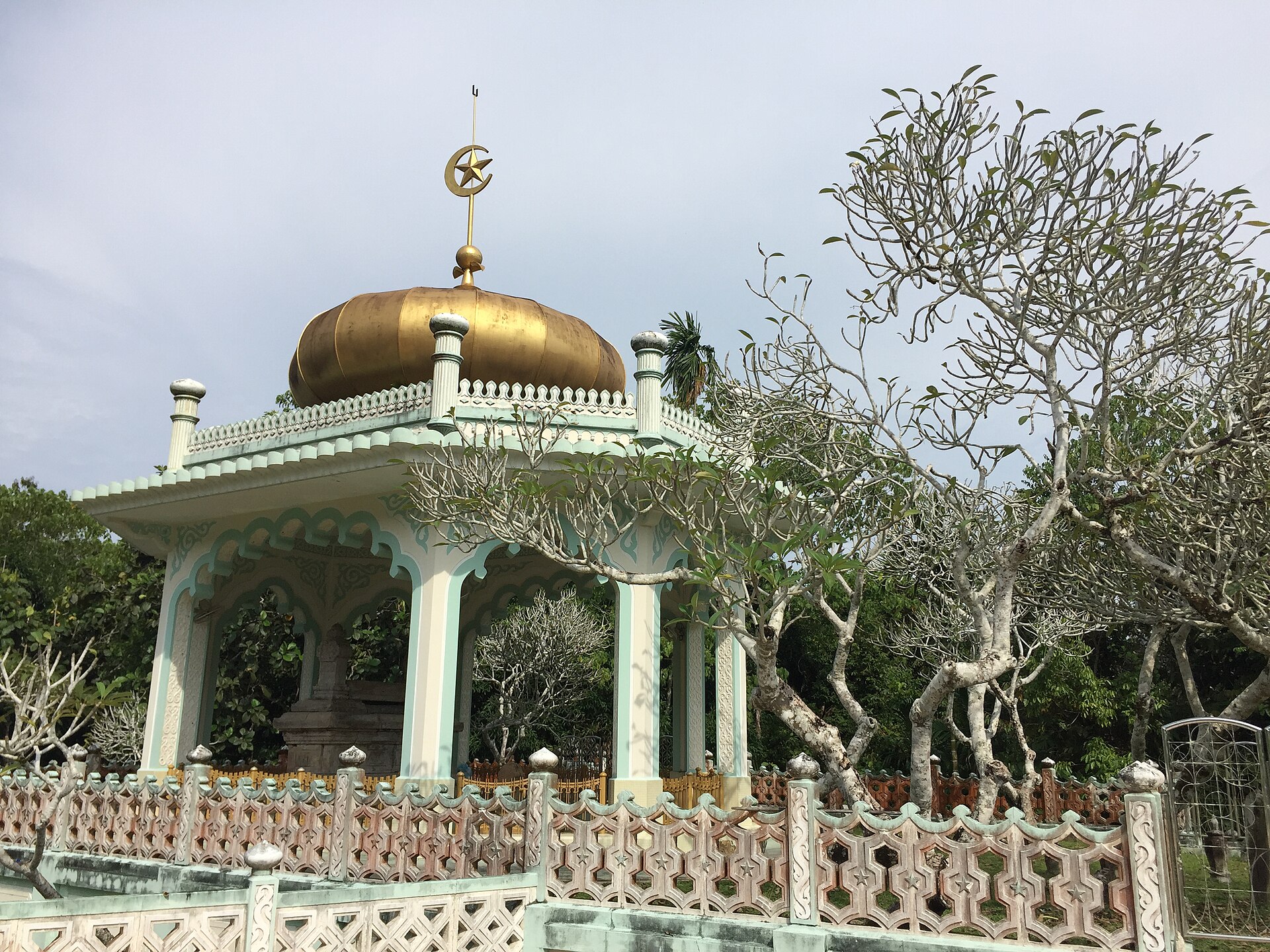
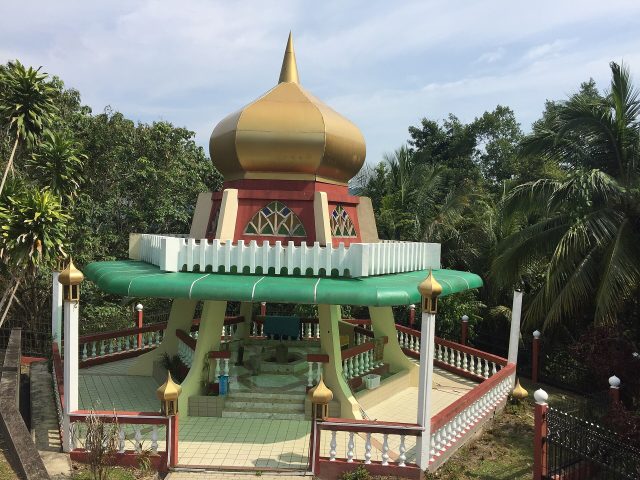
The mausoleum of Sultan Bolkiah stands quietly in Kota Batu, a place where Brunei’s past feels closer than anywhere else in the country. This modest structure, half-hidden by trees and time, is one of the few tangible links to the golden age of the Bruneian sultanate, when the kingdom stretched across Borneo and beyond. Sultan Bolkiah, who ruled in the late 15th and early 16th centuries, is remembered as one of Brunei’s most powerful leaders, a ruler whose reign marked the peak of the empire’s influence. His mausoleum, though unassuming in appearance, carries the weight of that legacy.
Unlike the grand tombs of other Southeast Asian monarchs, this one is simple—built from stone and mortar, with a low, sloping roof that blends into the surrounding greenery. The design reflects the Islamic traditions of the time, yet there’s a humility to it, as if the sultan’s memory was meant to be preserved without ostentation. The site itself is part of Kota Batu Archaeological Park, an area rich with remnants of Brunei’s early history. Nearby, you’ll find the ruins of the old palace and other structures that once formed the heart of the sultanate.
The mausoleum’s location in Kota Batu is no accident. This was the original seat of power in Brunei before the capital shifted to its current location in Bandar Seri Begawan. The area was once a thriving port, a hub of trade and diplomacy where merchants from China, India, and the Malay archipelago converged. Walking through the park today, it’s easy to imagine the bustle of that era—the clatter of goods being unloaded, the murmur of negotiations, the distant call to prayer echoing over the water. The mausoleum, set slightly apart from the main ruins, feels like a quiet witness to it all.
Sultan Bolkiah’s reign was a time of expansion and cultural flourishing. Under his rule, Brunei extended its control over much of Borneo, including parts of what are now Sabah and Sarawak, as well as the Sulu Archipelago. He was also known for his diplomatic skill, maintaining alliances with powerful neighbors like the Majapahit Empire and later the Portuguese, who were beginning to make their presence felt in the region. The sultan’s legacy is still felt in Brunei today, not just in the mausoleum but in the country’s continued reverence for its royal lineage.
Visiting the mausoleum is a low-key experience. There are no crowds, no grand ceremonies—just the sound of leaves rustling in the breeze and the occasional chirp of birds. The site is well-maintained but not overly polished, preserving its sense of age and authenticity. A small plaque provides basic information, but beyond that, the place invites quiet reflection. It’s a spot where history feels personal, where the past isn’t just something you read about but something you can almost touch.
The surrounding Kota Batu Archaeological Park adds depth to the visit. The ruins here, though fragmentary, offer a glimpse into the layout of the old capital. You can see the remains of walls, foundations, and what might have been administrative buildings or royal quarters. The park is still an active archaeological site, with ongoing excavations that occasionally uncover new artifacts. For those interested in history, it’s a rare chance to see how the layers of the past are slowly being uncovered.
What makes the mausoleum particularly interesting is its place in Brunei’s broader historical narrative. The sultanate’s decline in the centuries after Bolkiah’s death—due to internal strife, European colonial pressures, and the rise of neighboring powers—contrasts sharply with the prosperity of his reign. The mausoleum, then, isn’t just a monument to one man but a reminder of the ebb and flow of empires. It’s a place where you can stand and consider how quickly fortunes can change, how even the most powerful kingdoms can fade into memory.
For travelers, the mausoleum and the archaeological park offer a different side of Brunei, one that’s far removed from the gleaming mosques and modern infrastructure of Bandar Seri Begawan. Here, the country’s history feels raw and immediate. There’s no need for grand interpretations or dramatic storytelling—the ruins speak for themselves. It’s a place to wander, to let your mind drift back to a time when Brunei was a major player on the regional stage, and to appreciate the quiet dignity of a monument that has stood the test of centuries.