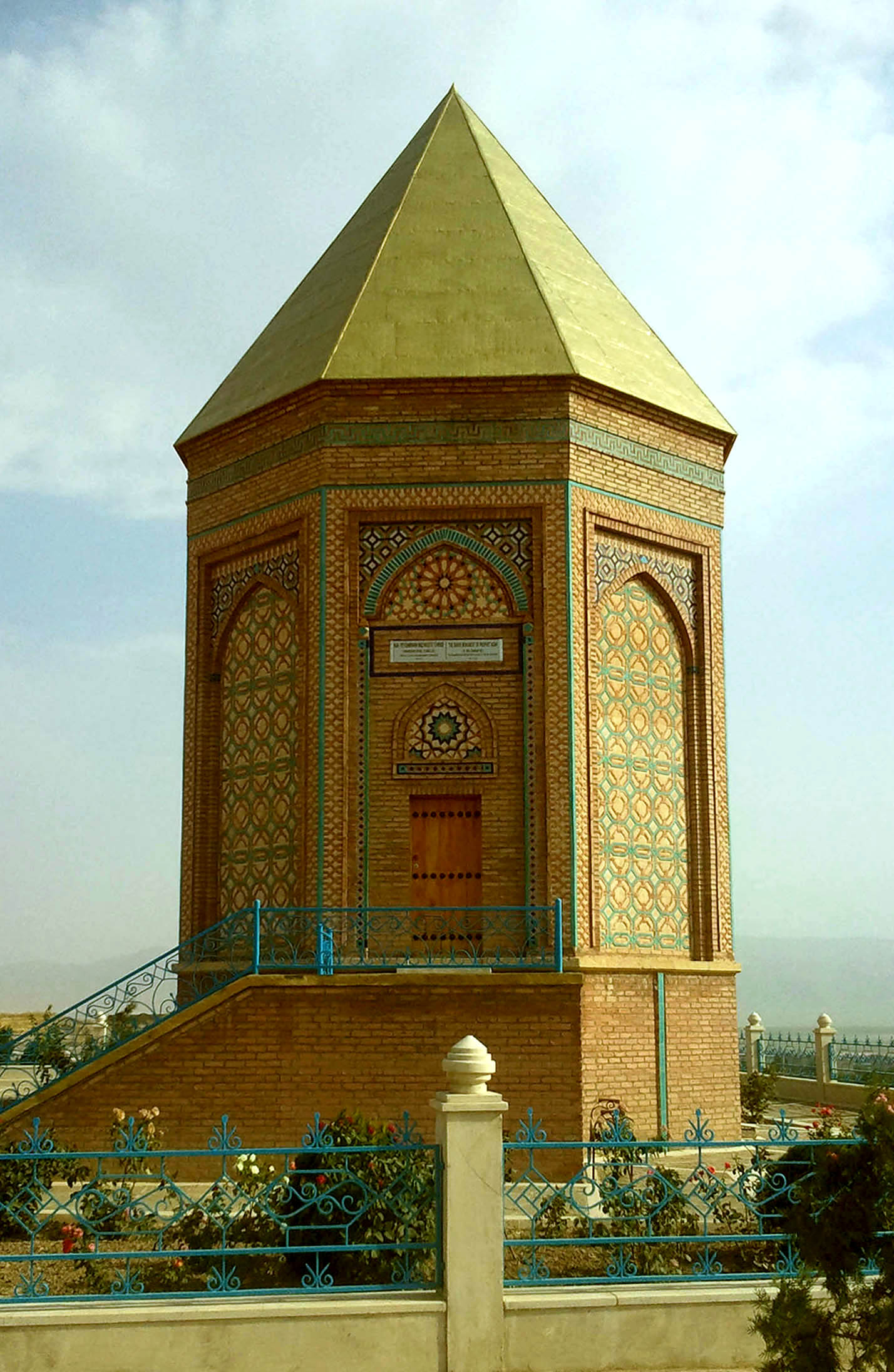
The Nuh Mausoleum stands quietly on a hillside near the town of Julfa, where the arid landscapes of Nakhchivan meet the winding curves of the Aras River. This modest yet striking structure is one of those places where history feels both distant and strangely present, as if the stones themselves remember the stories whispered about them for centuries. The mausoleum is traditionally linked to the biblical figure of Noah, though its origins are far more tangled in local legend than in any verifiable record. For many who visit, it’s less about historical certainty and more about the way the place seems to hold time in its walls—a silent witness to the layers of belief, conquest, and cultural exchange that have shaped this corner of the Caucasus.
The building itself is a simple, square tower of baked brick, rising about ten meters into the dry air. Its design is unadorned, almost austere, with a single arched entrance and small windows that let in slivers of light. The brickwork, weathered by centuries of sun and wind, gives the structure a warm, earthy hue that shifts with the time of day. Inside, the space is equally spare, with a low ceiling and a few remnants of what might once have been decorative elements. There’s no grand tomb or elaborate sarcophagus, just an empty chamber that invites quiet reflection. The simplicity of the mausoleum is part of its power—it doesn’t demand attention with flashy details, but rather draws you in with its understated presence.
The connection to Noah is, of course, the most compelling part of the mausoleum’s story. According to local tradition, this is the final resting place of the prophet who survived the great flood, a figure revered in Islam, Christianity, and Judaism alike. The legend goes that after the waters receded, Noah’s ark came to rest on nearby Mount Judi (or Mount Ararat, depending on the telling), and that he eventually settled in this region, where he lived out his days. The mausoleum is said to mark the spot where he was buried, though no archaeological evidence has ever confirmed this. Still, the story persists, passed down through generations, and for many visitors, the mausoleum is a place of pilgrimage, a tangible link to one of humanity’s oldest shared narratives.
The history of the mausoleum is as murky as the legends surrounding it. Some scholars suggest it dates back to the 8th or 9th century, a time when the region was part of the Islamic world’s cultural and religious expansion. Others argue it could be even older, possibly pre-Islamic, though the lack of written records makes it difficult to say for certain. What is clear is that the site has been revered for centuries, not just by Muslims but by Christians and Jews as well, reflecting the region’s long history of religious coexistence. The mausoleum has survived earthquakes, invasions, and the slow erosion of time, a testament to the enduring significance of the stories it represents.
Julfa itself is a place that feels suspended between past and present. Once a thriving town on the Silk Road, it was known for its caravans, its markets, and its role as a crossroads between Persia, the Caucasus, and Anatolia. Today, it’s a quieter place, overshadowed by the more famous sites of Azerbaijan, but it retains a certain charm. The Aras River, which forms the border with Iran, flows lazily past the town, its banks lined with poplars and the occasional ruined bridge. The landscape is stark and beautiful, with rolling hills and rocky outcrops that seem to stretch endlessly toward the horizon. The mausoleum sits on one of these hills, a solitary figure against the vastness of the sky.
Visiting the Nuh Mausoleum is less about ticking off a tourist attraction and more about stepping into a story that feels both personal and universal. There’s no grand entrance fee, no guided tours, no gift shops—just the mausoleum, the wind, and the quiet hum of history. Locals might point you in the right direction, or you might stumble upon it while exploring the hills around Julfa. Either way, the experience is one of quiet discovery. The climb up the hill is short but steep, and as you approach, the mausoleum seems to grow out of the landscape, its brick walls blending seamlessly with the earth around it.
Inside, the air is cool and still, a stark contrast to the heat outside. The light filtering through the small windows casts long, shifting shadows on the walls, creating a sense of timelessness. It’s easy to imagine the generations of pilgrims, travelers, and curious souls who have stood in this same spot, each bringing their own beliefs and questions. Some come seeking blessings, others come out of curiosity, and a few might come simply to feel the weight of history in a place where the past feels unusually close. The mausoleum doesn’t offer answers, but it doesn’t need to—its power lies in the way it invites you to sit with the unknown.
The surrounding landscape adds to the sense of solitude and reflection. From the hill where the mausoleum stands, you can see the Aras River winding its way through the valley below, its waters glinting in the sunlight. On a clear day, the distant peaks of Mount Ararat rise on the horizon, their snow-capped summits a reminder of the ancient flood story that has shaped this place. The land here is rugged and untamed, a far cry from the bustling cities of Azerbaijan’s lowlands. It’s a place where nature and history feel intertwined, where every rock and ridge seems to carry the echoes of the past.
For those who make the journey to Julfa, the Nuh Mausoleum is often just one stop on a longer exploration of the region. Nearby, the ruins of the medieval city of Julfa offer a glimpse into the town’s former glory, while the ancient petroglyphs of Gobustan, though far away, hint at the deep human history of the Caucasus. But the mausoleum itself remains the most compelling draw, a place where myth and reality blur in the most intriguing way. Whether you believe in the legends or simply appreciate the quiet beauty of the site, it’s a place that lingers in the memory long after you’ve left.
In the end, the Nuh Mausoleum is more than just a building—it’s a symbol of the way stories shape our understanding of the world. It doesn’t matter whether Noah was ever truly buried here, or whether the mausoleum is as old as some claim. What matters is the way the place makes you feel: small in the face of history, yet connected to something much larger than yourself. It’s a reminder that some places are sacred not because of what they contain, but because of what they represent—the enduring power of faith, the resilience of human belief, and the quiet magic of a story passed down through the ages.