The Marien Ngouabi Mausoleum stands as a quiet but powerful landmark in Brazzaville, a place where history and memory intersect. Named after the former president of the Republic of the Congo, Marien Ngouabi, who was assassinated in 1977, the mausoleum serves as both a memorial and a symbol of the country’s turbulent political past. Ngouabi’s leadership in the 1970s marked a defining era for Congo, as he steered the nation through a period of socialist reforms and Cold War tensions. His sudden death left a lasting imprint on the national consciousness, and the mausoleum was later established to honor his legacy.
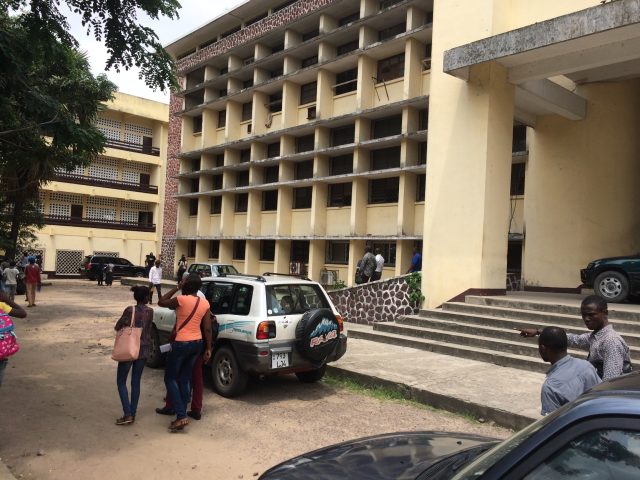
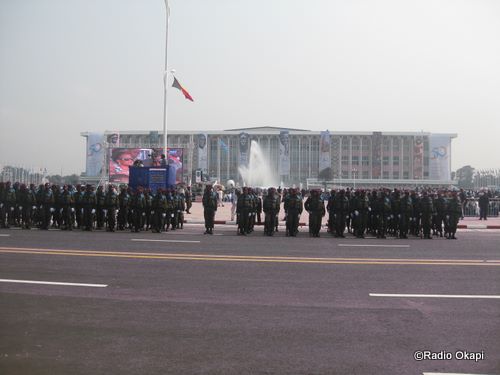
The structure itself is modest yet striking, blending modernist architecture with subtle Congolese influences. Built in the late 20th century, it reflects the aesthetic of its time—clean lines, geometric shapes, and a sense of solemnity. The exterior is often described as understated, with a focus on functionality rather than grandeur. Inside, the atmosphere is one of reverence, with Ngouabi’s tomb at the center, surrounded by elements that evoke his life and ideals. The design doesn’t overwhelm with opulence but instead invites reflection, making it a place where visitors can contemplate the complexities of Congo’s history.
For many Congolese, the mausoleum is more than just a burial site; it’s a reminder of a pivotal chapter in the nation’s story. Ngouabi’s presidency was a time of ideological shifts, as he aligned the country with socialist principles and sought to distance it from colonial influences. His assassination remains a subject of debate and speculation, with theories about the motives and perpetrators still circulating decades later. The mausoleum doesn’t attempt to resolve these questions but instead provides a space where people can engage with the past on their own terms.
The location of the mausoleum in Brazzaville is significant. The city has long been a political and cultural hub, and the mausoleum’s presence there underscores its importance in the national narrative. Brazzaville itself is a city of contrasts—vibrant markets, colonial-era buildings, and modern developments coexist alongside quieter, more reflective spaces like this one. The mausoleum is often visited by locals, particularly those with an interest in history or politics, as well as by foreign visitors seeking to understand Congo’s recent past.
Unlike some memorials that are designed to impress with scale or spectacle, the Marien Ngouabi Mausoleum feels intimate. There are no grand statues or elaborate murals, just a simple, dignified space where the focus remains on the man it commemorates. This understated approach might surprise some visitors, but it also makes the experience more personal. It’s a place where you can stand in silence, observing the details—the inscriptions, the lighting, the way the space is arranged—and consider what Ngouabi’s life and death meant for the country.
The mausoleum also serves as a counterpoint to the more chaotic aspects of Brazzaville. The city can be lively and unpredictable, with bustling streets and a rhythm that never quite slows down. In contrast, the mausoleum offers a moment of stillness. It’s a place where the noise of the present fades into the background, allowing visitors to connect with a different kind of energy—one rooted in memory and history. This duality is part of what makes the site meaningful, as it bridges the gap between the past and the present.
For those unfamiliar with Congolese history, the mausoleum can be an entry point into understanding the country’s political evolution. Ngouabi’s era was marked by efforts to assert national sovereignty, navigate Cold War dynamics, and address internal divisions. His leadership, though cut short, left a legacy that continues to shape discussions about Congo’s identity and future. The mausoleum doesn’t provide all the answers, but it does offer a starting point for deeper exploration.
Visiting the mausoleum is a low-key experience. There are no guided tours or elaborate exhibits, just the space itself and the stories it carries. This simplicity can be refreshing in an age where many historical sites are packaged for mass tourism. Here, the focus remains on the individual and their connection to the place. Whether you’re a history enthusiast, a traveler curious about Congo, or simply someone passing through Brazzaville, the mausoleum invites you to pause and reflect.
In many ways, the Marien Ngouabi Mausoleum is a microcosm of Congo itself—a country with a rich, complex history that is often overshadowed by broader narratives. It’s a reminder that behind the headlines and geopolitical struggles, there are people, ideas, and moments that shape a nation’s trajectory. The mausoleum doesn’t claim to tell the whole story, but it does offer a glimpse into one of its most significant chapters. For those willing to listen, it speaks volumes.