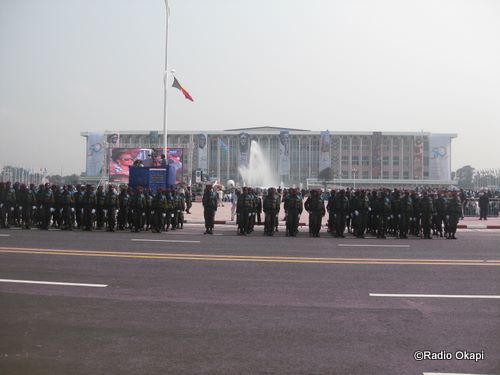
The Palace of the People stands as one of Brazzaville’s most recognizable landmarks, a building that carries both political weight and architectural significance. Built during the mid-20th century, it was conceived as a symbol of the Republic of the Congo’s post-colonial identity, reflecting the ambitions of a young nation stepping into independence. The structure dominates the city’s skyline, its imposing silhouette visible from many parts of Brazzaville, especially along the Congo River, where it overlooks the water with a quiet authority.
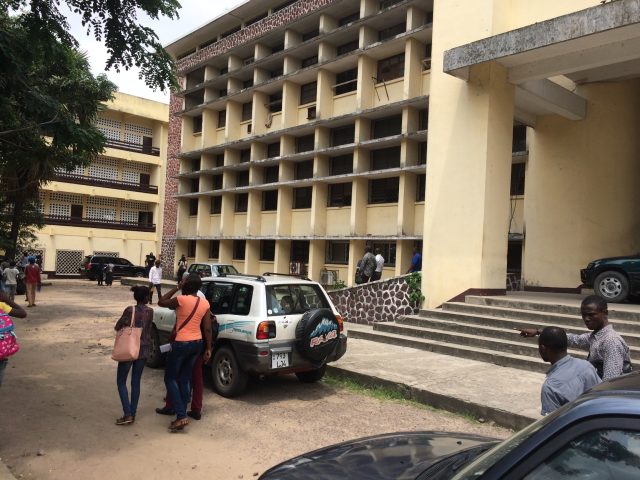
Designed in a style that blends modernist principles with local influences, the palace is a study in contrasts. Its clean lines and geometric forms speak to the international architectural trends of its time, while the use of materials and decorative elements subtly nod to Congolese traditions. The building’s facade is both austere and elegant, with a sense of symmetry that gives it a timeless quality. Inside, the grand halls and meeting rooms are spacious and functional, designed to accommodate the country’s political gatherings, state ceremonies, and diplomatic events.
The palace has witnessed much of Congo’s modern history. It was here that key moments in the nation’s political life unfolded—presidential inaugurations, legislative sessions, and international summits. Over the decades, it has served as a backdrop for the country’s evolving governance, from the early years of independence through periods of political change. While its primary function remains administrative, the building also holds a place in the public imagination, representing both the stability and the challenges of the nation’s journey.
Beyond its political role, the Palace of the People is part of Brazzaville’s urban fabric. The surrounding area is a mix of government offices, embassies, and residential neighborhoods, with the palace acting as an anchor for the city’s administrative district. The streets nearby are often quiet, lined with trees that provide shade in the tropical heat, while the riverfront offers a more dynamic scene, with boats passing by and the occasional market spilling onto the promenade.
Visitors to Brazzaville may not always have access to the palace’s interior, as it remains an active government building, but its exterior is worth seeing up close. The architecture tells a story of a country navigating its place in the world, balancing global influences with local identity. The building’s presence is felt even from a distance, a reminder of the institutions that shape daily life in Congo.
For those interested in the country’s history, the palace offers a tangible connection to the events that have defined modern Congo. It stands as a testament to the nation’s resilience, its struggles, and its aspirations. While it may not be a tourist site in the traditional sense, its significance goes beyond mere aesthetics—it is a living part of Brazzaville’s identity, a place where the past and present intersect.
The Congo River, flowing just beyond the palace, adds another layer to the experience. The river has always been central to life in Brazzaville, and its proximity to the palace underscores the city’s relationship with the waterway. Whether viewed from the riverbank or from a boat on the water, the palace’s reflection in the river creates a striking image, one that captures the essence of Brazzaville—a city shaped by history, politics, and the natural landscape around it.
In many ways, the Palace of the People is more than just a building. It is a symbol of Congo’s sovereignty, a marker of its progress, and a quiet witness to the changes that have swept through the country. For those who take the time to observe it, the palace offers a glimpse into the complexities of a nation still finding its way.