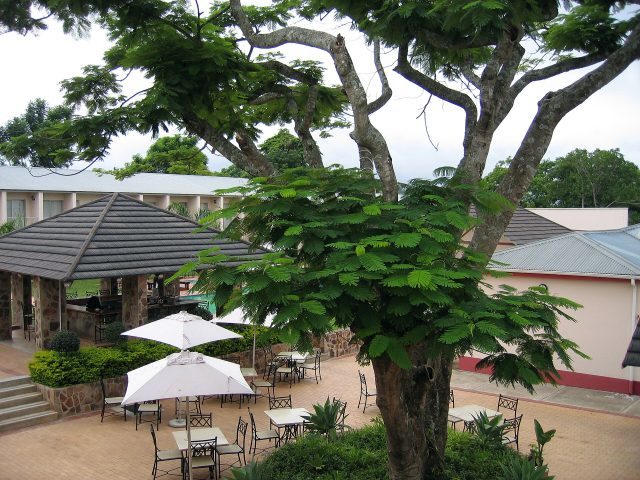
The University of Eswatini’s Manzini campus is one of those places that doesn’t announce itself with grand monuments or tourist crowds, yet it quietly shapes the rhythm of the city. Manzini itself is often overlooked by visitors to Eswatini, a country better known for its wildlife reserves and royal ceremonies. There are no luxury lodges here, no souvenir markets buzzing with activity, just the steady pulse of a working town where daily life unfolds without fanfare. The campus, though, offers something different—a space where education, history, and the everyday intersect in ways that feel both ordinary and meaningful.
Founded in 1964 as a small college under British rule, the institution was originally meant to train local professionals at a time when Swaziland, as it was then called, was still finding its footing. Over the decades, it grew into a full-fledged university, with campuses spread across the country, including here in Manzini. This location, along with the main campus in Kwaluseni and another in Luyengo, became a hub for students not just from Eswatini but from neighboring countries like South Africa, Mozambique, and Zimbabwe. For many, it’s more than just a place to study; it’s a stepping stone, a chance to build a future in a region where opportunities can be scarce.
The architecture of the campus reflects its practical origins. The buildings, constructed in the mid-20th century, were designed for function rather than aesthetics—brick structures with wide corridors, lecture halls that echo with the murmur of students, and a library where the scent of old books lingers in the quiet reading rooms. There’s a certain charm in its simplicity: a small botanical garden where plants from across the region are cultivated, sports fields where games of soccer or netball unfold in the late afternoon, and an artificial lake that serves as a gathering spot. On warm days, students sit beneath the trees, talking or studying, the water reflecting the slow passage of time.
Beyond academics, the university plays a role in the broader life of Eswatini. It hosts conferences, workshops, and cultural events that draw not just students but also locals from Manzini and beyond. Visiting lecturers, researchers, and volunteers often pass through, bringing with them new ideas and perspectives. For many foreigners, the campus is their first real introduction to Eswatini, a place where they can engage with the country beyond the usual tourist experiences. In this way, the university acts as a kind of bridge, connecting Eswatini to the wider world while remaining firmly rooted in its own context.
Life on campus moves at an unhurried pace, though it’s far from monotonous. Mornings are filled with the rush of students heading to lectures, while afternoons might be spent in the library or on the sports fields. Evenings often bring gatherings in dormitories or the small campus café, where conversations stretch late into the night. There’s no frenetic energy here, no constant hum of activity, just the steady rhythm of academic life. For many students, especially those who’ve come from rural areas or other countries, the campus becomes a home away from home—a place where they find community, friendship, and a sense of belonging.
Manzini’s location in central Eswatini makes it a natural choice for a university campus. The city is a crossroads of sorts, with easy access to the capital, Mbabane, as well as other parts of the country. Unlike the more tourist-oriented areas of Eswatini, Manzini retains a quiet, unassuming character. There are no flashy attractions here, no crowds of visitors snapping photos. Instead, the streets are lined with small shops, local eateries serving simple meals, and markets where vendors sell fresh produce. It’s a place where life unfolds at its own pace, unfiltered and unscripted.
The campus is also a piece of Eswatini’s history. It was established during a time of transition, as the country moved toward independence, and it became a symbol of hope for a new generation. Many of Eswatini’s leaders, academics, and professionals studied here, later contributing to the country’s development in various ways. For locals, the university isn’t just a collection of buildings; it’s a place tied to personal and family stories. Some have studied here themselves, others have sent their children or grandchildren, and a few have worked on campus for decades, watching it evolve over time.
Today, the university continues to grow. New programs are introduced, partnerships with international institutions expand, and modern facilities are added. Yet despite these changes, the campus retains its understated, almost intimate atmosphere. There’s no grandeur here, no attempt to impress with scale or opulence. Instead, what lingers is something harder to define—the sense of a place shaped by the people who pass through it, each leaving their own small mark.
If you find yourself in Manzini, the campus is worth a visit, even if just for a quiet walk. There are no must-see sights here, no postcard-perfect views. What you’ll find instead is something more subtle: the quiet hum of daily life, the conversations drifting from open windows, the sight of students lounging on the grass between classes. It’s not the kind of place that leaves you with dramatic memories, but it does offer something rare—a glimpse into the unvarnished reality of a country, a university, and the people who call it home.